The Persistent Legacy of USB-B: Why the Squarish Connector Refuses to Disappear
Designed for peripherals in 1996, the bulky plug remains a standard for printers and professional audio gear.
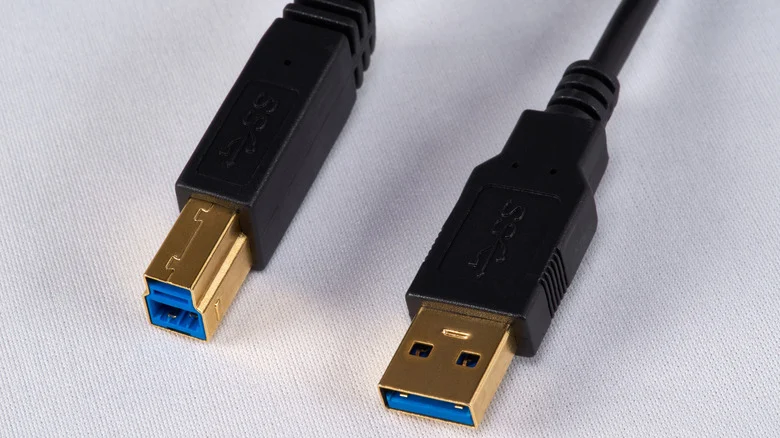
While the tech world has largely converged on the sleek, reversible USB-C standard, a bulky, squarish relic from the mid-1990s continues to hold its ground. The USB-B connector, often relegated to the back of printers and high-end audio interfaces, remains a vital component of the modern hardware ecosystem despite being nearly 30 years old.
Introduced in 1996 alongside the more familiar rectangular USB-A, the Type-B connector was never intended to be a universal plug for every device. Instead, the USB Implementers Forum (USB-IF)—a consortium founded by industry giants including Intel, Microsoft, and IBM—designed the two distinct shapes to solve a specific engineering problem: preventing users from connecting two host devices (like two computers) or two peripherals to one another, which could cause electrical damage or system failures.
In this original architecture, USB-A was designated for the “host” side, while USB-B was reserved for “peripherals” such as printers, scanners, and external hard drives. This physical distinction ensured that power and data flowed in the correct direction, with the host typically providing the power and managing the data traffic.
As mobile technology evolved, the physical limitations of USB-B became apparent. Its tall, boxy profile was incompatible with the shrinking footprints of digital cameras and early smartphones. This led to the development of the Mini-USB and later the Micro-USB standards, which offered smaller form factors while maintaining the host-peripheral logic.

However, in the professional and office equipment sectors, the size of the USB-B port was an asset rather than a liability. The connector provides a robust mechanical connection that is significantly harder to accidentally dislodge than its smaller counterparts. For devices that remain stationary for years, such as office printers or MIDI controllers in a recording studio, the stability of the connection often outweighs the convenience of a smaller plug.
Furthermore, the longevity of USB-B is driven by industrial inertia. Manufacturers of high-end musical equipment and industrial hardware prioritize backward compatibility, ensuring that a decade-old cable in a professional setup will still work with a brand-new piece of gear.
The landscape began to shift dramatically with the introduction of USB-C, which eliminated the need for different host and peripheral connectors. Unlike its predecessors, USB-C is symmetrical and supports significantly higher bandwidth and power delivery. The European Union’s mandate for a common charging standard has further accelerated the adoption of USB-C, pushing it into categories previously dominated by proprietary or older USB types.
Despite the rise of USB4 and Thunderbolt technologies, USB-B remains the “workhorse” of the peripheral world. While it may eventually be phased out as USB-C becomes the universal default, the squarish plug continues to serve as a reminder of an era when physical shapes were the primary line of defense against technical user error.