Supreme Court to Decide if Alaska Can Seize $95,000 Plane Over Six-Pack of Beer
An octogenarian bush pilot challenges the state's forfeiture of his Cessna under the Eighth Amendment.
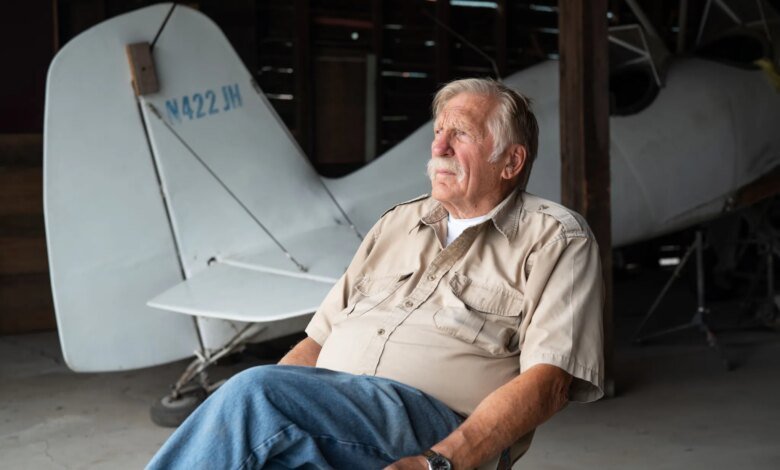
The Supreme Court of the United States has agreed to hear an appeal from an elderly Alaska bush pilot who is fighting the state’s attempt to seize his $95,000 airplane after a passenger brought a six-pack of beer onto a flight destined for a “dry” indigenous village.
The pilot, Kenneth Jouppi, argues that the forfeiture of his 1969 Cessna violates the Eighth Amendment’s Excessive Fines Clause. The high court’s decision to review the case sets up a major constitutional test over the limits of government asset forfeiture. Arguments in the case are scheduled for this fall.
The legal battle began more than a decade ago in April 2012. Jouppi was preparing to fly a passenger from Fairbanks to Beaver, a remote Alaskan village that has banned the sale and importation of alcohol. During a pre-flight search, Alaska State Troopers discovered a six-pack of Budweiser beer tucked inside a grocery bag belonging to the passenger.
Both Jouppi and his passenger were charged with misdemeanor offenses. While the passenger pleaded guilty, Jouppi and his aviation company went to trial and were convicted of knowingly transporting alcohol into a dry community. A state judge subsequently sentenced Jouppi to three days in jail. Following the conviction, the state moved to permanently confiscate his aircraft under Alaska’s criminal forfeiture laws.
Represented by the Institute for Justice, a public-interest law firm that frequently challenges civil and criminal forfeitures, Jouppi has argued that losing a $95,000 plane over a minor misdemeanor is grossly disproportionate. The case touches on the Eighth Amendment’s Excessive Fines Clause, which protects citizens from government overreach. Jouppi’s attorneys argue that the Alaska Supreme Court failed to evaluate whether his conduct was part of a broader pattern of criminal activity, noting that this was an isolated incident.
The Alaska Attorney General’s office defended the state Supreme Court’s ruling, which had cleared the way for the plane’s seizure. State prosecutors argue that alcohol abuse remains a devastating public health crisis in rural Alaska, where isolated communities are accessible only by air. They contend that aircraft are primary tools for bootlegging operations, making strict forfeiture laws a necessary deterrent.
Alaska officials maintained that the state court correctly applied a multi-factor test to determine whether the forfeiture was proportional to the offense. However, Jouppi’s legal team argues that allowing the state to take a commercial pilot’s livelihood over a single six-pack of beer represents an extreme case of government overreach that conflicts with established constitutional protections.