Samsung Links Health Data Synchronization to AI Training Consent
Users face data deletion if they opt out of AI training consent.
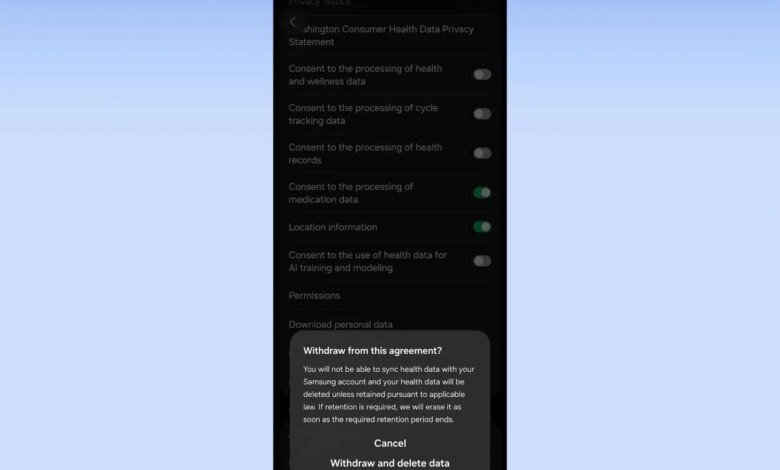
Samsung has implemented a new policy for its health tracking platform that requires users to consent to the use of their personal medical information for training **inteligencia artificial** models. Under the updated terms, users who decline to participate in the data-sharing program face the removal of their stored medical history and the loss of cloud synchronization features.
According to a report by **HowtoGeek**, the South Korean technology giant added a specific option titled “Consentimiento para el uso de datos de salud para el entrenamiento y modelado de IA” (Consent for the use of health data for AI training and modeling) within the **Samsung Health** settings. If a user attempts to deactivate this function, the application issues a notification warning that health data will no longer synchronize with their Samsung account. All existing information will be deleted unless a legal obligation requires its immediate retention.
Samsung stated that the data collection is intended to improve the platform through more precise algorithms. The scope of information subject to this policy includes sleep patterns, medication logs, medical histories, and menstrual cycle data. For users who provide consent, Samsung may also utilize metrics related to body measurements, nutrition, step counts, and physical activity. Medication data encompasses both specific prescriptions and dosages, while clinical histories include diagnoses, prognoses, and past test results used to train the company’s AI systems.
Imagen: **HowtoGeek**
Users retain the ability to stop data collection through the app’s configuration menu. However, Samsung noted that consent provided on one device will automatically apply to other versions of the app installed on different devices linked to the same account.
Integration with New Hardware
The update to these terms coincides with a significant refresh of the app following the launch of the **Galaxy Watch 9** and the **One UI 9 Watch** operating system. The new ecosystem introduces several AI-based tools, including a feature called **Vitals**. This tool analyzes biometric signals overnight—such as heart rate, temperature, respiratory rate, and blood oxygen levels—to alert users to potential fatigue or illness.

Additionally, the application now features **Puntuación de Salud Cardíaca**, which aggregates body composition, daily activity, sleep metrics, and stress levels into a single dashboard card. To assist in training management, the **Carga cardiovascular diaria** indicator provides insights to prevent overtraining, working alongside a Fitness Index that evaluates general physical condition. While these features are currently exclusive to the latest smartwatches, Samsung plans to expand them to older models in the coming months.
About Samsung Health
Originally launched as S Health in 2012, the platform has evolved from a basic step counter into a comprehensive wellness suite. It serves as the central hub for data collected by Galaxy smartphones and wearable devices. The integration of machine learning into health apps has become an industry standard, as companies seek to provide predictive health insights rather than just raw data. However, the requirement to share sensitive medical records for model training represents a shift in how user data is leveraged for product development.