Google Scales Gemini AI Automation Across 40 Apps in Deepened Samsung Partnership
New integration allows Gemini to handle reservations, shopping, and travel bookings directly on Samsung's latest foldables.

Google is significantly scaling its Gemini AI capabilities, moving beyond simple chat responses to active task automation across dozens of third-party applications. Announced during the latest Samsung Galaxy Unpacked event, the update marks a pivotal shift in how the Android ecosystem competes with Apple’s upcoming AI initiatives by turning a digital assistant into a functional agent capable of executing complex real-world actions.
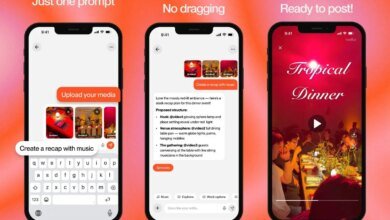
Following a beta launch in February that allowed for basic tasks like ride-hailing or food delivery, Gemini will now support automation for 40 different apps. This expansion allows the AI to perform more intricate sequences, such as booking travel experiences, making dinner reservations, and handling retail shopping on behalf of the user. The system has also been upgraded to process complex visual data, allowing it to analyze images as prompts and interpret active screen content in real-time.
This software evolution is being tightly integrated into Samsung’s newest hardware lineup. On the Galaxy Z Flip 8, users can trigger Gemini directly from the Flex Window by long-pressing the power button, facilitating quick interactions without unfolding the device. To support these more demanding AI features, Google is offering a six-month trial of its premium Google AI Pro service with the purchase of the Galaxy Z Fold 8 Ultra, Fold 8, and Flip 8 models.
Central to this productivity push is the inclusion of Gemini Notebook, the rebranded version of NotebookLM. The tool functions as a centralized research repository where users can aggregate web sources, videos, and chat logs. The AI can then synthesize this data into various formats, including slide decks, flashcards, and even podcasts. This move aligns with a broader industry trend toward “agentic AI,” where software does not just provide information but organizes and creates based on a user’s specific data pool.
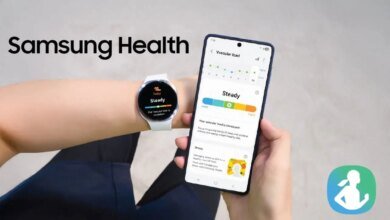
The integration extends to the wrist with the Galaxy Watch 9, which now features a gesture-based activation for Gemini. Users can engage the AI by simply raising their wrist to ask questions or issue commands. Furthermore, the partnership teased the upcoming launch of Android XR smart glasses, revealing two additional frame designs for the wearable line scheduled for release this fall.
Beyond AI features, Google is addressing a long-standing friction point for mobile users: platform migration. A new native transfer experience built into Android 17 aims to simplify the transition from iOS to Android. Unlike previous methods that required third-party apps, this integrated tool can migrate photos, videos, contacts, and messages, as well as more sensitive data like Google Accounts, saved passwords, Wi-Fi credentials, and eSIM profiles. While the feature is currently rolling out to select Pixel models, it will be a standard offering on the new Galaxy Z series foldables.