Texas Border Town Sues to Block Wall Construction Over Flooding Fears
Presidio residents fear federal wall construction will compromise critical flood levees.
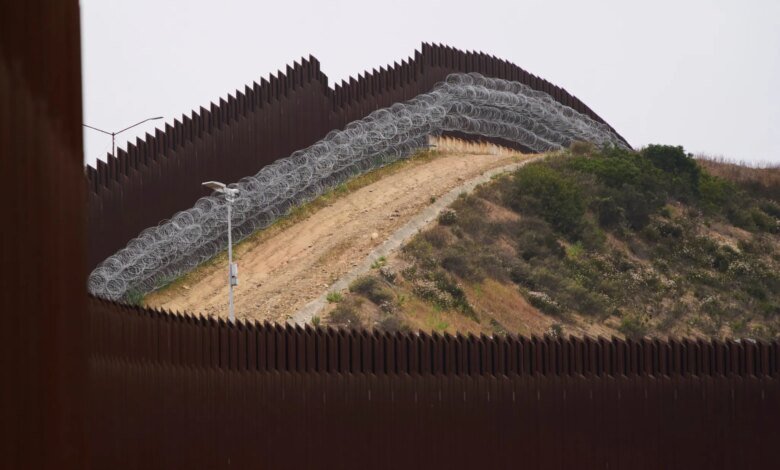
A rural Texas community is challenging the federal government in court, alleging that the Trump administration’s rush to complete a border wall threatens to destroy critical flood defenses. The town of Presidio, located in the rugged Big Bend region, argued before a federal judge on Tuesday that replacing existing earthen levees with a massive concrete and steel barrier could trigger catastrophic flooding in the area.
The legal battle pits the Presidio Development District, representing a town of roughly 3,200 residents, against the Department of Homeland Security (DHS). At the heart of the dispute is a plan to modify a levee system built in the 1970s and 1980s to protect the community from the Rio Grande’s unpredictable water levels. Local officials claim the government’s proposal to install 30-foot steel bollard panels atop a concrete base would compromise the structural integrity of these berms.
During the hearing, legal representatives for the town argued that the administration bypassed the Rivers and Harbors Act of 1899. This century-old legislation, the oldest federal environmental law in the United States, requires entities to obtain permission from the Army Corps of Engineers before altering any work built by the federal government for flood control. Lawyers for Presidio contend that while DHS has broad authority to waive regulations, it is still legally obligated to consult with the Corps due to the specific wording of the Act.
The federal government has defended its actions by citing the Illegal Immigration Reform and Immigrant Responsibility Act of 1996. This law provides the Secretary of Homeland Security the power to waive all legal requirements that might impede the expeditious construction of border barriers. Current Secretary Markwayne Mullin and former Secretary Kristi Noem have utilized these waivers to bypass dozens of environmental and cultural protection laws to advance a $46 billion infrastructure plan spanning the 2,000-mile frontier.
Government attorneys told the court that a final construction plan for the Presidio sector has not yet been authorized, making the town’s concerns premature. However, they confirmed that construction materials are already being staged and that work could begin as early as late August or September. The administration maintains that the wall is essential to achieving its goal of “zero illegal crossings,” despite current data showing that border encounters in the remote Big Bend Sector are at historic lows due to the region’s punishing terrain.
Judge Reggie Walton, presiding over the case, expressed skepticism regarding the government’s absolute goal of zero crossings, describing it as an unlikely reality. However, he also noted the significant authority granted to the executive branch by Congress to waive regulations in the interest of national security. The judge is expected to issue a ruling within the coming week on whether to grant an injunction against the project.
The tension in Presidio reflects a broader trend along the U.S.-Mexico border, where landowners, Native American tribes, and environmental groups have increasingly turned to the judiciary to slow construction. These groups argue that the rapid pace of the project ignores local geographic realities and historical preservation. In Presidio, the fear is specifically focused on the flash flooding common in West Texas, which local leaders say could be exacerbated if the natural flow of water is obstructed by a solid concrete base.
Customs and Border Protection (CBP) has indicated that it is currently installing approximately six miles of wall per week across various sectors. While the administration views this as a fulfillment of a signature policy promise, the residents of Presidio maintain that the cost of national security should not be the physical safety of their homes and infrastructure.