Andy Burnham Faces Fragile Debt Market as He Becomes UK Prime Minister
The incoming prime minister inherits a highly reactive financial landscape shaped by the lingering legacy of the 2022 mini-budget crisis.

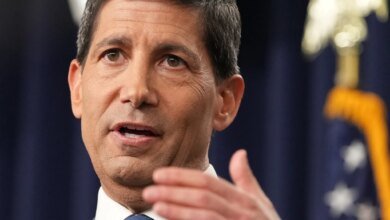
As Andy Burnham prepares to take office as the United Kingdom’s seventh prime minister in a decade, he faces an immediate and formidable challenge: navigating a highly sensitive sovereign debt market still haunted by past fiscal missteps.
According to a recent report from the International Monetary Fund (IMF), the UK economy continues to carry the scars of the September 2022 “mini-budget” crisis. That episode, characterized by unfunded spending hikes and tax cuts under the brief 44-day administration of Liz Truss, triggered a massive sell-off of government debt and led to her rapid resignation. The IMF warned that this turmoil marked a permanent “structural shift” in the fragility of the gilt market, meaning future governments will have far less room for fiscal error.
The IMF analysis highlights that foreign investors have increasingly dominated the UK debt landscape, estimating that global factors drove between 60% and 90% of the variation in gilt yields from 2020 to 2026. This high level of international participation leaves the $4.2 trillion economy highly exposed to sudden capital shifts and price-sensitive “fast money.” Currently, external buyers hold as much as 30% of UK government debt.
This market dynamic means the incoming Labour leader will have to contend with what Wall Street veteran Ed Yardeni famously termed bond vigilantes—investors who drive up yields to protest loose fiscal policies. Yardeni noted that regardless of who resides in Downing Street, the bond market will ultimately call the shots. He pointed out that Burnham is inheriting the same hyper-reactive environment that constrained his predecessors, Keir Starmer and Rachel Reeves, whose borrowing proposals were kept on a tight leash by wary traders.
Burnham has previously expressed frustration with this financial leverage, stating in September 2025 that the country must move past “being in hock to the bond market.” However, escaping its influence will prove difficult as he attempts to stimulate economic growth without spooking lenders.
To maintain market confidence, Burnham’s choice for Chancellor of the Exchequer will be critical. Reports indicating that Shabana Mahmood is the leading candidate for the role have temporarily reassured financial markets.
The IMF has cautioned the incoming administration against raising taxes on top earners, arguing such moves could damage economic growth. Instead, the international body suggested that targeted adjustments to marginal tax rates at the lower end of the income scale, paired with welfare transfers, would be a more efficient way to manage the national balance sheet. Burnham, who has pledged to support local enterprises, must now balance these orthodox fiscal demands with his domestic policy goals.