Byron Donalds Proposes Federal Mandate for AI Data Centers to Fund Private Utilities
New legislation seeks to decouple AI infrastructure from the public power grid to protect residential ratepayers.
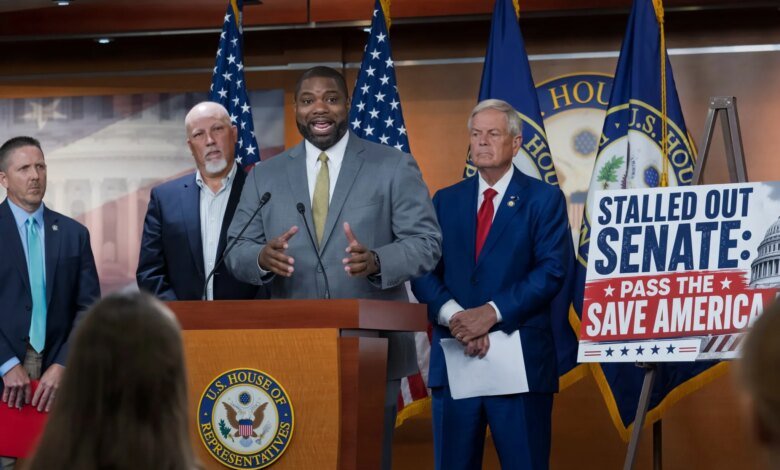
U.S. Representative Byron Donalds has introduced federal legislation designed to insulate residential utility customers from the surging energy and water demands of Artificial Intelligence infrastructure. The proposed mandate would require developers of AI data centers to secure their own private power and water sources, effectively barring them from drawing on the public power grid and municipal public water systems.
The move comes as the United States experiences a rapid expansion of hyperscale data centers, which are essential for training large language models but consume vast amounts of electricity. According to the U.S. Department of Energy, data centers currently account for a significant and growing portion of national electricity consumption, often straining local infrastructure that was not designed for such intensive industrial loads.
Donalds, who is currently campaigning to become the next Florida governor, stated that the legislation aims to ensure that the technological boom does not translate into higher monthly bills for families. He noted that many developers are willing to internalize these utility costs to secure the necessary permits and public support for their projects. The proposal aligns with earlier voluntary initiatives suggested by Donald Trump, though Donalds’ bill would codify these requirements into federal law.
In Florida, the issue has already reached a boiling point. More than 20 counties and municipalities across the state have recently voted to reject or pause the construction of major data centers. Local opposition frequently cites concerns over community disruption, environmental impact, and the potential for residential ratepayers to subsidize the massive energy needs of tech giants. This local resistance mirrors a broader national debate over the “social license” of tech companies to operate within residential hubs.
The legislative push follows a state-level precedent set by Florida Governor Ron DeSantis, who in May signed a law requiring large-scale data centers to pay their own energy and water expenses in full. If elected to succeed DeSantis, Donalds has indicated he would prioritize moving these facilities away from high-population areas and improving operational efficiency to protect the state’s natural resources.
The rapid buildout of artificial intelligence capacity has forced a reckoning with the concept of baseload power—the minimum amount of electric power a grid must provide to meet demand. As the Federal Energy Regulatory Commission (FERC) monitors grid reliability, the arrival of hyperscale facilities has raised questions about whether existing infrastructure can handle the load without compromising service to traditional consumers.
The political landscape surrounding data centers has become increasingly complex. In the Florida gubernatorial race, candidates from across the spectrum have staked out aggressive positions. James Fishback, a Republican challenger, has centered his campaign on opposing data center expansion, while David Jolly, a leading Democrat, has called for a total moratorium on new construction.
Industry analysts suggest that the willingness of tech firms to consider private utility sourcing reflects a defensive posture against potential bans. Travis Fisher, a fellow at the Cato Institute, observed that while companies typically seek the most cost-effective access to public utilities, the threat of being “run out of town” by local regulators is driving a shift toward self-sufficiency. By mandating private sourcing, lawmakers hope to decouple the growth of the tech sector from the rising utility costs faced by the general public.