Strategy Boosts Cash Reserves by $263 Million Through Share Sales, Keeping Bitcoin Treasury Untouched
The firm raised $263.5 million through equity dilution, keeping its 843,775 BTC treasury untouched.
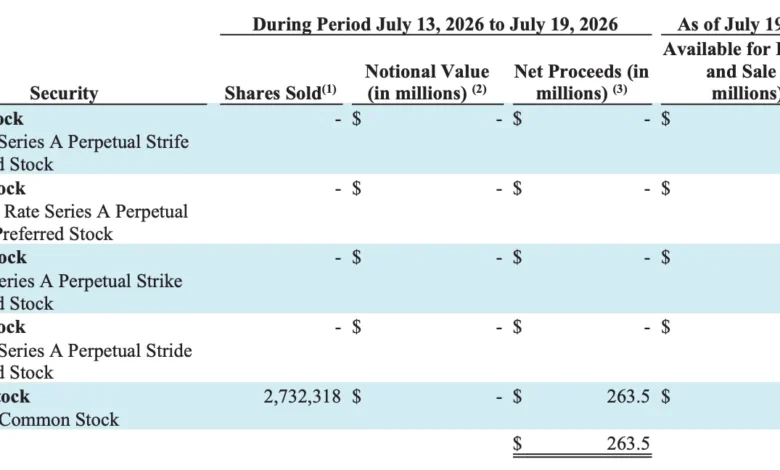
In a move that prioritizes preserving its massive cryptocurrency holdings, enterprise software and Bitcoin treasury firm Strategy has raised hundreds of millions of dollars by selling its own common stock. According to a recent regulatory filing with the U.S. Securities and Exchange Commission, the company generated $263.5 million in net proceeds by selling 2,732,318 shares of its MSTR common stock between July 13 and July 19.
The capital was raised through an at-the-market equity offering program, which allows the company to gradually sell new shares directly into the open market. The transaction boosted Strategy’s dedicated USD Reserve to $3.225 billion. This reserve is specifically maintained to cover corporate debt obligations and distribute dividends to preferred shareholders, who hold specialized income-focused securities such as STRC, STRK, STRF, and STRD.
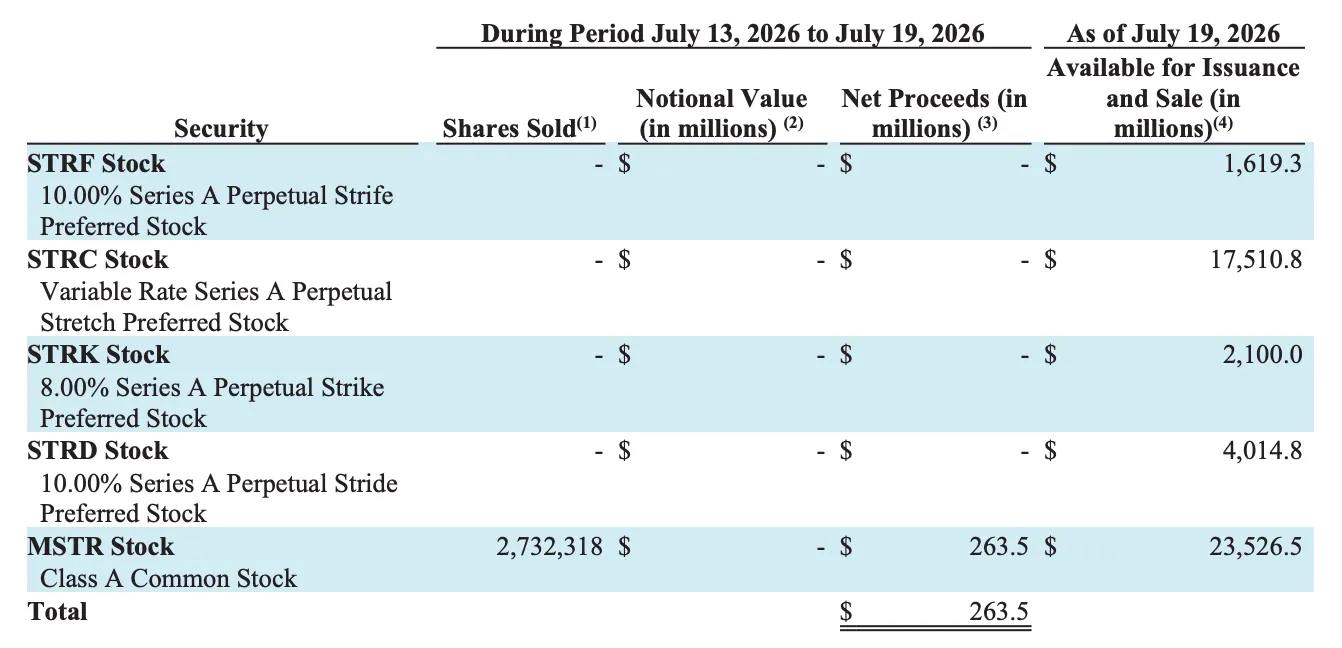
This marks the second consecutive week that Strategy has chosen to issue new equity rather than liquidate any portion of its digital asset portfolio. Over the past fortnight, the firm has accumulated a total of $675 million in cash through stock sales, including a $466.7 million share issuance the previous week. By opting for equity financing, the company avoids selling its cryptocurrency but dilutes the ownership of existing common stockholders, who sit behind preferred shareholders in the payment hierarchy.
Company founder Michael Saylor confirmed the financial update, stating that the firm’s USD Reserve increased by $225 million during the period, while its core treasury of 843,775 Bitcoin (BTC) remained completely untouched. This massive digital stash represents approximately 4% of the total 21 million Bitcoin that will ever exist.
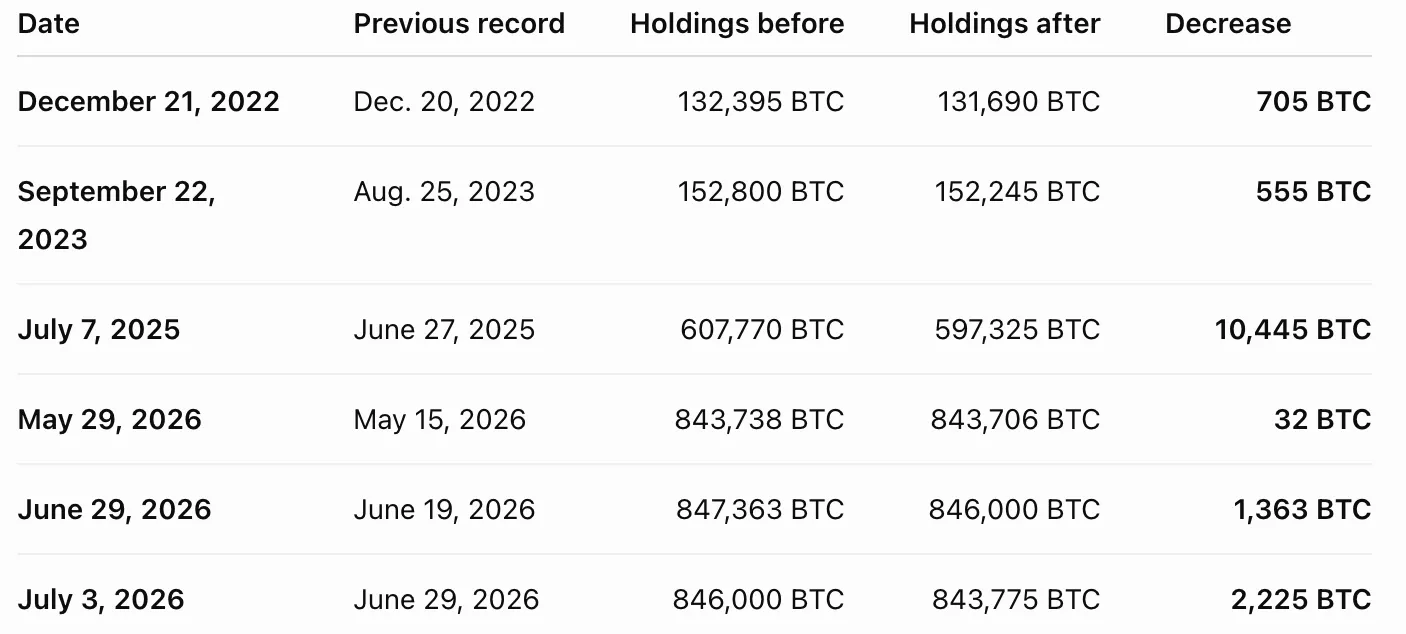
Strategy’s hands-off approach to its cryptocurrency portfolio is consistent with its long-term treasury strategy. Since adopting Bitcoin as its primary reserve asset in 2020, the firm has reduced its holdings on only six occasions. Notably, three of those sales occurred in 2026, including a late June liquidation of 3,588 BTC for approximately $216 million. That transaction was executed under a board-approved capital framework allowing the company to sell up to $1.25 billion in BTC to replenish its cash reserves when necessary.
The decision to dilute equity rather than sell digital assets drew sharp criticism from prominent gold investor and Bitcoin skeptic Peter Schiff. Schiff argued that Strategy is unnecessarily harming common shareholders to protect preferred investors, suggesting that the firm may be hesitant to sell its Bitcoin out of fear that the market lacks the liquidity to absorb such a large sale without triggering a sharp decline in price.
At current market prices, Strategy’s Bitcoin holdings are sitting on an unrealized paper loss of roughly $9.6 billion, reflecting an average purchase price of $75,476 per coin. Because these are paper losses, they do not impact the company’s cash flow unless the assets are officially sold.
Despite the current market downturn, Saylor has previously expressed highly bullish long-term expectations, suggesting that the company could eventually acquire all Bitcoin produced by miners up to the year 2140—amounting to roughly one million coins. However, market participants remain skeptical about whether the firm can fulfill such an ambitious target in the near term.