White House Accuses China’s Moonshot AI of Intellectual Property Theft and Evading Export Controls
Allegations involve the theft of Anthropic’s technology and the illegal acquisition of NVIDIA superchips.

The United States government has leveled serious allegations against Chinese artificial intelligence developer Moonshot AI, claiming the firm utilized illicit methods to build its latest flagship model, Kimi K3. Michael Kratsios, Director of the White House Office of Science and Technology Policy (OSTP), stated that the company engaged in a sophisticated operation to “distill” proprietary data from American AI models, specifically targeting Anthropic’s Claude Fable to replicate its performance without the associated research costs.
According to the OSTP, Moonshot AI developed a dedicated platform designed to bypass detection while scraping training data from leading Western systems. This process, known as model distillation, involves using the outputs of a larger, more advanced AI to train a smaller or newer one. While distillation is a standard industry practice for creating efficient software, Kratsios characterized Moonshot’s actions as “industrial-scale covert distillation” aimed at undermining U.S. innovation and stealing trade secrets.
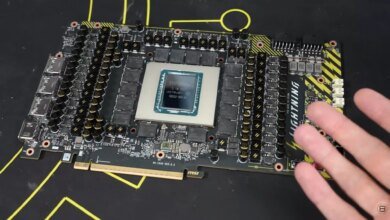
Beyond data theft, the White House alleges that Moonshot AI circumvented strict trade barriers to acquire high-end hardware. Kratsios reported that the firm obtained NVIDIA servers powered by the restricted GB300 superchip through intermediaries in Malaysia. This hardware is currently subject to U.S. Department of Commerce export controls designed to limit the advancement of Chinese military and strategic AI capabilities.
The controversy follows the recent debut of Kimi K3, which Moonshot AI marketed as a massive open-source model featuring nearly 3 trillion parameters. Initial benchmarks suggested the model could rival or even surpass industry leaders like OpenAI’s GPT series and Anthropic’s Claude. However, skepticism arose when the company delayed the release of the model’s weights until July 27, preventing independent researchers from verifying how the AI was constructed.
This incident mirrors previous friction between Washington and Beijing over AI development. Earlier this year, firms like DeepSeek faced similar accusations of utilizing data from OpenAI and Google to accelerate their progress. The recurring nature of these allegations has fueled discussions within the U.S. administration regarding a total ban on high-end Chinese AI models, including open-source versions, to protect domestic interests and national security.
Despite the geopolitical tension, Kimi K3 has seen a surge in popularity within China. The company recently suspended new user registrations, citing the need to manage infrastructure demand for existing subscribers. The situation remains fluid as the international community awaits the official release of the Kimi K3 model weights, which will allow for a deeper technical audit of the software’s origins.