Andy Burnham Rejects Thatcherism, Signaling Sharp Leftward Shift for Britain’s Labour Party
The incoming prime minister pledges state control of essential services, drawing sharp criticism from free-market advocates and foreign policy analysts.
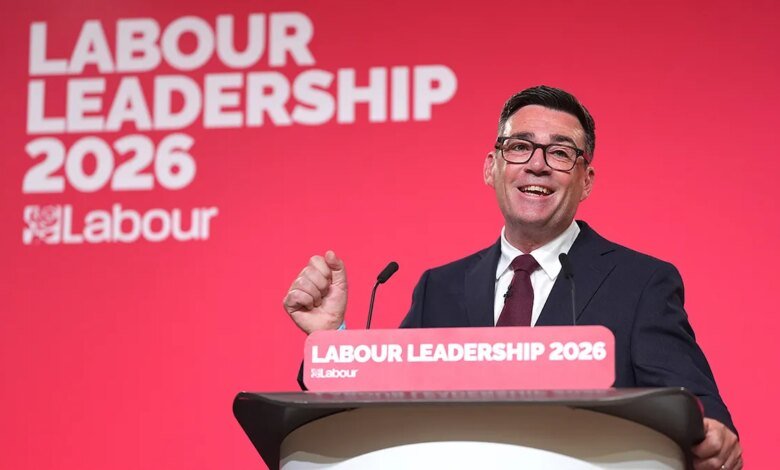
LONDON — In a decisive break from decades of economic orthodoxy, Britain’s incoming Prime Minister Andy Burnham used his maiden address as Labour leader to launch a direct ideological assault on the free-market model established in the 1980s by Margaret Thatcher. Pledging to return essential public services to state control, Burnham’s speech on Friday signaled a sharp leftward turn for the party, moving away from the more cautious, centrist positioning of outgoing Prime Minister Keir Starmer.
Burnham, who secured the party leadership unopposed after being nominated by 379 Members of Parliament, is scheduled to be formally sworn in as prime minister on Monday by King Charles III. His transition to Downing Street represents a dramatic political pivot for the United Kingdom, occurring without a national general election following a period of intense internal party turmoil that saw Starmer resign in the wake of a devastating Labour revolt and local election losses.
Speaking in London on July 17, Burnham declared that Britain had taken “a series of wrong turns in the 1980s,” a decade defined by the centralization of political power and the transfer of state-owned enterprises to private companies.
“The country surrendered control of the essentials — housing, water, energy, transport — and left people exposed to higher costs,” Burnham said, according to a transcript of his remarks. He characterized his rise to leadership as the country’s most significant political turning point in 40 years, asserting that four decades of neoliberal economic policies had “not been kind” to the working-class and industrial communities that form Labour’s traditional heartland.
“The government I lead will confidently lay that path out starting next week,” Burnham said. “That is why this change today is the most significant change moment in our politics for 40 years.”
A Shift Toward State Ownership
The former Greater Manchester mayor’s remarks offer the clearest indication yet of his administration’s domestic agenda. Burnham outlined a platform centered on greater state ownership, the expansion of council and social housing, the devolution of power to regional governments, and increased state involvement in utility sectors.
Despite this leftward tilt, Burnham sought to reassure the commercial sector, insisting he would govern as a “pro-business leader” who would foster closer cooperation with private enterprises. He also sought to carve out a distinct identity for his administration, stating that Labour “won’t try to out-Green the Greens or out-Reform Reform.”
However, critics were quick to warn that dismantling the economic legacy of the 1980s risks resurrecting the structural crises of the 1970s. The decade prior to Thatcher’s election was bookended by the Winter of Discontent in 1978-79, when millions of public sector workers went on strike over pay. The widespread industrial action left trash piling up in streets, crippled hospital services, and paralyzed public transport, ultimately paving the way for Thatcher’s Conservative landslide in 1979 as voters rejected the trade unions and the incumbent Labour government.

Britons suffer through the ‘Winter of Discontent’ as a man walks past a pile of rubbish in London. Sanitation workers joined other unions across the U. K. on strike in February 1979. (Graham Morris/Evening Standard/Hulton Archive/Getty Images)
Free-Market Backlash
The Adam Smith Institute, a prominent free-market think tank, mounted a robust defense of the Thatcher era in response to Burnham’s address. “Since you mentioned the 1980s, Andy Burnham, here’s a reminder of what was achieved,” the institute wrote, presenting a series of economic metrics from the period.
According to the think tank, Thatcher-era reforms saw the top rate of income tax fall from 83% to 40%, the basic rate drop from 33% to 25%, and corporation tax decrease from 52% to 35%. Additionally, inflation fell from a peak of 21.9% in 1980 to 2.4% in 1986, while the number of working days lost to strikes plummeted from 29.5 million in 1979 to 1.9 million in 1990. The institute also noted that homeownership rose from 55% to 67%, individual shareholders grew from 3 million to 11 million, and the national debt fell from 47% of gross domestic product to 28%.
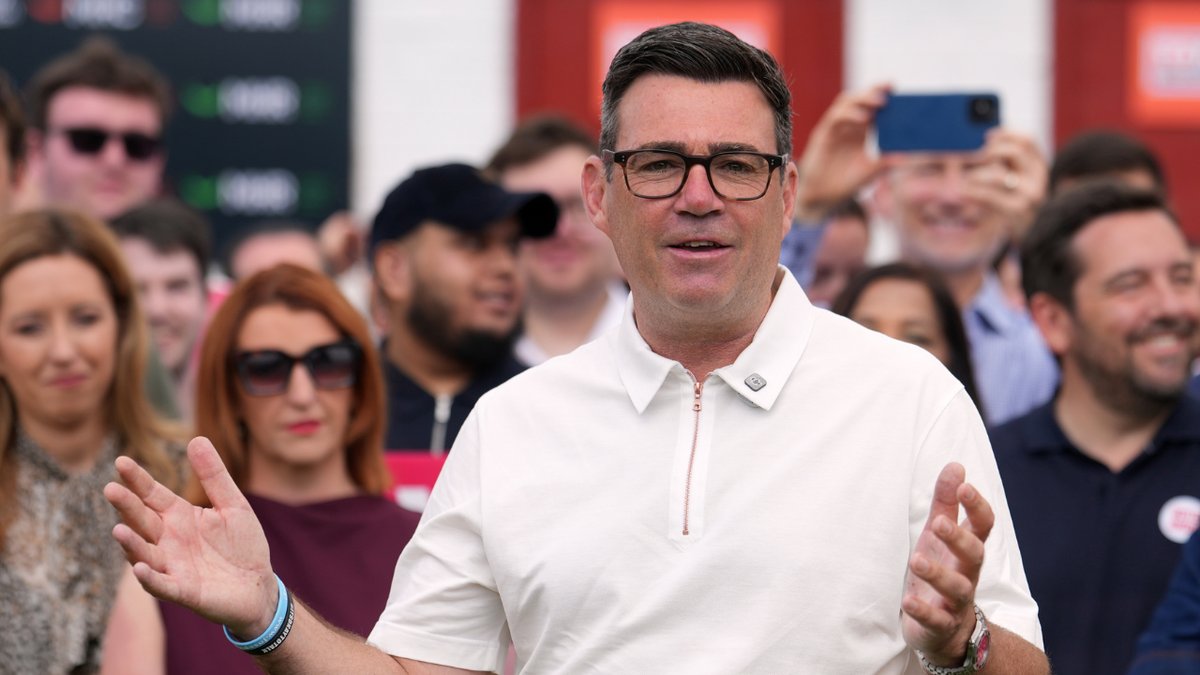
Andy Burnham, who is expected to become the U.K.’s next prime minister on Monday, speaks to supporters after winning a by-election in Ashton in Makerfield, England, on Friday, June 19, 2026. (Jon Super/AP)
Emma Schubart, a research fellow at the Henry Jackson Society and former Adam Smith Institute staffer, criticized Burnham’s economic logic. “The biggest takeaway is that he comes across as pretty economically illiterate,” Schubart said in an interview, describing his “demonization” of Thatcher’s policies as “strange and needless.”
Schubart argued that Burnham’s platform contains inherent contradictions. “He keeps saying he’s bringing a renewal to the U.K. and a new chapter,” she said. “But then he also says, ‘We’re going to go back to the ’70s.’ You have to pick one.”
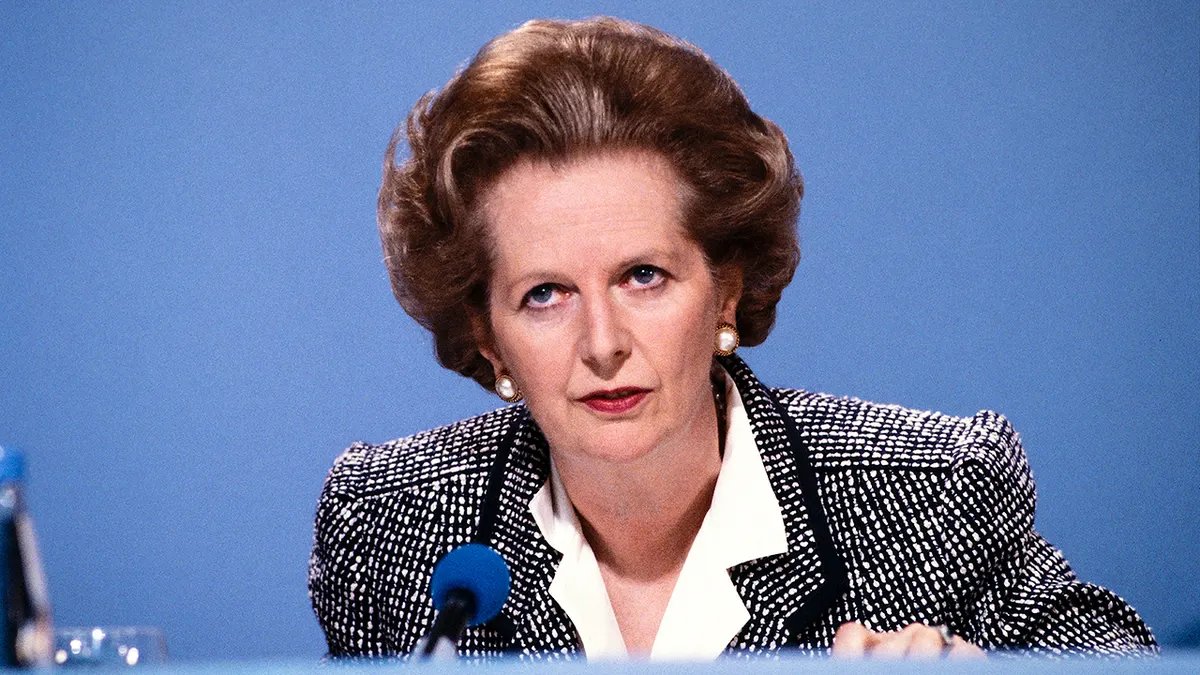
Margaret Thatcher, British Prime Minister, addresses a Press Conference at Conservative Party Headquarters in Smith Square, London on June 8, 1987 during the General Election campaign. (David Levenson/Getty Images)
Geopolitical and Domestic Hurdles
Other analysts pointed to a lack of concrete policy detail and potential international complications. Alan Mendoza, executive director of the Henry Jackson Society, remarked that while Burnham’s speech provided a clear ideological signal, it offered few specifics.
“With Burnham, there is a lot of light and heat, but not much actual substance,” Mendoza said. “We are all still waiting to see what that substance might be. If he thinks Britain has been on the wrong track for the last 40 years, what is the right track? Is it socialism of a past kind? Is it some form of statism? What does he actually intend to do?”
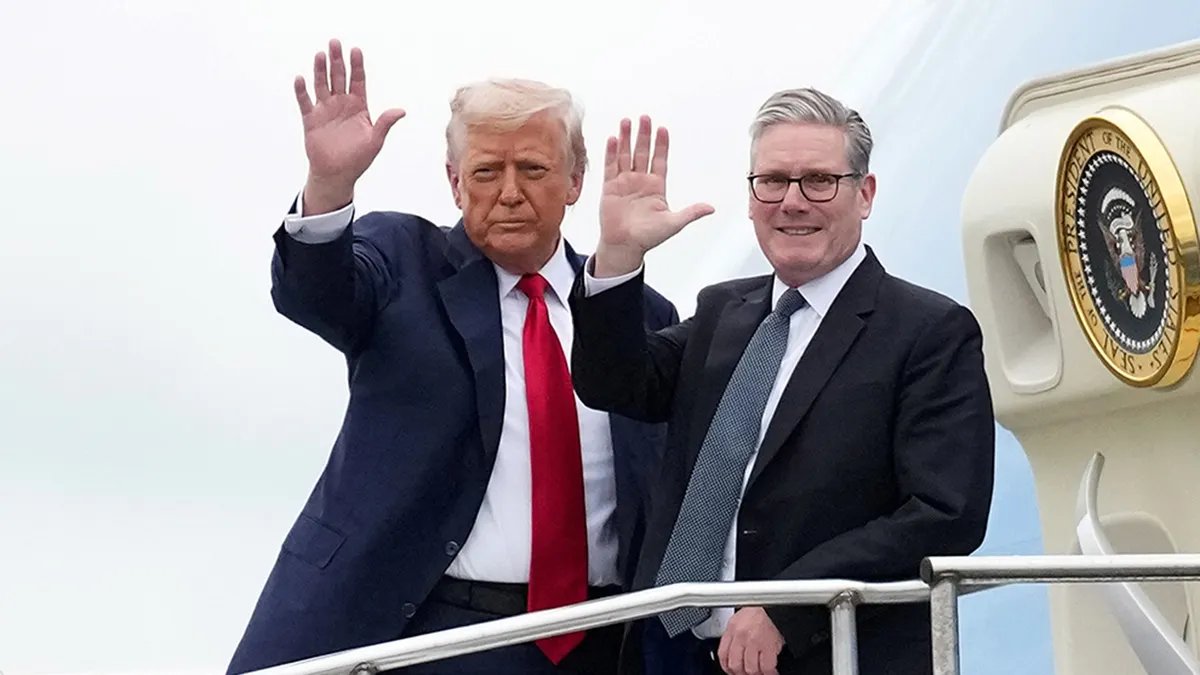 Keir Starmer” width=”1200″ height=”675″ />
U.S. President Donald Trump and British Prime Minister Keir Starmer wave as they board Air Force One at Prestwick Airport ahead of a flight to north-east Scotland on July 28, 2025 in Prestwick, Scotland. (Andrew Harnik/Getty Images)
Mendoza also warned that Burnham’s leftward shift could strain relations with the United States, particularly under the Trump administration.
“The government could most definitely clash with the United States under Burnham’s vision, because the voters he is trying to bring back into his tent include many of those who are deeply hostile to America,” Mendoza observed. “If he adopts U.S.-friendly policies, he risks alienating the voting coalition he is trying to create. But if he decides to pick fights with the United States, he risks damaging British national security and the alliance with America, which matters far more to the country than any electoral coalition.”
As Burnham prepares to take office, he faces a delicate political balancing act. Without the mandate of a general election victory, he must unite Labour’s competing internal factions, soothe anxious financial markets, and counter the electoral threat posed by a rising Reform UK party, all while charting a fundamentally new course for the British state.