U.S. Troops Unload Chinese Aid Flight in Earthquake-Stricken Venezuela
American military personnel lead logistics at repaired Simón Bolívar Airport as death toll from twin quakes nears 5,000
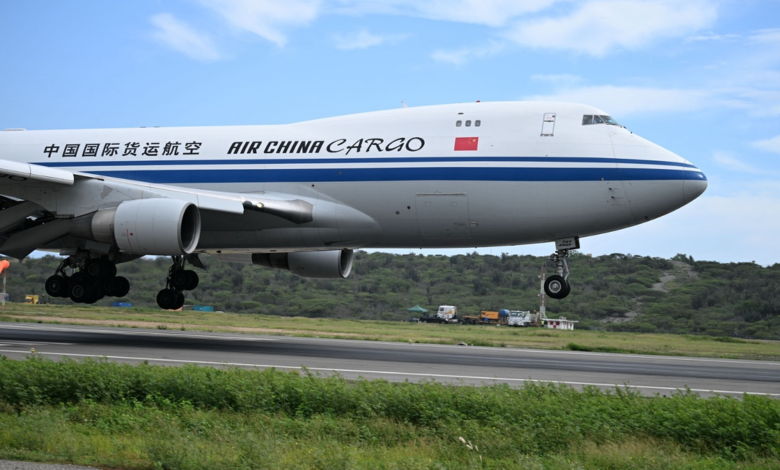
CARACAS, Venezuela — In a striking demonstration of Venezuela’s transformed geopolitical landscape, U.S. military personnel recently unloaded a Chinese humanitarian aid flight at the country’s primary international gateway. The operation, which took place at Simón Bolívar Airport, highlights the shifting dynamics in the region following the deposition of former President Nicolás Maduro and the devastating twin earthquakes that struck the nation on June 24, 2026.
The Air China flight, which landed on July 6, represents Beijing’s sole aid shipment to the crisis-stricken country so far. Photos released by the U.S. government show American service members utilizing heavy machinery on the tarmac to unpack and organize pallets of supplies.
An Air China plane lands at Simón Bolívar Airport in Venezuela July 6, 2026, to deliver aid from the Chinese government (United States Government)
A Transformed Logistics Hub
The arrival of international relief was made possible only after intensive engineering efforts by the U.S. military. The twin earthquakes severely damaged the runways at Simón Bolívar Airport, located just outside the capital city of Caracas.
To restore the critical supply line, American forces repaired the airfield to allow heavy transport aircraft, such as Boeing C-17 Globemasters, to land. Currently, one runway is operational. Among the initial U.S. flights into the repaired facility were cargo planes carrying forklifts, which have been vital in unloading subsequent international shipments.
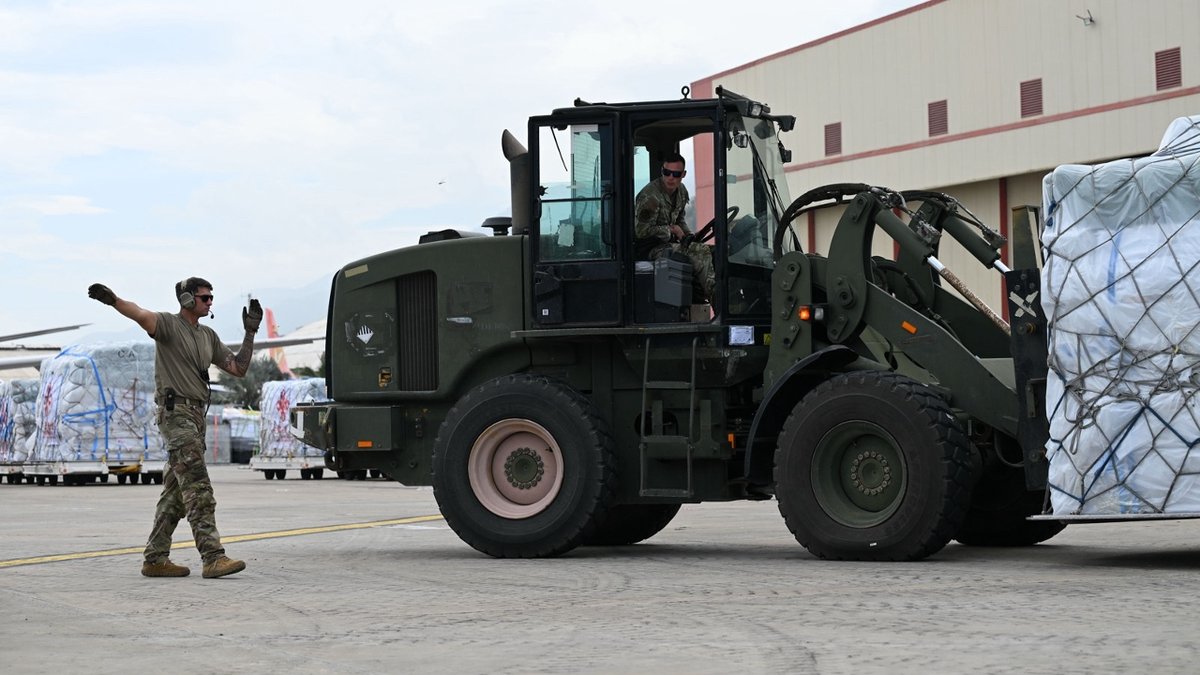
A U.S. soldier directs a wheel loader as it moves pallets of aid brought by the Chinese government July 6, 2026. (United States Government)
State Department spokesman Tommy Pigott emphasized the speed and scale of the American response, contrasting it with other international efforts.
“Secretary Rubio promised the Trump administration’s response to the devastating earthquakes in Venezuela would be big, fast and effective. We continue to deliver on that commitment,” Tommy Pigott said in a statement. “While some countries say they’ll deliver aid — weeks after natural disasters occur — America shows up, unloads the aid and ensures that assistance reaches the hands of those who truly need it thanks to our close coordination with the Department of War and the great public-private partnerships our Department has spearheaded.”
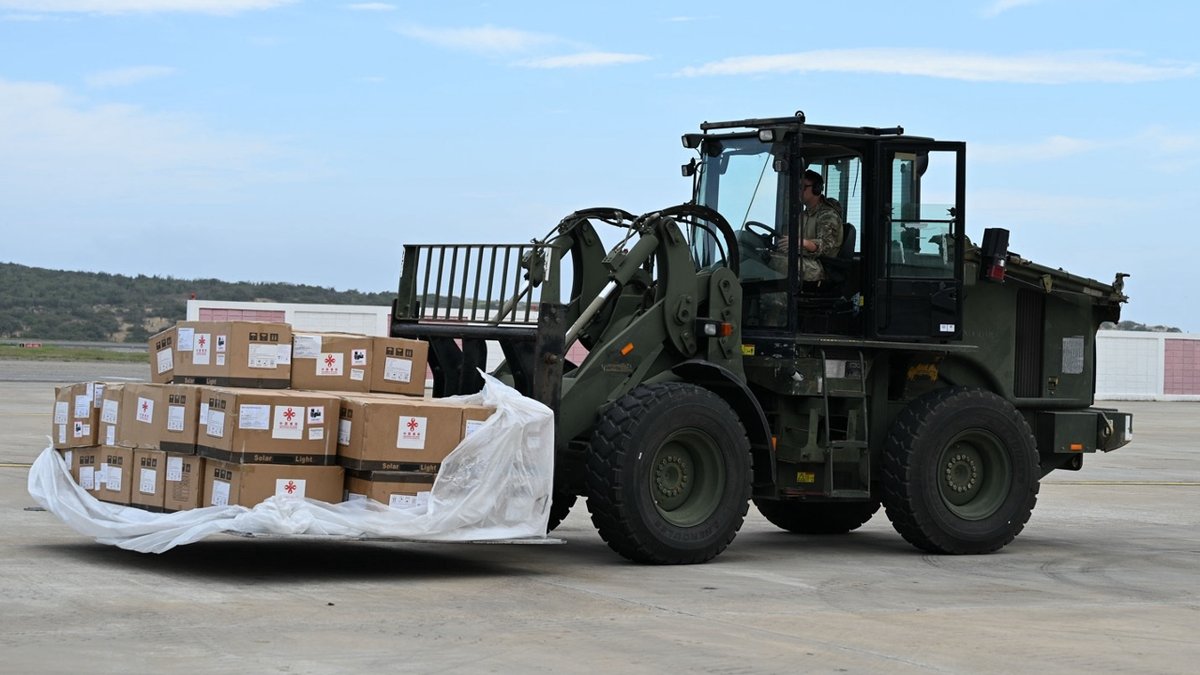
A U.S soldier drives a wheel loader full of supplies on the Simón Bolívar Airport tarmac July 6, 2026. (United States Government)
Contrasting Aid Commitments
Since the disaster occurred, the United States has delivered more than 1.5 million pounds of physical assistance to Venezuela. On July 9, the State Department announced that the U.S. government has committed more than $386 million in financial assistance, routed through trusted partner organizations to ensure direct delivery to affected populations.
In contrast, China’s financial and material commitment to Venezuela, announced in late June via state-run media, totals $14.72 million. The July 6 flight was described by Chinese state media as the “first batch” of aid, containing essential supplies such as tents and generators. According to Chinese reports, Venezuelan Foreign Minister Yvan Gil and Chinese Ambassador to Venezuela Lan Hu received the shipment at the airport, where U.S. troops ultimately handled the physical unloading.
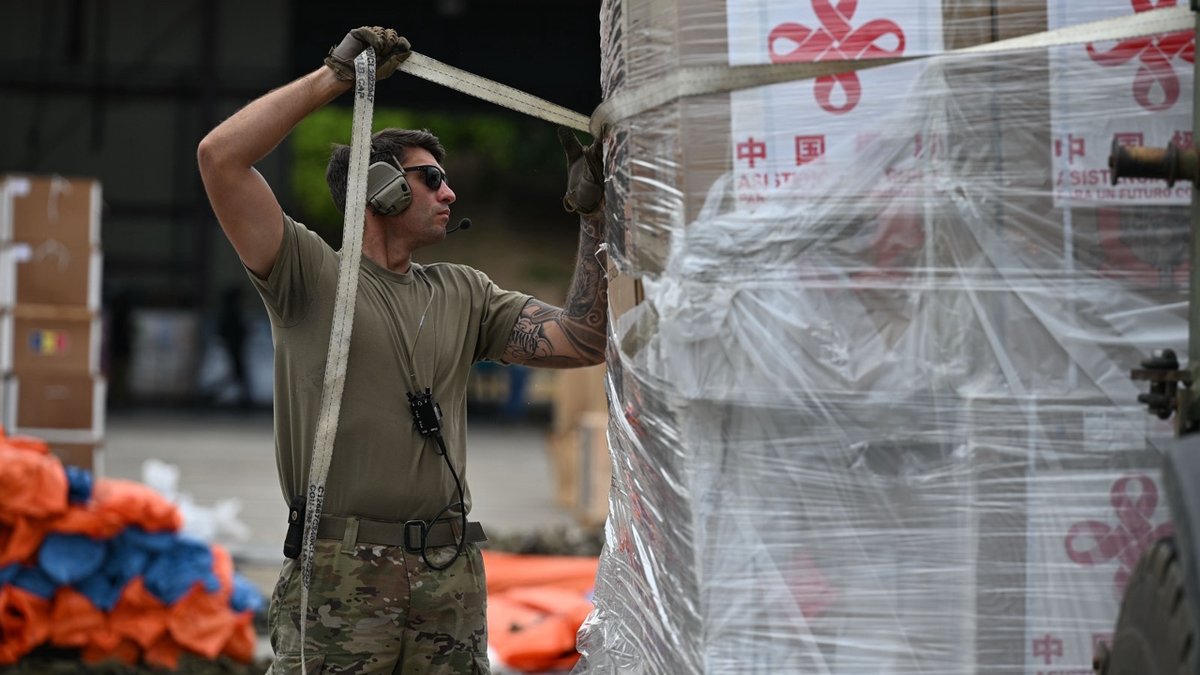
A U.S. soldier undoes wrapping on Chinese aid to Venezuela July 6, 2026. (United States Government)
Bypassing State Control
The involvement of U.S. forces and independent non-governmental organizations represents a major departure from how aid was distributed under the previous administration. Nicolás Maduro, who was captured and deposed during a U.S.-led raid on January 3, had long restricted foreign humanitarian access.
Michael Capponi, the founder and president of the Florida-based Global Empowerment Mission, noted that distributing aid in the post-Maduro era is a “whole different animal.” Michael Capponi, who was previously barred from entering the country by the Maduro regime, described a highly streamlined process.
“We land a private plane. It gets unloaded by U.S. soldiers. It goes in a truck we pay for and to a warehouse that we completely control. It doesn’t touch the hands of the Venezuelan government,” Michael Capponi said.
The Global Empowerment Mission has already shipped nearly 1 million pounds of aid to the country, including over 38,000 hygiene kits, more than 27,000 tents and tarps, and 48 generators. The organization aims to scale up its operations, targeting the delivery of 100,000 boxes of supplies monthly for the next three to six months.
The Human Toll of the Disaster
The scale of the humanitarian crisis remains immense. The June 24 twin earthquakes have left a trail of destruction across the country, particularly in coastal and urban areas.
As of Tuesday, the official death toll has reached 4,734, according to figures released by the Venezuelan government and cited by Reuters. At least 16,740 people have been injured, and nearly 18,000 individuals are currently homeless. The seismic shocks completely destroyed 190 buildings and left more than 850 others damaged.
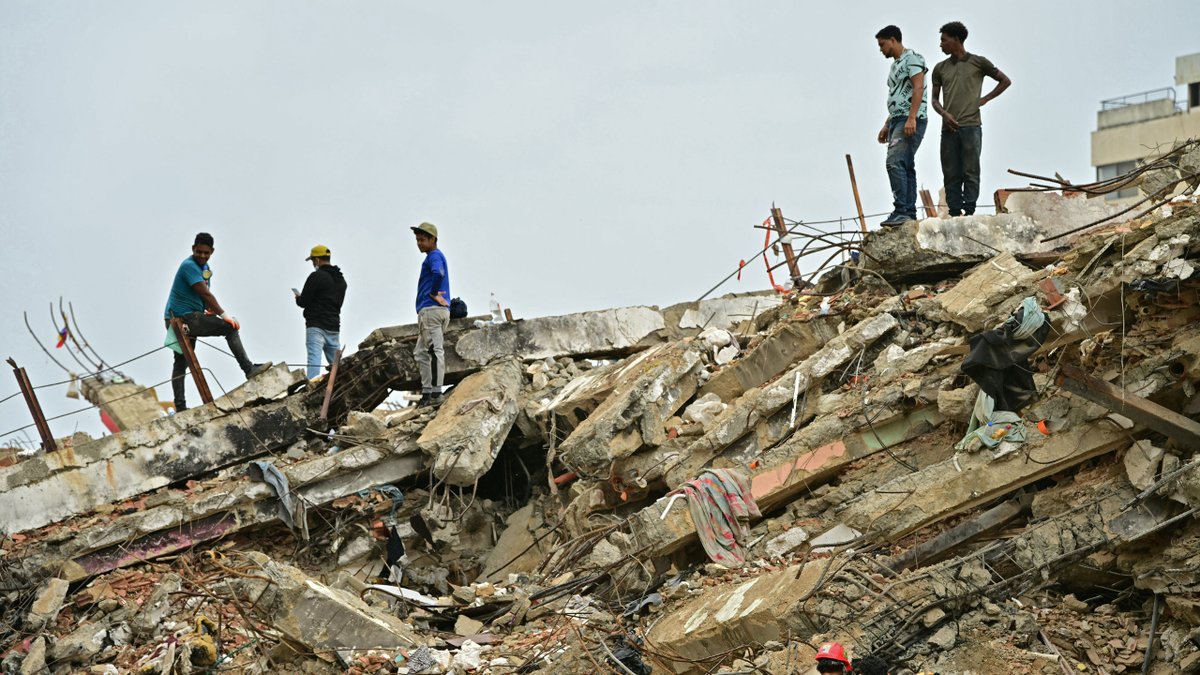
Relatives of missing people search for victims amid the rubble of a collapsed building in Caraballeda, La Guaira State, Venezuela, July 13, 2026, after the June 24 twin earthquakes. (Martin Bernetti/AFP via Getty Images)
In the immediate aftermath of the disaster, the U.S. mobilized more than 300 search and rescue personnel to assist local efforts. Those specialized teams have since departed the country after completing their mission, as reported by the Miami Herald. However, the broader logistical and humanitarian mission continues as international partners work to stabilize the country.