The Greenback’s Enduring Dominance: Why Standard Chartered Sees a ‘Re-Dollarization’ Trend
Analysts argue that a lack of viable alternatives and American productivity gains are keeping the dollar at the center of the global financial system.
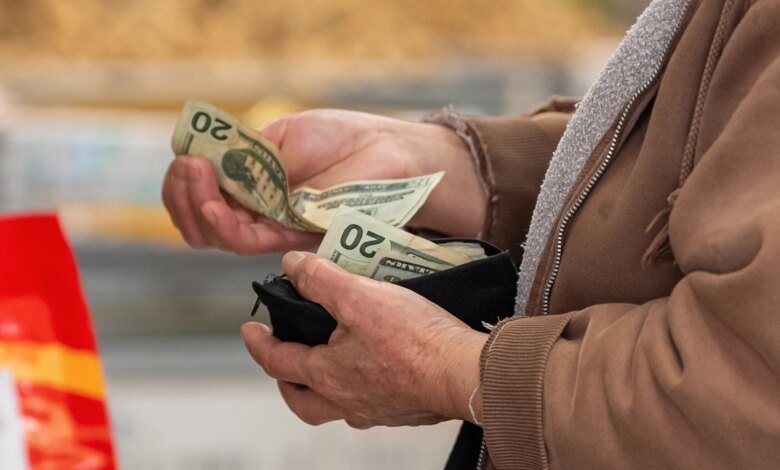
For years, the narrative of “de-dollarization” has simmered in the background of global finance, fueled by geopolitical tensions and a shifting economic landscape. From U.S. allies like Canada and France expressing concern over the greenback’s hegemony to rivals like Iran and China turning toward cryptocurrencies and the yuan, the signs of a retreat seem visible. Statistically, the argument has teeth: the U.S. dollar’s share of global foreign exchange reserves has slipped from 71% in 1999 to 57% in 2024, marking its lowest point in a quarter-century.
However, inside the research offices of Standard Chartered, a different story is emerging. Rather than a terminal decline, analysts at the bank see a phenomenon they describe as “re-dollarization,” driven by the sheer lack of viable alternatives and the continued magnetism of American capital markets.
“We’re not really in this de-dollarization camp,” said Divya Devesh, Standard Chartered’s co-head of FX research for ASEAN and South Asia, during a July 15 press briefing at the bank’s Singapore office. Devesh argues that while central bank reserves might be diversifying, the private sector and global investors are doubling down on the dollar. “I actually see re-dollarization in the form of exporters keeping dollars, and investors still finding U.S. equities very attractive to invest in,” he noted.
To illustrate this behavior, Devesh pointed to Taiwan as a prime example of the dollar’s stickiness. Despite the political rhetoric surrounding currency diversification, Taiwanese exporters convert only $2 out of every $100 in export earnings into the New Taiwan dollar. The remaining $98 is largely retained in U.S. dollars, serving as a liquid hedge and a primary vehicle for international trade.
This perspective stands in stark contrast to a growing chorus of skeptics who warn that the U.S. dollar is vulnerable. Critics often cite the ballooning U.S. federal debt, the frequent use of financial sanctions by Washington, and the rise of non-dollar trade blocs as existential threats to the currency’s status. These concerns have prompted several Asian governments to de-risk. Central banks across the region have been aggressively expanding their gold reserves to reduce reliance on the Treasury market. The People’s Bank of China has engaged in multi-month buying sprees, while the Reserve Bank of India recently repatriated roughly 100 tonnes of gold back to its domestic vaults.
Standard Chartered’s leadership acknowledges these fiscal pressures but suggests they are being mispriced in the currency markets. Eric Robertsen, the bank’s chief strategist and global head of research, noted that while the U.S. budget trajectory is a valid concern, it is a problem shared by many of the world’s major economies.
“You can have a negative view on Trump, twin deficits, or the U.S. budget trajectory,” Robertsen said. “But if you sell U.S. dollars, you have to buy something else, and the alternatives out there are not very attractive.”
In Robertsen’s view, the bond market—rather than the foreign exchange market—is the primary theater where fiscal anxieties play out. He contends that the dollar’s fundamental role as a refuge remains intact. “I don’t think the dollar is going to lose its safe-haven status in the near or medium term simply because of the budget deficit,” he added.
The resilience of the U.S. economy has also forced a reversal in market positioning. Last year, following various tariff announcements, there was a notable wave of dollar selling and FX hedging, particularly among European investors looking to protect their dollar-denominated assets. However, as the Federal Reserve maintains a cautious stance on rate cuts and the U.S. economy continues to outperform its peers, that bearishness is fading.
“Now that the Fed is not cutting rates and the U.S. economy [is] displaying some resilience, the idea of U.S. outperformance is gaining some traction again,” Robertsen explained.
Beyond interest rates and trade policy, a deeper structural driver is at play: productivity. The U.S. has maintained a significant lead in technological innovation, particularly in the realm of artificial intelligence, which is beginning to yield broader economic dividends.
“It’s not just in the AI industry. Broader productivity gains across the U.S. should translate into better earnings, and subsequently into more capital flows going into the U.S.,” Devesh concluded. “The demand for U.S. assets from foreigners is also still very strong, and that’s the underlying driver which keeps the dollar quite resilient.”