

Most Americans Oppose Election Betting as Networks Air Odds
Networks embed live Kalshi odds into 2026 midterm broadcasts while polling shows bipartisan opposition to political wagering.
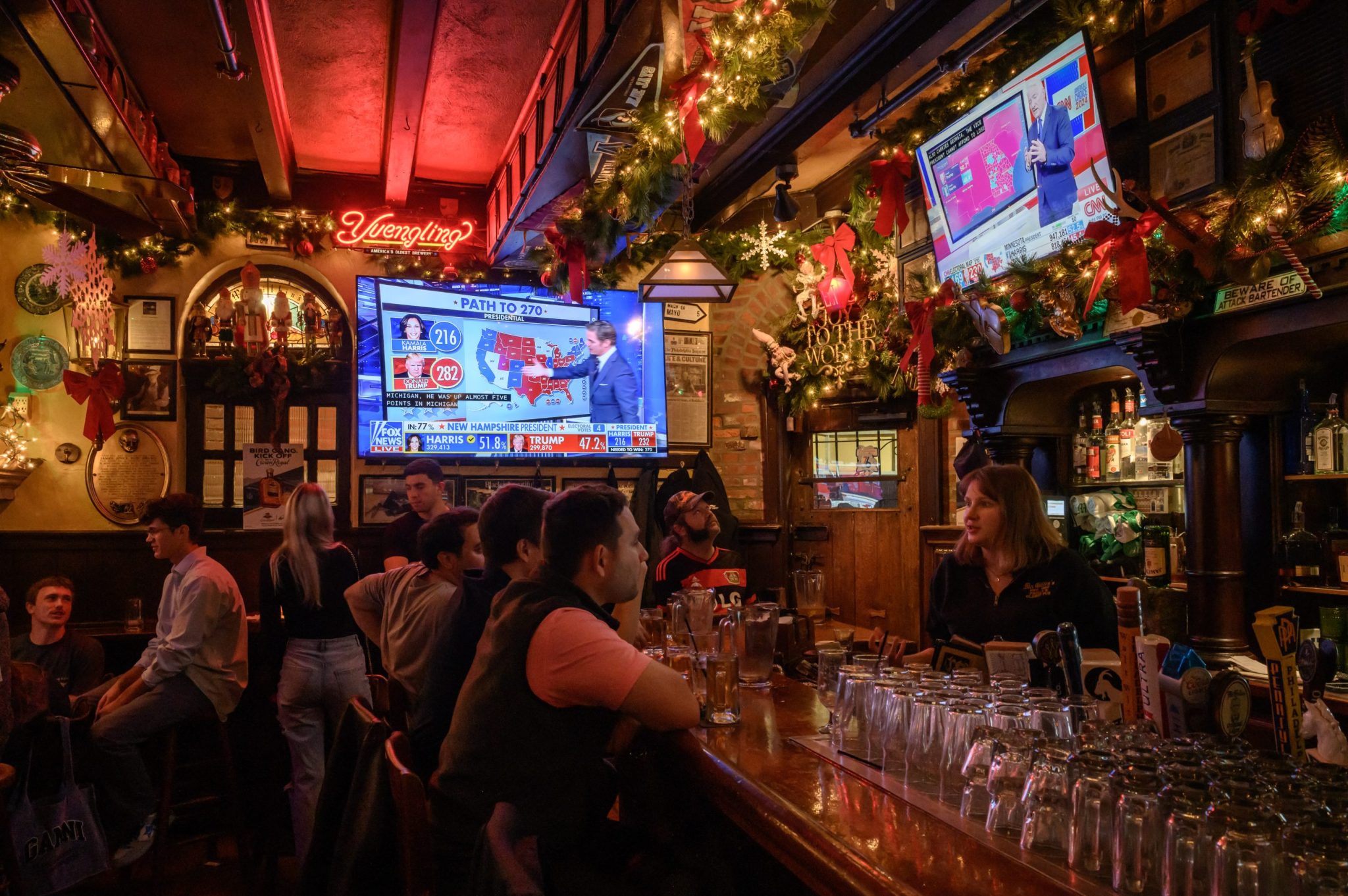
Major U.S. television networks are embedding real-time prediction market prices into their 2026 midterm election coverage even as six in ten American adults oppose wagering on political outcomes, according to a Reuters/Ipsos poll conducted Sept. 30 through Oct. 5.
CBS News announced it would integrate live pricing data from Kalshi alongside traditional polling for its midterm broadcasts. CNN and CNBC have secured similar arrangements with the platform, which also licenses official vote counts and race calls from the Associated Press. The integration of trading data into mainstream political journalism arrives just days after Skydance completed its acquisition of Warner Bros. Discovery on Oct. 6, placing both CBS News and CNN under a single corporate umbrella.
The editorial decision to broadcast betting odds clashes with broad public skepticism. The Ipsos survey of 4,506 U.S. adults found that 60% oppose using prediction markets to bet on election results, while only 13% support the practice. Opposition spans the political spectrum, drawing disapproval from 69% of Democrats and 61% of Republicans. Three-quarters of respondents categorized prediction-market wagering as gambling, and just 7% reported having placed a financial bet on such platforms.


Alec Tyson, senior vice president and lead pollster at Ipsos U.S. Public Affairs, noted that most Americans do not view elections or government decision-making as appropriate subjects for financial speculation.
Kalshi disputed the survey’s methodology, arguing that describing prediction markets as allowing people to “wager money on the outcome of real-world events” produced biased responses. The company criticized the questionnaire for asking about military actions and government policy decisions, asserting it does not offer war markets. The poll did not use the word “war.” A separate March Ipsos survey conducted for the American Institute for Boys and Men found that only 21% of Americans were very or somewhat familiar with prediction markets, a variable the latest questionnaire did not measure.
Beneath the broadcast partnerships, the actual architecture of political prediction markets relies on a narrow base of participants. An August analysis by the Anti-Corruption Data Collective, a nonprofit research group, found that on Polymarket’s global platform, the top 1% of wallets generated 68% of trading volume on 2026 congressional markets. Eighty percent of those specific markets had fewer than 100 active wallets trading.
This concentration contrasts sharply with the broader trajectory of the prediction market industry. Combined monthly trading volume on Kalshi and Polymarket surged from roughly $26 billion in May to $53 billion in July, according to a September Pew Research Center analysis. Sports contracts drove the majority of that growth. Users on these platforms buy and sell binary contracts priced up to $1; winning contracts pay out the full dollar, while losing contracts expire worthless. Reported volume figures reflect the potential $1 payout value of traded contracts rather than actual capital risked or company revenue.
Dustin Gouker, a gambling industry analyst who writes the prediction market newsletter The Event Horizon, attributed the gap between sports and politics to market mechanics. Sporting events generate continuous price fluctuations within minutes as scores change, creating constant opportunities for traders. Political markets move primarily in response to polls or campaign developments, offering less liquidity and fewer reasons to trade actively. Gouker expects midterm trading volume to rise closer to November but anticipates the 2028 presidential election will draw significantly more activity.
Polymarket maintains that its utility extends beyond gambling. A spokesperson stated that more than 90% of site visits involve viewing markets rather than executing trades, positioning the platform as an information aggregator rather than a casino.
Market probabilities, however, frequently diverge from final outcomes in ways that challenge their use as forecasting tools. During Abdul El-Sayed’s Michigan primary race, prediction markets showed him as an overwhelming favorite near the close of voting. Incoming returns revealed a much tighter contest, and El-Sayed ultimately led by less than one percentage point when the AP called the race. A contract pricing a candidate at a 70% probability of winning inherently carries a 30% chance of loss, requiring observers to evaluate accuracy over large samples of resolved markets rather than individual races.
The legal and operational risks of hosting politically sensitive contracts surfaced earlier this year when traders filed suit against Kalshi in March over a market tied to Iranian Supreme Leader Ali Khamenei. The dispute followed his killing in U.S.-Israeli strikes. Kalshi told Reuters at the time that its rules excluded death-related outcomes, and the company reimbursed trading fees and net losses to affected users.









