Cruise Ship Food Safety: 10 Buffet Items to Avoid in 2026
Maritime attorneys warn that limited onboard medical resources make avoiding high-risk buffet staples essential for passenger safety.
Nine gastrointestinal illness outbreaks struck cruise ships in the first half of 2026, a pace that maritime health monitors say reflects the intense operational pressure of vessels sailing at maximum capacity through the extended fall season. While norovirus and E. coli drive many of these incidents, the root cause frequently traces back to specific high-risk foods lingering too long in buffet lines rather than isolated galley failures.
The Centers for Disease Control and Prevention tracks these incidents through its Vessel Sanitation Program, which conducts unannounced inspections of ships calling on U.S. ports. The program enforces strict temperature controls, requiring cold food to remain below 41 degrees Fahrenheit and hot food above 135 degrees Fahrenheit. Maintaining those thresholds becomes exponentially harder when thousands of passengers cycle through self-service dining areas simultaneously, particularly as ships transit tropical climates where ambient heat accelerates bacterial growth.
Raw shellfish remains the most dangerous item on any cruise menu. Oysters and clams served raw carry Vibrio vulnificus, a bacterium that thrives in warm coastal waters. Unlike standard food poisoning, Vibrio infections can escalate into life-threatening septicemia within hours, a critical vulnerability when a ship is days away from a hospital equipped to handle severe cases. Maritime attorney Michael Winkleman of Lipcon, Margulies & Winkleman, P.A., notes that his firm consistently sees raw seafood linked to the most severe passenger medical emergencies at sea.


Sushi and sashimi present a parallel threat tied to cold-chain logistics. Cruise ships rely on complex supply networks, often provisioning in foreign ports where refrigeration standards during transport may fluctuate. Even brief temperature excursions allow pathogens like Listeria or Salmonella to multiply in raw fish. Passengers seeking Japanese cuisine are significantly safer ordering cooked rolls, such as shrimp tempura, which eliminate the biological risk while preserving the flavor profile.
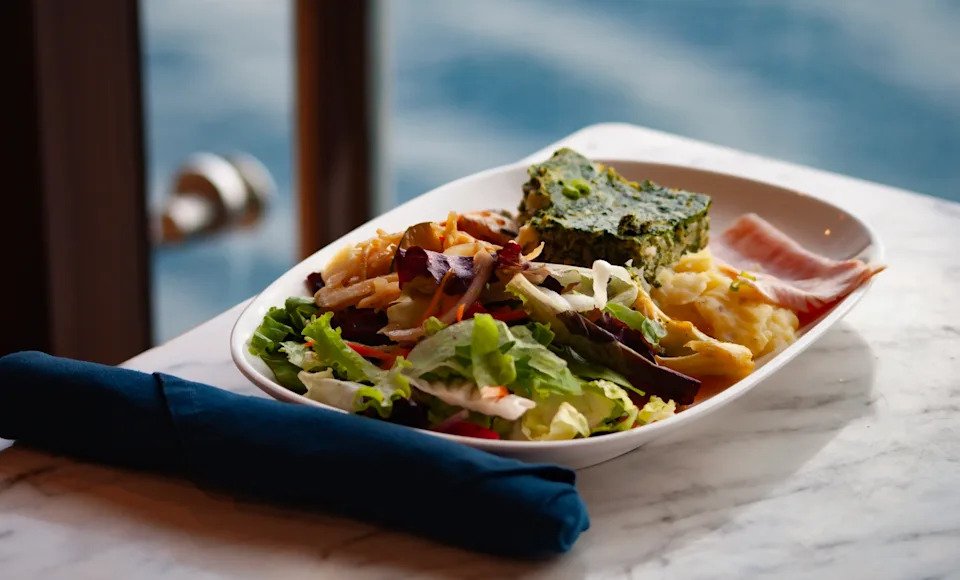
Dining Room Buffet aboard the abstract luxury cruise ship. Healthy food at modern liner concept
(Marina113 via Getty Images)
Buffet breakfast stations harbor their own distinct risks, primarily through scrambled eggs held under heat lamps. As eggs cool past safe holding temperatures, they become an ideal medium for Staphylococcus aureus, a bacteria that produces heat-stable toxins not destroyed by subsequent reheating. The shared tongs and sneeze guards at these stations also facilitate direct person-to-person transmission, which the CDC identifies as the primary vector for most onboard norovirus clusters. Ordering eggs prepared fresh on a flat-top griddle bypasses both the temperature abuse and the cross-contamination vectors.
Pre-made deli sandwiches face similar logistical challenges. Turkey clubs and ham wraps assembled hours before service depend entirely on consistent refrigeration. On open-air lido decks, solar radiation can push surface temperatures well beyond safe limits even if the ambient air feels moderate. Requesting sandwiches built to order at staffed counters ensures ingredients have not spent unmonitored time in the bacterial danger zone between 40 and 140 degrees Fahrenheit.

Soft cheeses including Brie, Camembert, and blue cheese demand precise humidity and temperature controls rarely sustainable in a high-traffic buffet environment. These unpasteurized or semi-soft varieties are highly susceptible to Listeria monocytogenes, which continues to grow even at refrigerator temperatures and poses severe risks to pregnant travelers and older adults. Hard cheeses or individually sealed portions offer a biologically stable alternative.
Cream-based dishes such as Alfredo sauces, seafood bisques, and chowders degrade rapidly once removed from active heat. The dense, rich composition masks early olfactory signs of spoilage, meaning passengers cannot rely on smell to detect bacterial proliferation. Freshly plated soups delivered directly from the kitchen line maintain thermal safety far better than large batches sitting in steam tables.

Produce introduces agricultural hazards compounded by maritime conditions. Pre-cut fruit, particularly melons like cantaloupe, transfers bacteria from the porous rind directly into the moist flesh during slicing. Once cut, the fruit lacks the protective skin barrier, allowing rapid microbial colonization in humid environments. Whole fruits peeled by the passenger or cut to order eliminate this exposure pathway.
Leafy greens at salad bars suffer from both inadequate washing protocols prior to boarding and continuous handling by hundreds of passengers. Wilted lettuce indicates cellular breakdown and prolonged temperature exposure. Packaged salads prepared in the main galley under controlled sanitation standards carry substantially less risk than open bins.
Mayonnaise-based salads containing tuna, chicken, or egg require uninterrupted refrigeration. Commercial mayonnaise itself is acidic and relatively stable, but the proteins mixed into it create a perishable matrix that spoils in under two hours if left unchilled. Visual inspection cannot confirm whether a potato salad has maintained safe temperatures throughout a port excursion day.

Beyond individual food items, the structural reality of cruise medicine amplifies every dietary risk. Ships typically staff a small medical center designed for stabilization and triage, not for managing mass casualty foodborne events. Intravenous fluids and basic antibiotics constitute the standard formulary, leaving severe cases dependent on costly emergency evacuations or diversion to the nearest port.
Passengers should review their ticket contracts before sailing. These documents contain specific liability disclaimers and strict documentation requirements for filing illness claims. Reporting symptoms immediately to the ship’s medical staff creates the necessary paper trail, as delayed reporting frequently invalidates legal recourse.

Hand hygiene remains the most effective defense against the person-to-person transmission that drives the majority of onboard outbreaks. Alcohol-based sanitizers fail to neutralize norovirus; only thorough washing with soap and water disrupts the viral capsid.
The CDC updated its Vessel Sanitation Program operations manual in mid-2026 to reflect revised inspection protocols for ships embarking on extended itineraries without intermediate port calls, tightening scrutiny on how galleys manage provisions over longer voyages.