The Bernie Sanders To-Do List Has a $2,400 Promise Reconciliation Cannot Pass
Sanders says the election gave Democrats a mandate for the list. The polls, the money and the procedure each fail a check against their own sources.
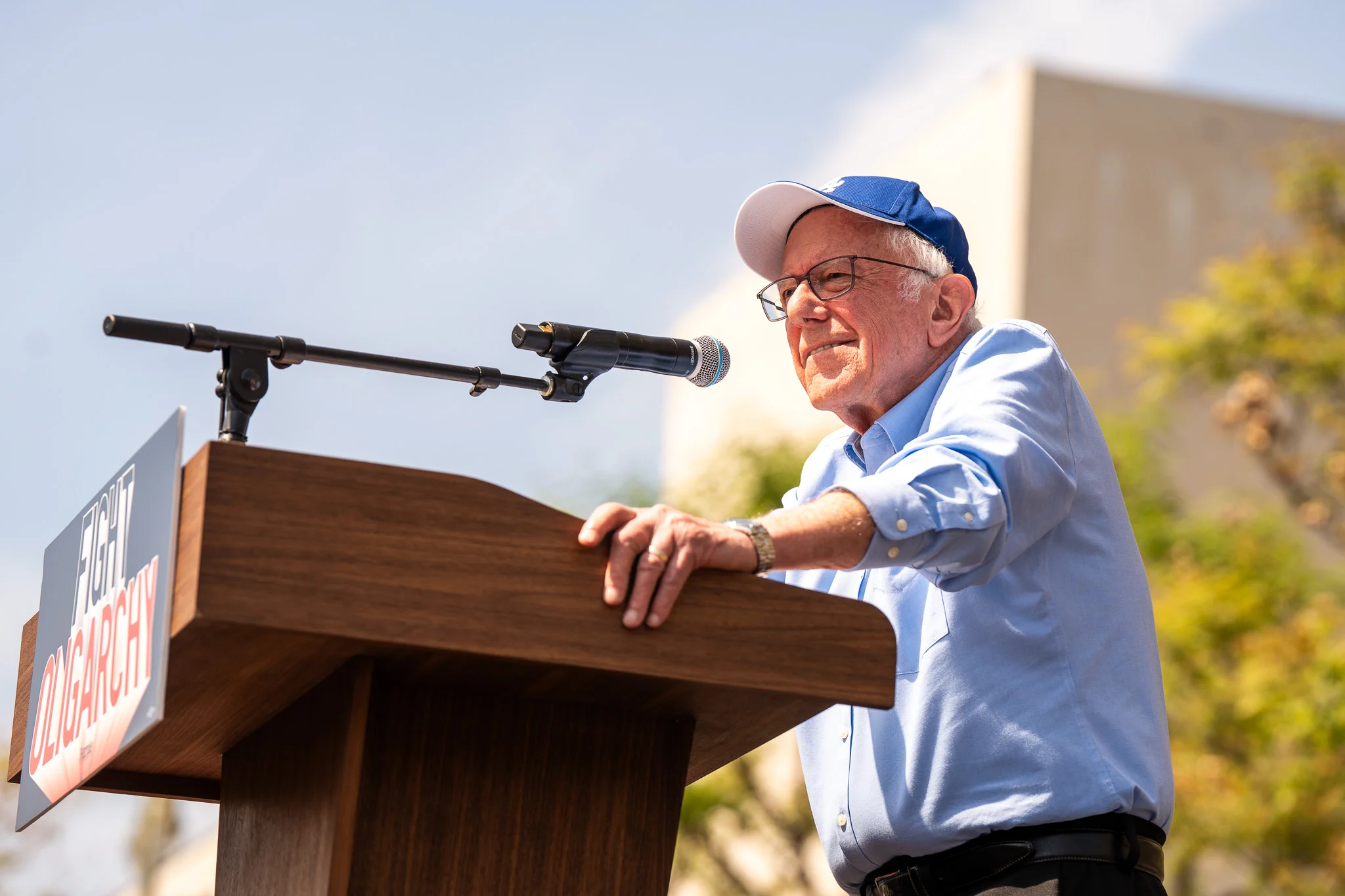
Bernie Sanders told Democrats on November 5 that the midterms handed them a mandate, and the Bernie Sanders to-do list is the program he set out for the new Congress: a 5 percent tax on billionaires, Medicare for All, a $20 minimum wage, a $2,400-a-year Social Security increase and a 10 percent cap on credit-card interest. He says 51 Senate votes are enough to carry the Medicare steps. Reconciliation is the vehicle. But the mandate, the money and the procedure each fail a check that the list’s own sources supply.
Sanders cited an Associated Press survey in which 80 percent of registered voters said they wanted “complete and total upheaval” or “substantial change,” including 58 percent of Republicans. The figure records a mood. The same Republicans who want upheaval oppose Medicare for All by two to one. The Kaiser Family Foundation’s October poll found support at 66 percent overall, falling to 52 percent when voters were told it would eliminate private insurers. Sixty-four percent opposed it on higher taxes, and 76 percent on delays. An Axios-Ipsos poll in late September put support at 43 percent, with 32 percent unsure.
Sanders’ Senate op-ed scores the 5 percent billionaire tax at $4.4 trillion over ten years, using an analysis by economists Emmanuel Saez and Gabriel Zucman that assumes 10 percent of the tax is lost to avoidance. The Tax Foundation puts the same tax at $3.3 trillion, assuming about a third is avoided. That leaves a $1.1 trillion spread on the list’s funding source. In the first year the tax would raise about $368.5 billion, by the Saez and Zucman figures. Sanders’ own bill pays $3,000 to every person in a household earning $150,000 or less, which is $12,000 for a family of four in year one. At $3,000 a head, the first year’s revenue covers about 123 million recipients. The median household income is $83,730, so well over half of all households qualify. The same $4.4 trillion is also promised for seven million housing units, tuition-free public college, childcare for 13 million children, repealing $1 trillion in health cuts and raising teacher pay.


“Forget the payment of $12K to working-class families,” a Reddit user wrote on November 6. “Give us healthcare with no insurance company involvement, fix Social Security.” The comment treats the $12,000 as the smaller prize and the health system as the larger one. That reverses the list’s order. The payment comes first in Sanders’ essay, and Medicare for All sits further down as a goal whose first step is lowering the Medicare age to 55.
California tested the Bernie Sanders wealth tax two days before the essay appeared. The tax lost. Proposition 40, a one-time 5 percent tax on billionaires that Sanders campaigned for at three rallies, went down 54 percent to 46 percent with about three-quarters of the vote counted, a result the Decision Desk HQ projection called overnight on November 6 to 7. Opponents spent more than $333 million against it, including $102 million from Google co-founder Sergey Brin. Governor Gavin Newsom opposed it, and the union that backed it appeared to concede before the polls had closed. Voters also passed Proposition 42, which would ban wealth taxes in the state constitution, by about 52.6 percent. Sanders’ essay, published two days after the vote, never mentions California. San Francisco voted 55 percent yes and Los Angeles 53 percent yes, while Santa Clara County mirrored the statewide result, 55 to 45 against.
Sanders’ essay says the Medicare steps “can be accomplished with 51 votes in the Senate, through the reconciliation process.” The Bernie Sanders reconciliation claim is carefully placed: it attaches to lowering the Medicare age to 55 and adding dental, vision and hearing coverage. The Social Security expansion has no such vehicle. Under the Congressional Budget Act, a reconciliation provision is extraneous if it “contains recommendations with respect to the Social Security Old Age, Survivors, or Disability Insurance programs.” Striking it takes a 60-vote waiver. The Senate parliamentarian used the same rule to strike provisions from the 2025 reconciliation law in June, and in 2021 a $15 minimum wage fell to it when a waiver failed 42 to 58. The tax side of the plan might still ride reconciliation as a revenue change, but the benefit increase itself cannot, and the bill as a package contains Social Security recommendations. The $20 wage Sanders wants has no federal bill that reaches it, and it would need 60 votes too.
Sanders’ November 7 post said he would raise benefits by “scrapping the cap.” The bill behind the promise, the Social Security Expansion Act, applies the payroll tax only to income above $250,000. The band between the current $184,500 wage base and $250,000 stays untaxed, a $65,500 stretch of earnings that pays nothing extra, while the bill also taxes investment and business income above $200,000 or $250,000. The $2,400-a-year increase and the claim of solvency “for generations” rest on a 2023 estimate by the Social Security Administration’s chief actuary. The estimate covered the full package in an earlier version of the bill, not the wage provision alone.
Marc Goldwein of the Committee for a Responsible Federal Budget wrote on October 15 that “the math doesn’t quite math” on the Bernie Sanders Social Security figures. The Roosevelt Institute found that eliminating the cap closes 67 percent of the program’s 75-year funding gap, falling to 48 percent if benefits also rise. A community note on Sanders’ post cited a Social Security Administration model in which uncapping alone produces surpluses only through 2029. The trustees’ 2026 report says the retirement trust fund pays full benefits only until 2032, after which incoming taxes cover about 78 percent. Sanders himself warned in an August 3 letter that benefits would be cut 22 percent if Congress didn’t act within six years.
“Problem is lifting the cap doesn’t even cover the current Social Security deficit (I believe it would cover ~60% of the shortfall),” a Reddit user wrote on November 8, in a thread on the $2,400 promise. The estimate lands close to the Roosevelt Institute’s 67 percent, and well short of the solvency Sanders claims. The thread drew 452 comments that afternoon.
Nearly four in five voters support a 10 percent cap on credit-card interest, according to a Wall Street Journal poll, and a Harvard CAPS/Harris survey in May put support for a one-year cap at 72 percent. The Sanders-Hawley bill for a five-year cap has sat in committee since February 2025 without a hearing or a markup. President Donald Trump promised a one-year cap on January 9, 2026, effective January 20, then let the deadline pass with no cap in place. Average card interest runs about 21 percent. Households owe $1.263 trillion on cards. The Vanderbilt economist Brian Shearer puts the saving from a 10 percent cap at $100 billion a year. The banking industry says two-thirds of people carrying balances could lose their cards, and JPMorgan’s Jamie Dimon has called a cap “catastrophic.”
The Bernie Sanders data center moratorium is the only item voters actually decided on Tuesday, and it is the list’s most democratically grounded item. Forty-one ballot measures in ten states put data centers to a vote on November 3. Voters rebuffed them in all but one. Fifty-six percent of voters told the CNBC voter poll that artificial intelligence and data centers were a crucial or major factor in their vote, and Texas, Ohio and Georgia elected governors who campaigned on restricting them. Goldman Sachs expects states whose Democrats support a moratorium to hold 45 percent of planned American data-center capacity by January. The Sanders-Alexandria Ocasio-Cortez moratorium bill from March was rejected by most lawmakers in both parties. Democrats are divided over a blanket freeze, and Trump is expected to veto it.
The Medicare step would land in a system its own users already find thin. “As someone who is on Medicare, people will be extremely disappointed if the present Medicare system is all the medical insurance they have,” a reader wrote in the comments on a Common Dreams report of the Kaiser poll on October 7. “No glasses coverage, no dental, very limited prescription drug coverage.” Lowering the Medicare age to 55 would bring younger people into that system, with dental, vision and hearing added. The broader Bernie Sanders Medicare for All bill, H.R. 3069 in the House and S. 1506 in the Senate, has 104 House and 16 Senate cosponsors and has never been voted on.
Sanders told MS NOW’s Chris Hayes on November 5 that he was “not absolutely certain” Trump would veto Medicare for All. The rest faces the same question. “But neither your nor Sanders’ wishlists are going to be enacted into law in the next 2 years because trump will veto it and there will not be enough votes in Congress to get the 2/3rds necessary to overcome the veto,” a Reddit user wrote on November 6. An override needs 67 Senate votes and about 290 in the House, against 54 Democratic Senate seats and a House count that stood at 252 to 162 on November 7.