Cinnamon British Shorthair Cats: Why Their Coat Color Changes
The rare recessive gene behind the breed's warm reddish-brown coat explains why kittens look drastically different as adults.
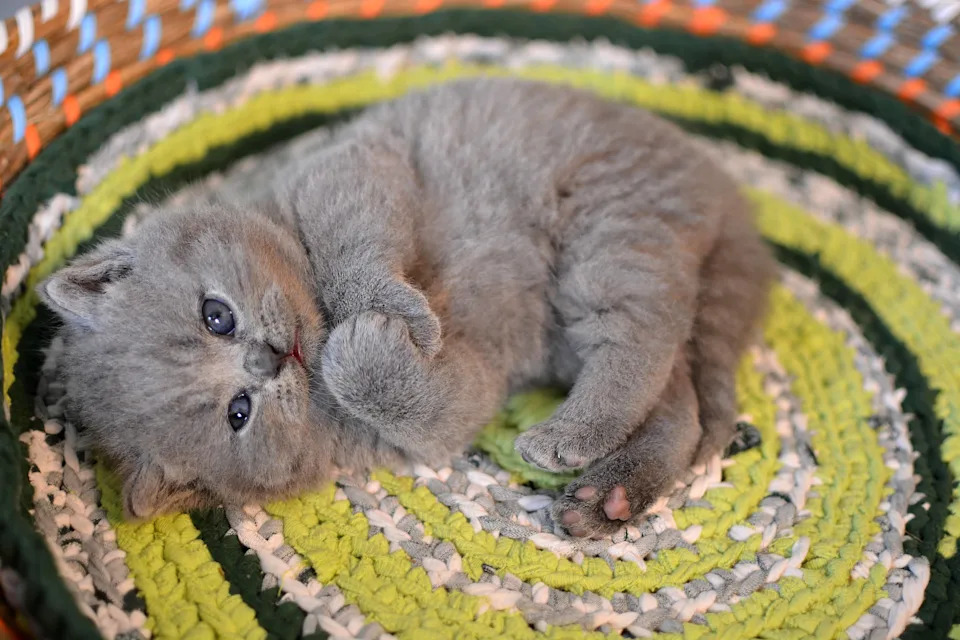
A cinnamon-colored British Shorthair named Cookie recently drew widespread attention online after video showed his transformation from a pale kitten into a dense, amber-eyed adult. Beyond the viral appeal, his development illustrates a genetic reality that frequently catches new owners off guard: British Shorthair kittens rarely finish looking like their adult selves.
The breed’s signature plush coat takes up to three years to fully mature. Unlike most domestic shorthairs that reach their final physical form by 12 months, British Shorthairs develop slowly. Their fur grows in exceptionally dense and crisp, standing away from the body rather than lying flat. This structural density requires prolonged growth cycles, which is why kittens often appear disproportionately small or lightly colored compared to the heavy, rounded adults they eventually become.
Coat color shifts during this maturation are driven by pigment distribution rather than simple darkening. The cinnamon coloration itself is rare within the breed. It results from a recessive mutation of the brown gene locus—specifically the b’ allele—which modifies black eumelanin into a warm, reddish-brown tone. Because both parents must carry the recessive gene for a kitten to express it, cinnamon British Shorthairs remain far less common than the breed’s traditional blue (gray) or black variants.


As these cats age, melanin production stabilizes and concentrates along the hair shaft. Kittens born with faint golden or cinnamon tones frequently deepen in color as the undercoat fills out. Blue-coated kittens experience similar fluctuations, sometimes lightening to silver or darkening to slate. Tabby-patterned British Shorthairs present another variable: juvenile ghost markings often fade entirely as the solid-color genes assert dominance over the coat, leaving adults with uniform pelts despite patterned kittenhood appearances.
Eye color follows its own delayed timeline. All kittens are born with blue eyes due to a lack of iris pigmentation at birth. In cinnamon varieties, the eyes typically transition to copper or deep amber between six and twelve months as melanocytes populate the iris. Cookie’s matching amber eyes represent the expected phenotype for the cinnamon coat variant, though the exact shade can continue to intensify through the cat’s second year.
Originating in Britain during the late 19th century, the British Shorthair was initially bred almost exclusively in blue. The introduction of cinnamon, chocolate, lilac, and fawn colors occurred decades later through controlled outcrossing programs designed to expand the breed’s genetic diversity while maintaining its distinctively broad skull and cobby body structure. The Cat Fanciers’ Association and The International Cat Association now recognize the cinnamon variation, though breeding them requires specific genetic testing to confirm carrier status before pairing.
Adult male British Shorthairs typically weigh between 12 and 18 pounds, with females ranging from 8 to 12 pounds. Their heavy bone structure combined with the thick double coat creates the characteristic “teddy bear” silhouette that defines the breed standard. Owners should anticipate regular brushing, particularly during seasonal shedding periods, as the dense undercoat mats easily without maintenance.
The cinnamon variant continues to gain traction among U.S. breeders, though waitlists for genetically tested, health-screened kittens routinely stretch several months into 2026.