Thomas Markle Arrested on an Affidavit Built From Film Negatives, a Kodak Code and a Pillow Logo
The complaint charges one count of possession. The affidavit behind it names three witnesses, two storage units held since 2008, and a film stock manufactured outside California.
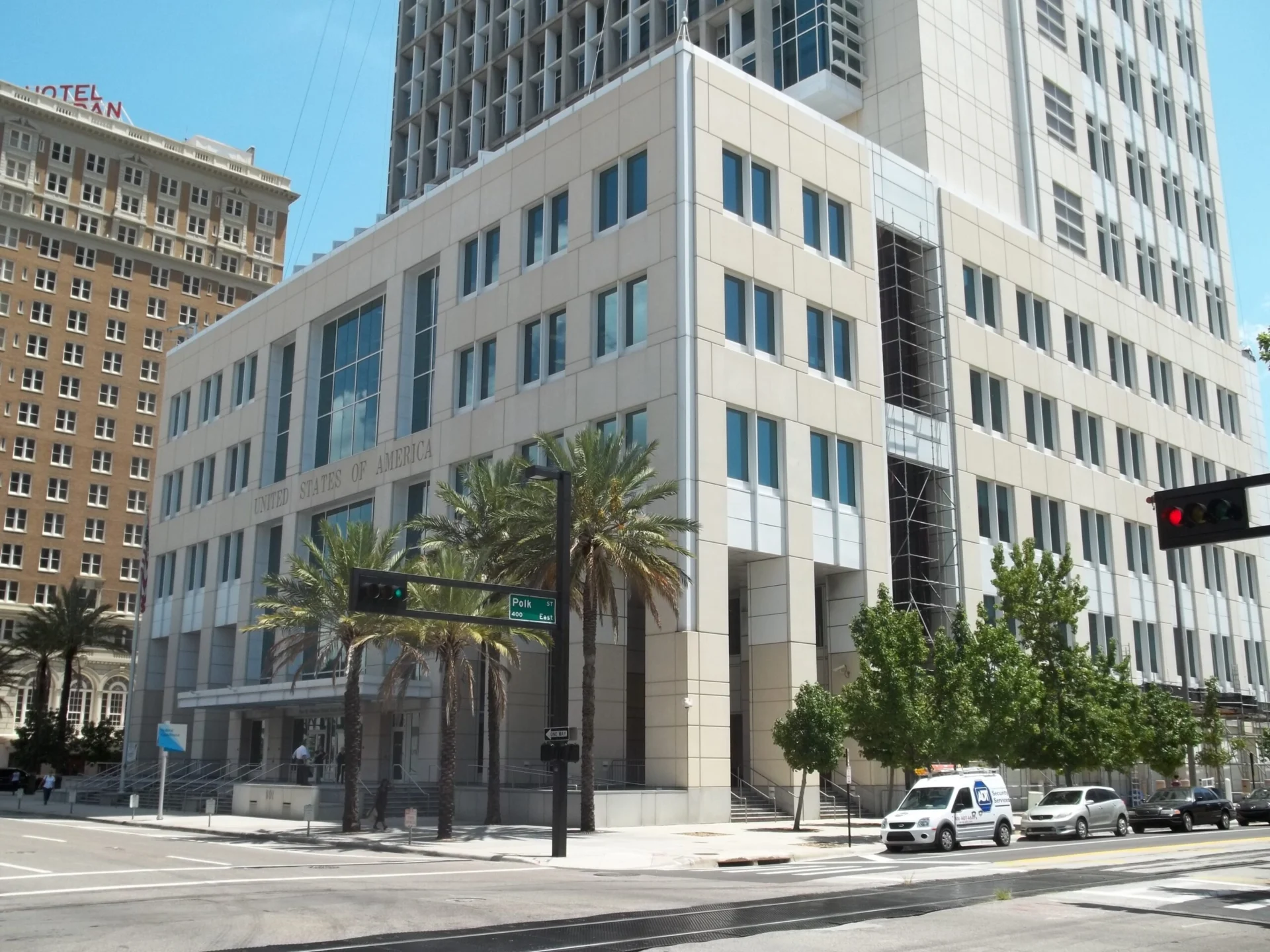
Thomas Markle was arrested on Friday on a federal complaint charging him with one count of possession of child pornography. The complaint, filed on Thursday in Los Angeles, rests on a 15-page FBI affidavit that names three witnesses and traces the case to two storage units he had rented since 2008.
The arrest took place at Maravida Senior Living, a senior living facility in North Lakeland, Florida. He was due in federal court in Tampa at 1:30 p.m. on Friday, according to Page Six, and had not entered a plea. The Justice Department says the material included sexually explicit photographs of Markle himself with prepubescent girls, and adds that a criminal complaint “merely contains allegations” — Markle is presumed innocent until proven guilty beyond a reasonable doubt.
The affidavit opens in the Philippines. In October, a witness signed a sworn statement saying they had found suspected child sexual abuse material among Markle’s possessions there. A second witness told investigators about a storage unit in Los Angeles. The affidavit names neither witness.
Judge Daniel S. Roberts signed a warrant for the first unit on October 30. Agents found boxes marked “Tom Markle” and took about 27 items — slides, film negatives and books. The unit had been rented since about July 2008, the last payment by autopay on October 14. A second warrant, signed by Judge Rozella A. Oliver on November 4, produced about 51 more items. The unit had been rented since about June 2008 and was tied to Markle by mail addressed to him and an international driver’s permit carrying his name, date of birth and photograph. The last autopay there went out on October 20. Together, the storage units Thomas Markle rented yielded about 78 items. An agent in the FBI’s violent crimes against children unit who viewed the 35mm negative strips identified about 18 images that appeared to constitute child pornography.
On November 2, agents digitised the negatives with a Nikon LS-5000 film scanner, a process the affidavit says does not alter their content. The edge markings read “K·ODAK CP 100 594,” and by Kodak’s own guide to dating its film stock, the dot’s position shows the stock was manufactured in New York or Colorado — outside California. The affidavit draws the line: film made outside California and possessed in Los Angeles had travelled in interstate commerce, the element that makes the possession a federal matter.
One image gave the agents a place. A pillow in the frame carried the logo “Anahaw Lodge,” a name the affidavit traces to a motel chain in the Philippines built by Angelo King, who reshaped the country’s motel industry in the 1970s and 1980s. The man in the images appears to be in his 30s or 40s. A third witness, who has known Markle since the 1970s, was interviewed on November 5. He looked at redacted versions showing only the adult man and identified him as Markle. Judge Oliver viewed the three images herself before signing, then sealed them in an envelope and initialled across it. Taken together, the details point to images far older than the arrest, though the affidavit dates none of them precisely.
Thomas Markle arrested Friday in Florida faces a statutory maximum of 20 years in federal prison if convicted. That is not the standard maximum for possession. Under the federal statute, possession carries up to 10 years — except where an image involves a prepubescent minor or a minor under 12, when the maximum doubles. The Justice Department’s description of the photographs is what sets the higher figure.
The Philippine investigation has recovered far more material, and established less about who it belongs to. Interior Secretary Jonvic Remulla said on Thursday that investigators there had counted about 7,500 photographs and one video from devices linked to Markle. The material showed underage boys and girls of Asian, Latina and European descent, some as young as 10 or 11. Nine mobile phones, three SD cards, five hard drives and one camera were examined; suspected abuse material was confirmed in three of the SD cards and one of the five phones. Ownership of the devices has not been established. Remulla called the material “the most deplorable display of impunity towards sexual activity that I have ever seen.”
The same briefing named Markle’s son, Thomas Markle Jr., 60, a person of interest — not a suspect — after witnesses said underage girls were being brought to his house in Cebu. He told investigators they were making TikTok videos; police checked his account and found no underage girls in it. He remains in Cebu. The investigation began after he found material while looking for a cellphone at a friend’s house in Cordova, where his father’s belongings had been left. The FBI is also examining claims of a second find at a storage container near Markle’s former home in Rosarito Beach, Mexico, according to The Times.
In January 2019, the Metropolitan Police received a letter addressed to its protection command raising concerns about the Duchess of Sussex’s security, containing claims about alleged offending outside Britain. The police passed it to the Sussexes’ office for awareness and did not share it with other law enforcement. On October 29, the force voluntarily referred itself to the Independent Office for Police Conduct, which ordered an independent investigation into the failure to pass the letter on. The letter was written by Roslyn Loveless, Markle’s former wife and the mother of Thomas Jr. and Samantha, who has since died.
Markle is Meghan Markle’s father, and the two have not spoken since before her wedding in May 2018. On October 22, Meghan said she was “deeply distressed at the news that has come to light in the last 24 hours, and my thoughts are with any children who may have been harmed.” She said a letter had been sent to the Metropolitan Police in 2018, and that her distance from her father and her choice not to let him have contact with her children “was for one reason: to protect them.”
Markle denies the allegations. He told the Daily Mail he was “shocked” and “hurt.” He told the Mail on Sunday he had “never had sex with anyone under the age of 18,” while admitting he had travelled to the Philippines at least twice and paid for sex there. “If there is anything bad on there, it was put there by someone else,” he said of his computer. His daughter Samantha called the allegations a set-up: “I believe this is a set-up.”
The first reactions under the Los Angeles Times’ Facebook post, where the arrest was announced on Friday, split in four directions. Sher Edwards wrote: “How truly horrifying to have a father like this. Put him in the darkest deepest cell and toss the key.” Mary Bosch answered the paper rather than the news: “You just had to include Meghan, didn’t you????”
Bjoe Fredericks proposed the defence theory himself: “Someone placed them there & set him up in an attempt to defraud extort abuse his estate or that of his daughters estate given the notoriety? That’s the defense.” Rie Cur, whose comment drew the most reactions of those visible, wrote: “He ended up in Florida. Of course he did.”
The four sit at odds with the official record. Edwards’s call for the darkest cell runs past the law as written: the maximum is 20 years, and that figure depends on the images being proved to show prepubescent children, and a complaint is an allegation, not a verdict. Bosch’s complaint lands on the Justice Department’s own release, which introduces Markle as Meghan’s father before it reaches the charge. Fredericks’s set-up theory is the one the affidavit meets with paper — two units paid for by autopay since 2008, three witnesses, a judge who looked at the images herself. And Cur’s Florida line is the register the coverage never records: the arrest’s geography as a punchline, while the case turns on a film code and a motel logo.
Markle’s first appearance was in Tampa, where he was arrested; the main case is prosecuted in California. The affidavit states that the investigation is active and ongoing.