Michigan Senate Race Cost $337 Million: $175 Million Against El-Sayed, and a Seven-Point Win
Outside groups spent three times as much against El-Sayed as against Rogers, most of it disclosed at the last minute. He won by seven points anyway.
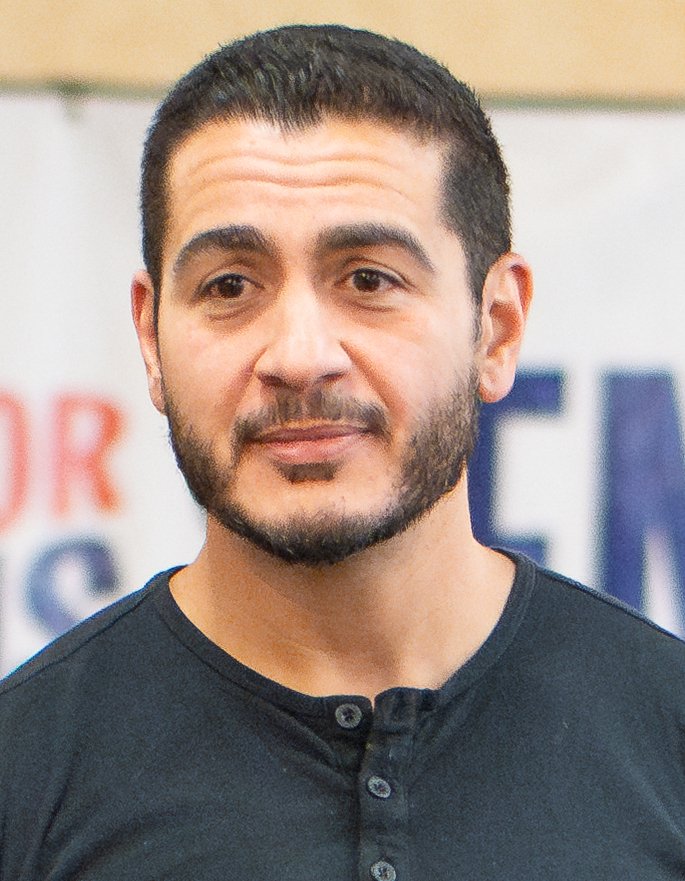
The most expensive Senate race in Michigan history ended in a seven-point win for the candidate it was spent against. Abdul El-Sayed beat Mike Rogers by seven points, 52.5 per cent to 45.5, in the Michigan Senate race, which the filings put at more than $336 million — half as much again as the $222 million record the same seat set two years earlier. Outside groups spent $330 million of it. Of that, $175 million was spent against El-Sayed. $58 million was spent against Rogers. That is three times as much negative money aimed at the winner as at the loser. And $281 million of the outside money — 85 per cent — reached the public only in last-minute filings, after the ads it paid for had already run.
AIPAC’s super PAC made the first bet. It was the biggest one. Outside groups spent about $62 million backing Haley Stevens in the Democratic primary, $33 million of it from AIPAC and its United Democracy Project, the largest primary investment the group had ever made in a single race. El-Sayed beat Stevens 48.4 per cent to 47.6. The margin was eight-tenths of a point. The Associated Press did not call it for more than 12 hours. The super PAC’s filings show about $41 million spent against him across the whole cycle. He put the figure at $42 million in his victory speech and thanked the group for the chance to beat it twice.
After the primary, a different set of groups took up the spending against him. AIPAC’s super PAC spent just over $500,000 against him directly before the general election, plus a $95,000 mailer buy in October. SLF PAC, the super PAC funded by Elon Musk, Miriam Adelson and Stephen Schwarzman, put $46.2 million against him in late filings. No Going Back PAC, funded with $200 million from MAGA Inc., spent $27.5 million against him and $8.2 million for Rogers. The Great Lakes Conservatives Fund spent $19.6 million against him. Americans for Prosperity Action spent $11.9 million against him and $15.2 million for Rogers. On his side, WinSenate spent $32.1 million against Rogers and $12.6 million for him.
The filings carry the same verdict the voters reached in fewer words. “I’m not sure any non-president has ever overcome so much spending to win anyway,” wrote a user called ceenote on Lemmy after the race was called. Another, ChunkMcHorkle, wrote: “He wants Medicare for all, he wants Trump held accountable, and he wants big money out of politics. He believes it, he preaches it, he has never deviated from it for a second as far as I know.”
The consistency held because the money was never one-sided in the way the attack ads suggested. El-Sayed raised $53.8 million himself, more than double Rogers’ $23 million, and $47.2 million of it came from individual donors against Rogers’ $15.4 million. He had vowed to take donations from individuals only, and the filings show the vow held: $405,000 from political action committees, less than one per cent of what he raised, against Rogers’ $1.29 million. His campaign spent $51.1 million. Rogers’ spent $19.4 million.
Wayne County delivered the win the ads were aimed at stopping. The county, home to Detroit, went 71 per cent to 27 for El-Sayed. Detroit itself gave him 92 per cent. Dearborn, where lines stretched across polling stations on Tuesday, went 82 per cent to 17. Washtenaw County, home to the University of Michigan, gave him 74 per cent; Ingham County, home to Michigan State, 69 per cent. Wayne County’s net margin, 311,007 votes, was 92.9 per cent of his statewide lead of 334,868. Macomb County went 50 per cent to 48 for Rogers, and he flipped four counties that voted for Trump in 2024.
In the closing days, Haley Stevens made the last move against him, from inside his own party. Stevens, who had lost the primary to him by eight-tenths of a point, reversed course after initially saying she would support the Democratic ticket and endorsed Rogers, saying she felt unwelcome by his campaign. Her reason was his too-soft commitment to Jewish voters. He won West Bloomfield, the Oakland County township at the centre of that argument, 51.9 per cent to 46.1, taking 11 of its 20 precincts. “Oh no how unfortunate. Hailey better cash that AIPAC check quick,” wrote resipsaloquitur, a user on Lemmy, the day after the race was called.
Some of the money was never meant to be seen before the vote. The New York Times reported that AIPAC’s super PAC planned to move up to $9 million to the Great Lakes Conservatives Fund, which backed Rogers, after the October 14 disclosure deadline, so the transfer would not appear in public filings until after Election Day. Rogers’ allies had wanted distance from AIPAC, and routing the money through a second group let him benefit without its name on the ads. $281 million of the $330 million in outside spending reached the Federal Election Commission only in 24- and 48-hour notices, the last-minute filings, while $49.7 million came in regular reports. The Intercept counted $13.1 million that AIPAC’s super PAC routed to other committees, more than triple the $3.5 million it had routed the cycle before, and noted that the disclosure schedules sometimes meant voters learned who had paid for the ads only after the primary.
AIPAC announced the retreat three weeks before the election: no more formal endorsements, no more direct contributions through its political action committee, no more earmarking donations for candidates. The announcement came after a cycle in which, by one count, the group spent $84 million and $55 million of it, two-thirds, on candidates who lost, the largest single sum $32 million against El-Sayed. Lara Friedman, president of the Foundation for Middle East Peace, told The Intercept the group’s brand had become politically radioactive. The money mostly worked where it was cheap: candidates backed by pro-Israel political action committees won about nine in ten called races, most of them incumbents in safe seats. Its super PAC kept operating, and the group said it would steer its donors to candidates directly instead.
The Senate was already decided before Michigan was called. Democrats had already taken the chamber, flipping seven seats in Texas, Ohio, North Carolina, Maine, Iowa, Kansas and South Carolina, and the Associated Press did not call Michigan until 2:27 a.m. on Wednesday, more than six hours after the polls closed.
In his victory speech, El-Sayed named the machine he said he had beaten. “Tonight, Michigan, we beat a machine,” he told supporters in Detroit in the early hours of Wednesday, “and we proved once again just how big America really is.” He told Vice President JD Vance, who is constitutionally required to swear him in: “JD, habibi, there is this delicious irony in the fact that you’re constitutionally obligated to swear me in in January.” He told Rogers: “Enjoy your retirement. You chose hate, and Michigan chose hope. May we never have to see the likes of you in this state again.”
His campaign’s first major television advertisement said he had erased $700 million in medical debt in Wayne County. The $700 million was the program’s goal. It covered about 300,000 residents. By the time he left the health department in April 2025, the program had erased $41.7 million, according to records obtained under freedom-of-information law. By September 2026 it had erased about $95 million for more than 100,000 residents. Bridge Michigan’s fact-check found the campaign had overstated the results, and Stevens posted it in July, saying aspirational goals aren’t real results.
Rogers, who served seven terms in Congress, lost his second Senate race in two years. He lost to Elissa Slotkin in 2024 by fewer than 20,000 votes.