Brazil Election 2026: Lula Faces Flávio Bolsonaro in Tight Race
Rare earth minerals, U.S. tariffs and cartel designations dominate the high-stakes contest for Latin America's largest economy.
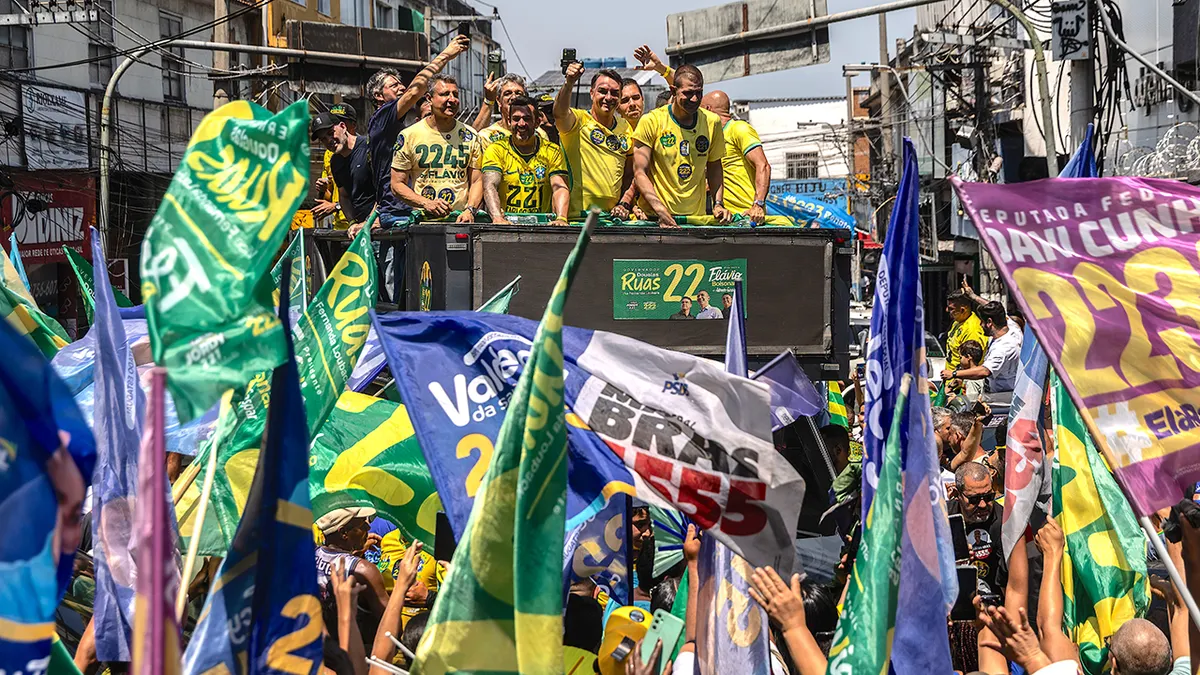
Brazilians head to the polls Sunday, Oct. 4, 2026, to decide whether Latin America’s largest economy will pivot toward Washington or deepen its commercial reliance on Beijing. President Luiz Inácio Lula da Silva faces a narrow statistical edge over right-wing challenger Sen. Flávio Bolsonaro in a first-round presidential vote that neither candidate is projected to win outright.
The race carries immediate consequences for U.S. trade policy, global supply chains and hemispheric security architecture. Brazil ranks as the world’s ninth-largest economy by nominal GDP, according to International Monetary Fund data, making it the dominant market in South America and a critical node in international agricultural and mineral exports.
Recent polling aggregates from Datafolha place Lula at 42% and Flávio Bolsonaro at roughly 38%, within the survey’s two-point margin of error. Under Brazilian electoral law, a candidate must secure more than 50% of valid votes to avoid a runoff. Electoral strategists broadly expect a second round scheduled for late October, where aggregated models show the incumbent holding a slim three-point advantage.

Polling accuracy remains a central concern. Roberto Reis, an electoral strategist analyzing aggregator data, noted that Datafolha has historically underestimated opposition candidates running against Lula’s Workers’ Party (PT). The institute missed Jair Bolsonaro’s final 2018 runoff tally by seven percentage points. Alternative aggregators, including MRT News, currently project a much tighter contest, with some modeling showing Flávio Bolsonaro leading a hypothetical runoff 45% to 44%.
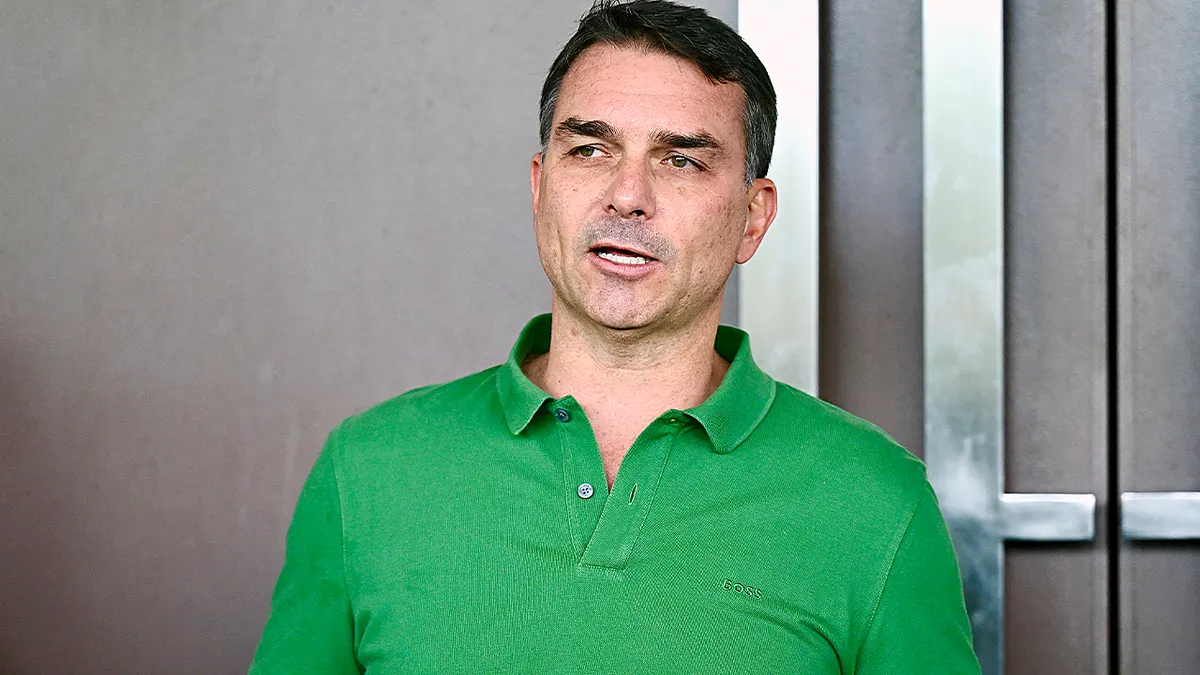
Flávio Bolsonaro ascended to the top of the ticket after his father, former President Jair Bolsonaro, endorsed him while serving house arrest. The younger Bolsonaro built his campaign heavily around alignment with the Trump administration, positioning himself as a reliable partner for U.S. economic and security interests in the Western Hemisphere.
That alignment accelerated in May when Flávio Bolsonaro met President Donald Trump at the White House. Discussions focused on tariffs, organized crime and Brazil’s vast reserves of rare earth elements and critical minerals—resources essential for reducing U.S. and European dependence on Chinese supply chains. Shortly after, on May 28, the U.S. State Department formally designated Brazil’s two most powerful criminal syndicates, the First Capital Command (PCC) and Red Command (Comando Vermelho), as foreign terrorist organizations under Section 219 of the Immigration and Nationality Act.
The designations infuriated the Lula administration, which viewed the move as direct interference in domestic affairs designed to bolster the Bolsonaro campaign. Organized crime remains a severe vulnerability for the incumbent. Despite Lula’s emphasis on social programs, cartel violence and territorial control by groups like the PCC have expanded in several major urban centers during his current term.
Economic friction between Brasília and Washington intensified over the summer. In July, the U.S. imposed sweeping 25% tariffs on approximately $7 billion worth of Brazilian goods. Washington also restricted most new permanent visa applications from Brazil, tightening immigration pathways. Lula’s government has attempted to negotiate relief with limited success, straining diplomatic channels further.
Flávio Bolsonaro has proposed countering these frictions through a bilateral free-trade agreement with the United States, potentially expanding it into a broader hemispheric pact. His platform emphasizes deep cooperation on critical minerals extraction and export, directly targeting the strategic vulnerabilities the Trump administration seeks to resolve.
A victory for the PT would signal continuity in a foreign policy anchored by Beijing. China remains Brazil’s largest trading partner. Brazilian agricultural exports to China exceeded $55 billion in 2025, driven largely by soybeans, beef and iron ore. Lula has aggressively defended this relationship, frequently clashing with Western allies over trade autonomy and maintaining a posture on Israel and Gaza that directly defies U.S. diplomatic priorities.
Implementing either candidate’s agenda faces structural hurdles. Brazil’s fragmented Congress requires broad coalition-building to pass legislation, and the country’s entrenched bureaucracy frequently slows executive directives. Agribusiness and mining conglomerates, which generate massive portions of Brazil’s export revenue, hold significant leverage regardless of who occupies the Planalto Palace.
The broader regional landscape amplifies the stakes. Over the past two years, conservative and center-right candidates have secured victories in Colombia, Chile and Peru, shifting the political center of gravity in South America. While left-leaning governments remain in power in Mexico, Nicaragua, Uruguay and Cuba, none command Brazil’s economic weight or geopolitical influence. A Flávio Bolsonaro victory would effectively complete a rightward realignment across the continent’s most vital markets.
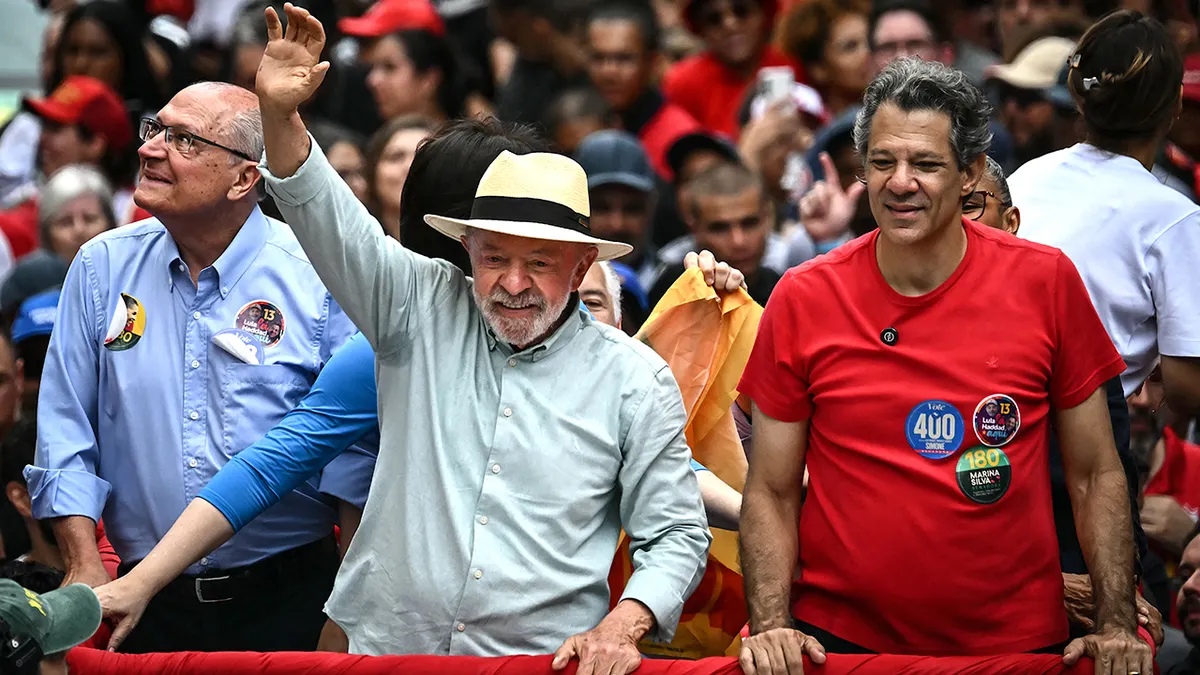
Lula campaigned Saturday in São Paulo alongside Vice President Geraldo Alckmin and Fernando Haddad, the PT’s candidate for São Paulo governor, attempting to consolidate support in the state that serves as Brazil’s industrial engine.
Voting stations opened at 8 a.m. local time Sunday. Brazil’s Superior Electoral Court (TSE) expects preliminary first-round results to be released within hours of the 5 p.m. voting deadline, given the country’s fully electronic ballot system. If no candidate surpasses the 50% threshold, the top two finishers will advance to a runoff.