

Global risk markets face a critical test this week as impending United States inflation readings threaten to reshape interest-rate expectations, challenging Bitcoin’s ability to sustain its breakout levels above $82,500.
The September Consumer Price Index report, scheduled for release Wednesday, lands as investors reassess borrowing costs ahead of the Federal Open Market Committee meeting on Oct. 28. Economists project headline annual inflation accelerated to 3.7% from August’s 3.4%, driven primarily by persistent volatility in energy markets and escalating tensions in the Middle East. Wholesale price pressure is also projected to climb, with Thursday’s Producer Price Index estimated to increase 0.3% month-on-month compared to 0.2% previously.
Lower inflation data often fuels rallies across risk-sensitive instruments by easing pressure on the Federal Reserve to maintain tight monetary conditions. KCM Trade chief market analyst Tim Waterer noted that a downside surprise in consumer prices represents the most immediate catalyst for risk appetite, pointing out that softer prints would temper expectations for monetary tightening while lowering pressure on real yields.


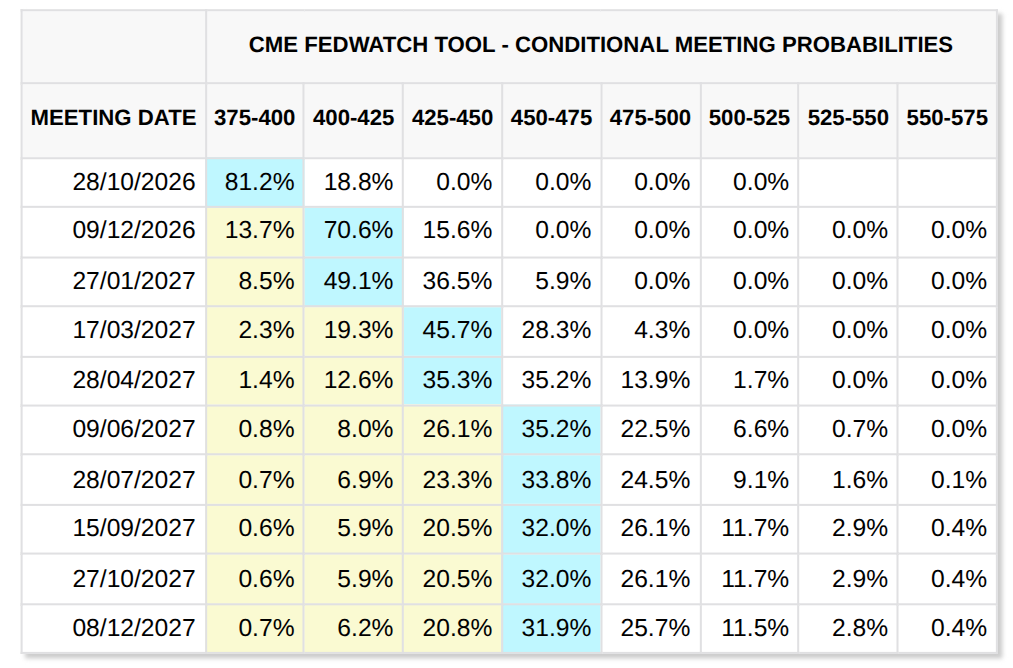
Pricing in interest-rate futures reflects a cautious outlook. The CME FedWatch tool indicates an 18.8% probability of a rate hike at the upcoming October gathering, keeping the benchmark target between 3.75% and 4.00%. However, traders assign a 70.6% probability to a quarter-point rate increase at the subsequent policy meeting in December, setting up an environment where hot inflation data could quickly pull forward expectations of tighter liquidity.
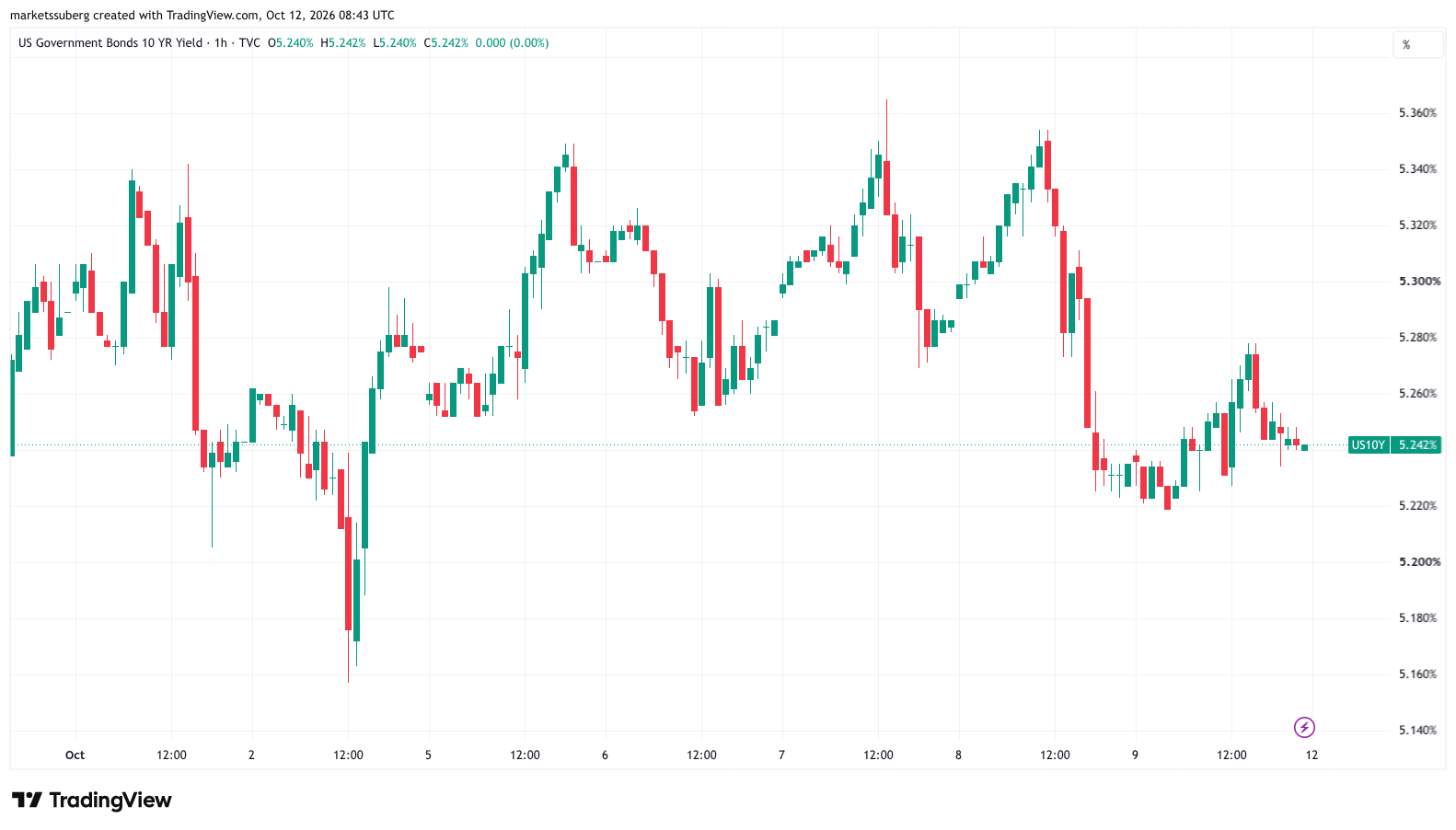
Fixed-income markets have offered slight relief after testing extreme levels. Yields on benchmark 10-year Treasury notes traded around 5.24% on Monday after retreating from 24-year peaks, while 30-year paper sat near 5.60%.
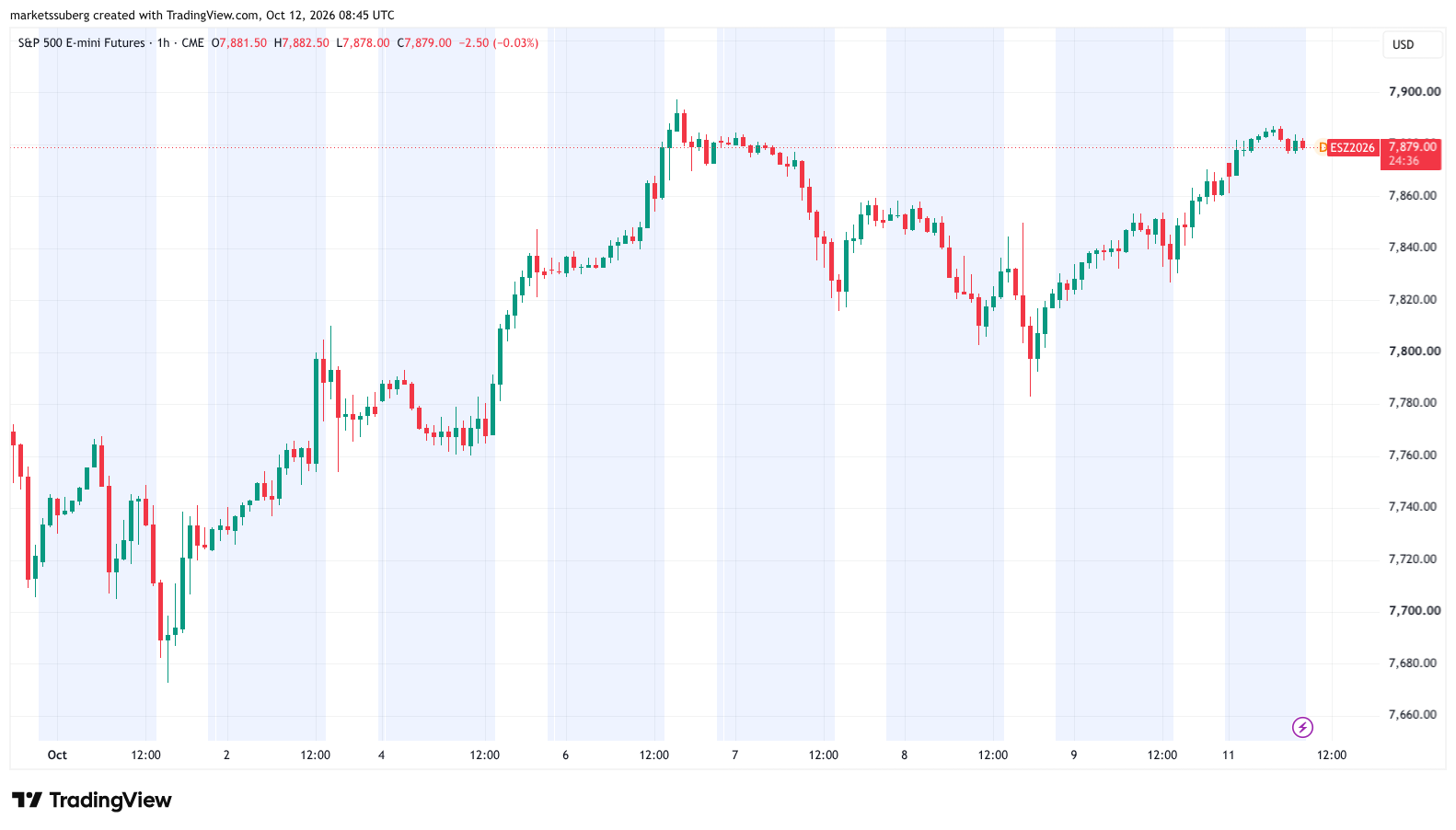
Equity benchmarks showed resilience despite elevated borrowing costs. S&P 500 futures gained 0.25% early in the week, hovering roughly 30 points below record territory.
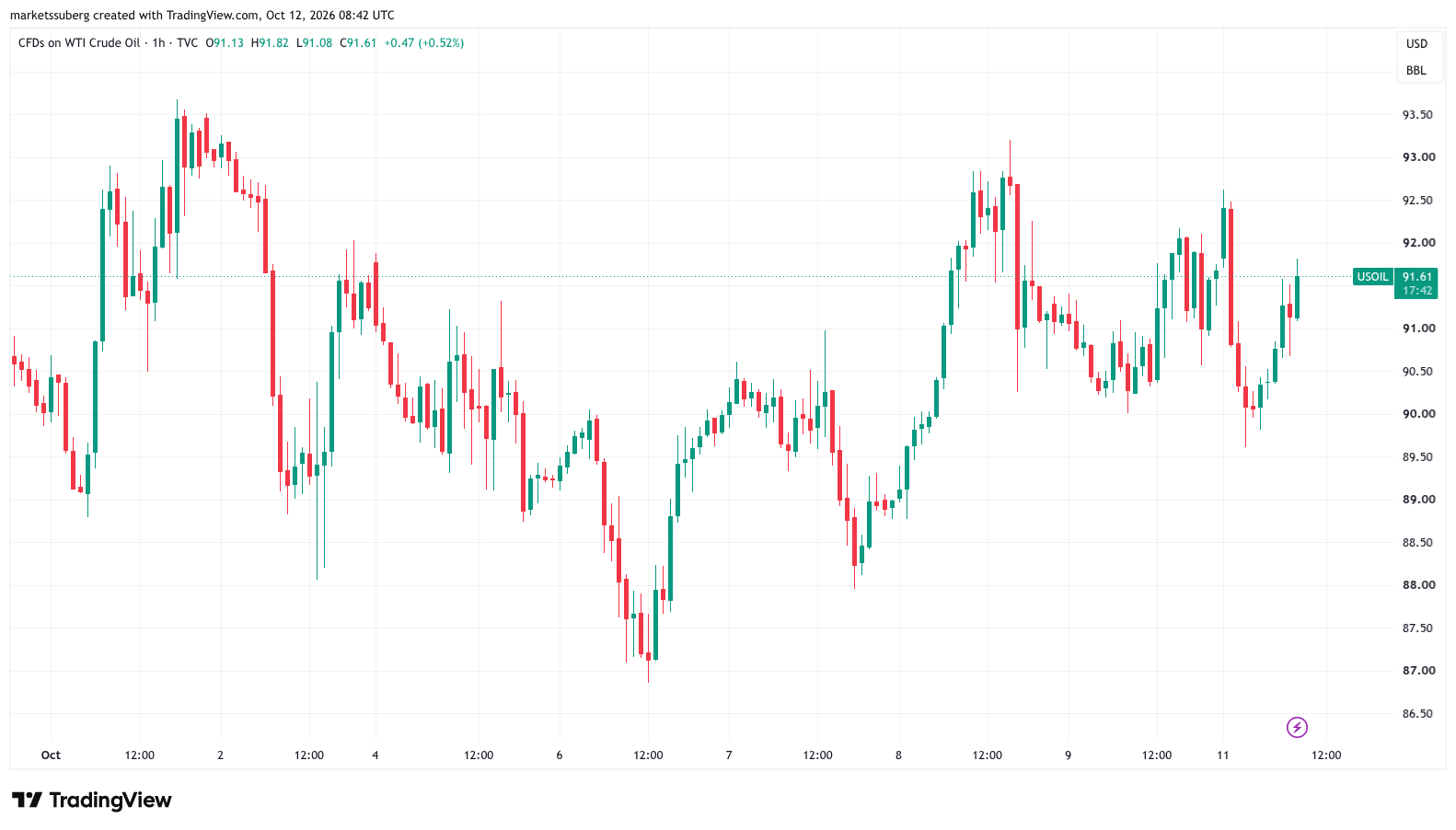
Energy markets remain an unpredictable variable for economic policymakers. West Texas Intermediate crude traded near $91.50 per barrel Monday after recovering from an intraday low of $89.60. An agreement announced by President Donald Trump to acquire 300,000 tons of Russian diesel provoked immediate domestic political scrutiny while generating modest price movement. The White House also asserted an “energy ceasefire” between Moscow and Kyiv, though Ukrainian President Volodymyr Zelenskyy stated he had no knowledge of such an accord.
Retail fuel costs continue to strain consumers, with AAA figures showing diesel averaging $6.26 per gallon, slightly below the record mark of $6.52 posted on Sept. 22. PVM analyst Tamas Varga observed that Moscow’s partial relaxation of diesel export curbs permits 500,000 tonnes—roughly 3.7 million barrels—to enter world supply, roughly matching a single day of total American consumption.
Against this complex macroeconomic backdrop, digital assets have held ground at critical technical thresholds. Bitcoin concluded its weekly candle around $83,700 on Bitstamp, absorbing a 3.2% loss over seven days while preserving structural support at $82,500.
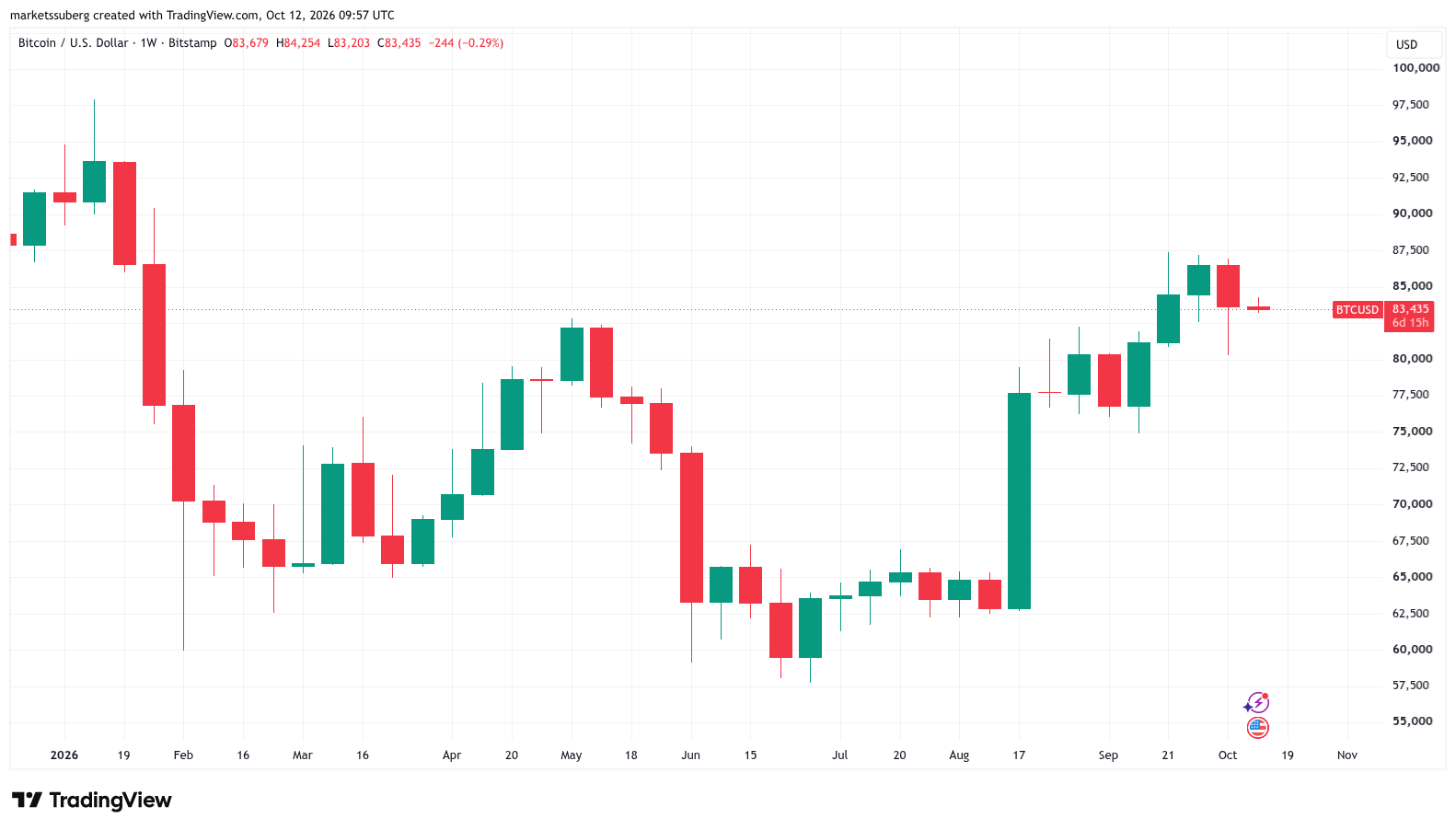
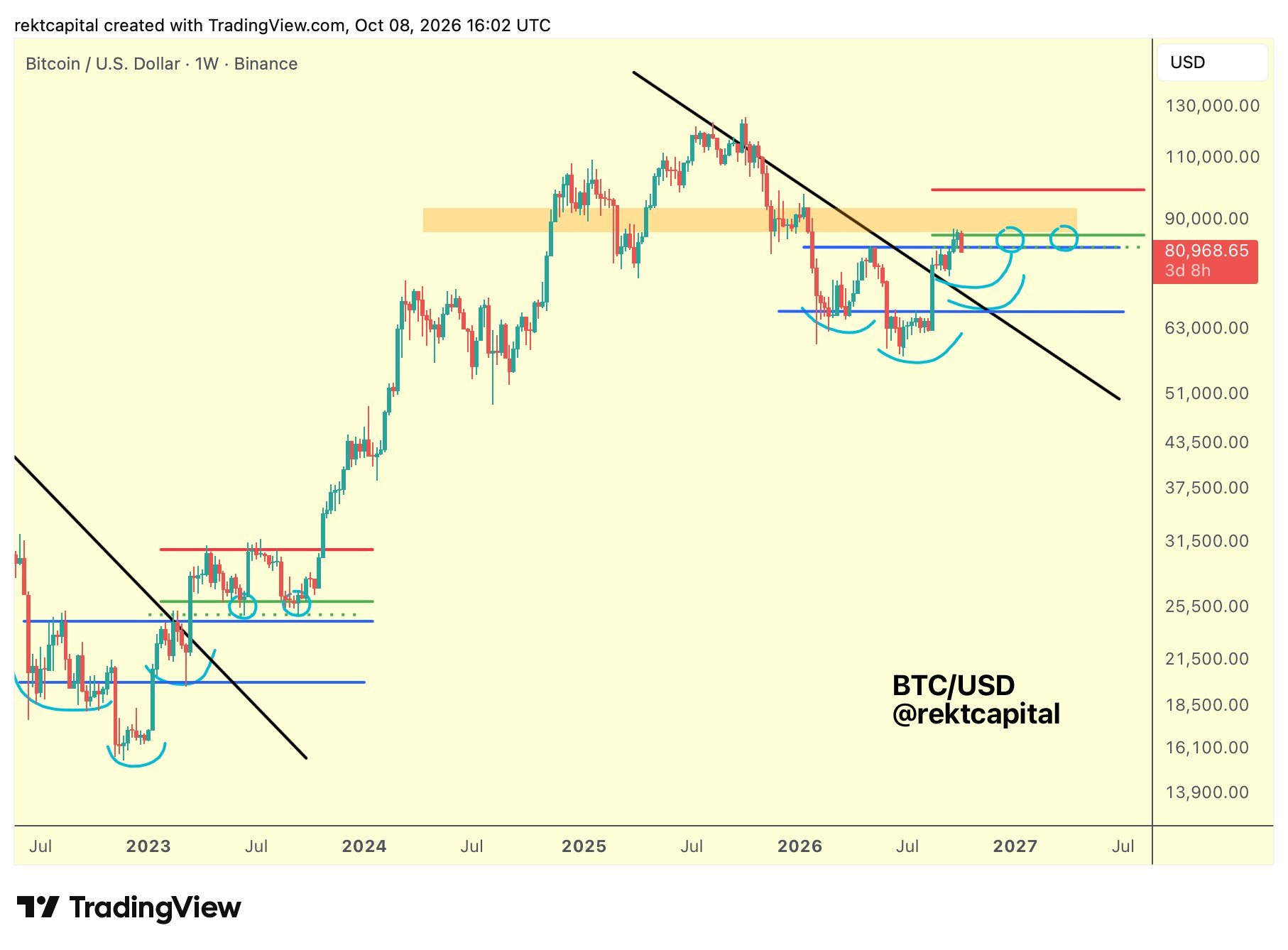
Holding that barrier prevents the token from slipping back into the protracted $60,000 to $80,000 trading corridor that constrained prices earlier in the year. Analyst Rekt Capital highlighted that confirming $82,500 as reliable support establishes a technical foundation for continued spot reaccumulation, mirroring structural recoveries seen following prior bear market cycles.
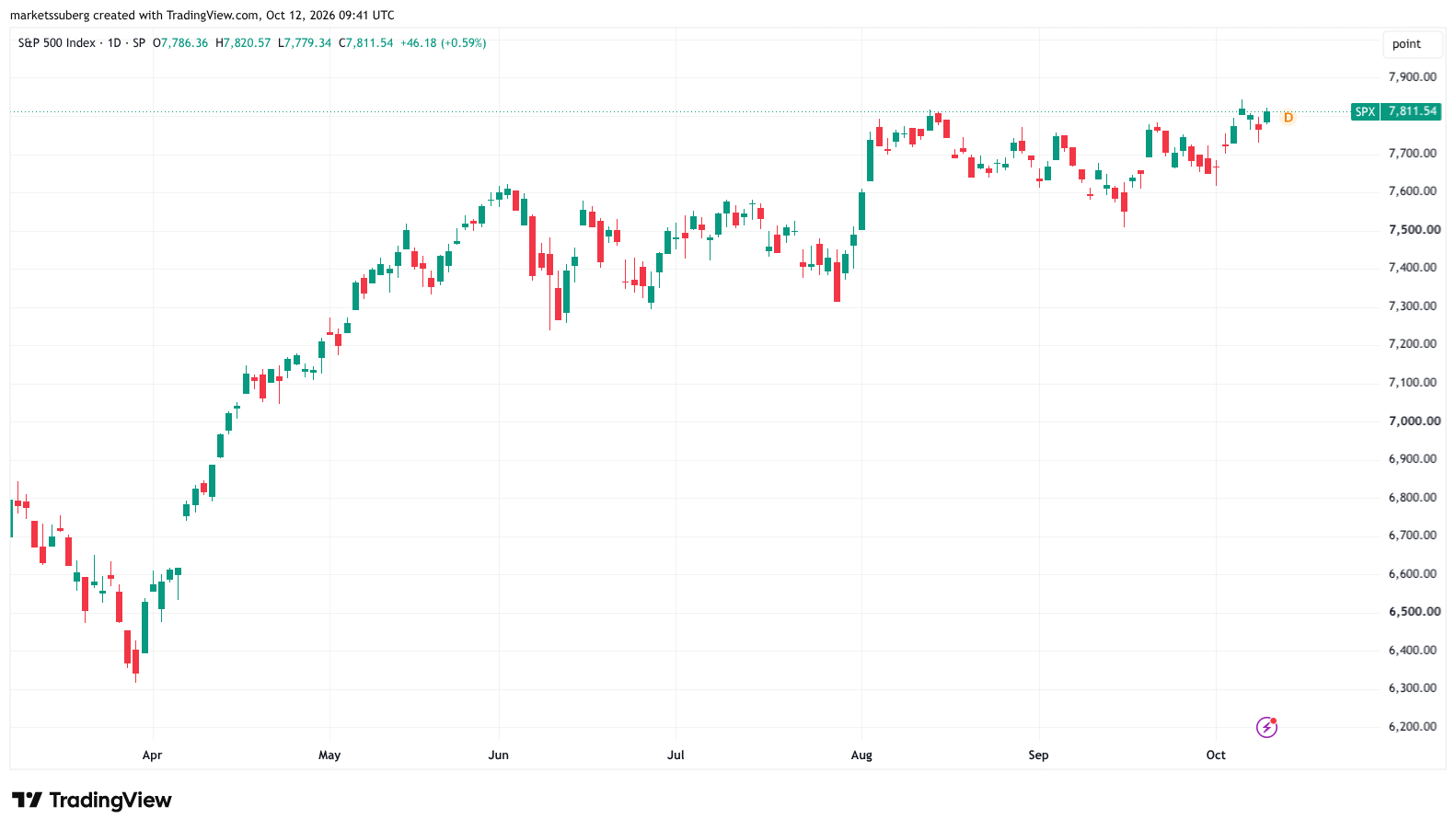
Market technician Aksel Kibar drew parallels between Bitcoin’s current behavior and the trajectory of equity indices, emphasizing how the S&P 500 repeatedly confirmed breakouts near 7,300 and 7,600 points before advancing.
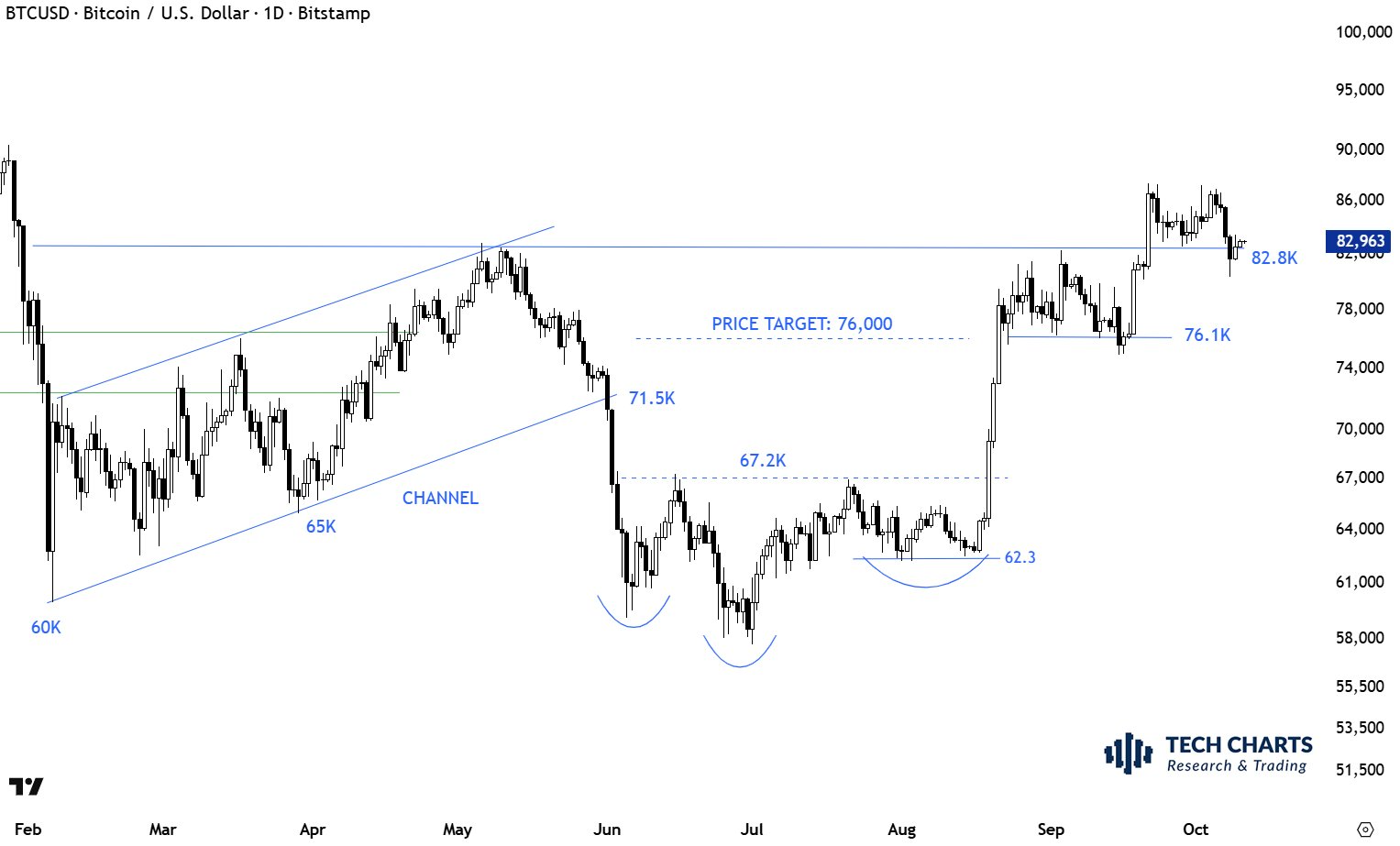
Kibar suggested that Bitcoin’s sustained retest of $82,500 reflects a standard consolidation phase, creating room for an extension higher if buyers consistently defend the shelf.
Traders now look ahead to late-week central bank commentary, when Federal Reserve Chair Kevin Warsh is scheduled to participate in a formal discussion with International Monetary Fund Managing Director Kristalina Georgieva during an economic symposium in Bangkok on Friday.



