

Ayad Akhtar’s ‘The Radiance’ Adapts Autofiction for the TikTok Era
Pulitzer winner shifts from Instagram aesthetics to immersive presentism in new autofiction work exploring trauma and digital attention
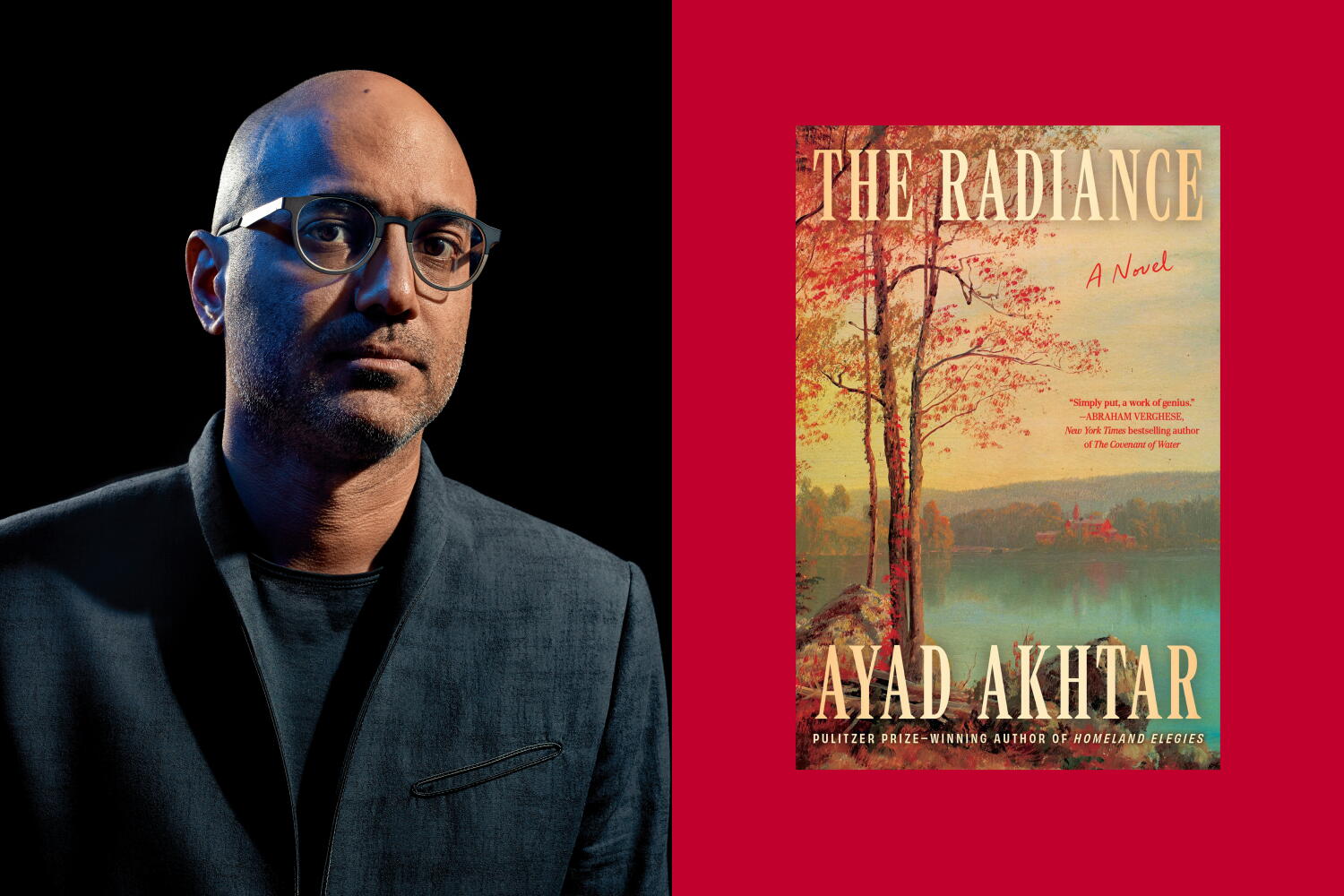
Pulitzer Prize-winning playwright Ayad Akhtar has released “The Radiance,” a novel that deliberately abandons traditional narrative structure to mirror the fragmented attention spans of contemporary digital life. Published by S&S/Summit Books, the 304-page work represents a significant evolution in autofiction, moving beyond the Instagram-era aesthetics of his 2020 novel “Homeland Elegies” to embrace what Akhtar describes as the immersive presentism of platforms like TikTok.
The novel opens with a near-fatal hit-and-run accident that leaves the narrator hospitalized with a ruptured spleen and internal injuries. This physical trauma serves as the catalyst for an altered state of consciousness Akhtar terms “multilateral presence.” Rather than following a linear recovery arc, the narrative fractures into legal briefs, monologues, footnotes, and internet memes. This structural choice is designed to replicate the sensation of experiencing multiple temporal layers simultaneously, challenging readers to engage with text in a manner closer to scrolling through a feed than turning pages in a Victorian novel.
Akhtar’s approach draws on a specific literary lineage of post-traumatic transcendence. He cites Montaigne’s fugue state after being thrown from a horse and Jean-Jacques Rousseau’s description of “beatitude” after being knocked down by a Great Dane as historical precedents for the narrator’s condition. In “The Radiance,” this beatitude does not lead to spiritual reconciliation or narrative closure. Instead, it creates a profound alienation, rendering the protagonist unable to communicate his expanded awareness to those operating within conventional time and social norms.


The distinction between author and protagonist remains intentionally porous. While the narrator shares Akhtar’s name and biographical outline, including residence in New York’s Hudson Valley and a teaching position at a college resembling Bard, the work resists strict autobiographical classification. The novel features a character named Lucie Neroponte, a colleague known for publishing personal essays about past affairs, who embodies the collapse of distance between lived experience and textual representation. Through these characters, Akhtar interrogates the modern compulsion to self-narrate, suggesting that the act of storytelling often separates individuals from immediate reality rather than connecting them to it.
This formal experimentation addresses a crisis in reader engagement that Akhtar views as more acute now than when “Homeland Elegies” was published six years ago. The earlier work utilized an Instagram-like curation of self, where disparate elements coexisted seamlessly. “The Radiance” rejects that paradigm as outdated, arguing that current media consumption demands a more attenuated, relentless immersion in the now. The book includes a cascading five-page paragraph modeled on the disorienting flow of a Reddit thread, attempting to capture the texture of online discourse within print fiction.
Akhtar frames this stylistic risk within a broader historical context of political fragmentation. He compares the current moment to 1606, when Shakespeare wrote “King Lear” amid questions about whether Scotland, Wales, and England could coexist under James I. Just as Shakespeare used the division of a kingdom to explore national cohesion, Akhtar uses narrative fragmentation to examine whether shared meaning is possible in a polarized society. For Akhtar, literature remains the only human discourse capable of holding this complexity because of its unique capacity for interiority, preserving the texture of lived experience against the flattening effects of digital speed.









