William Contreras Won Milwaukee’s World Series One Helmet Tap at a Time
The first World Series played under the challenge system was shaped by the catcher who used it best — 185 challenges in the season, 7-for-9 through three Series games.
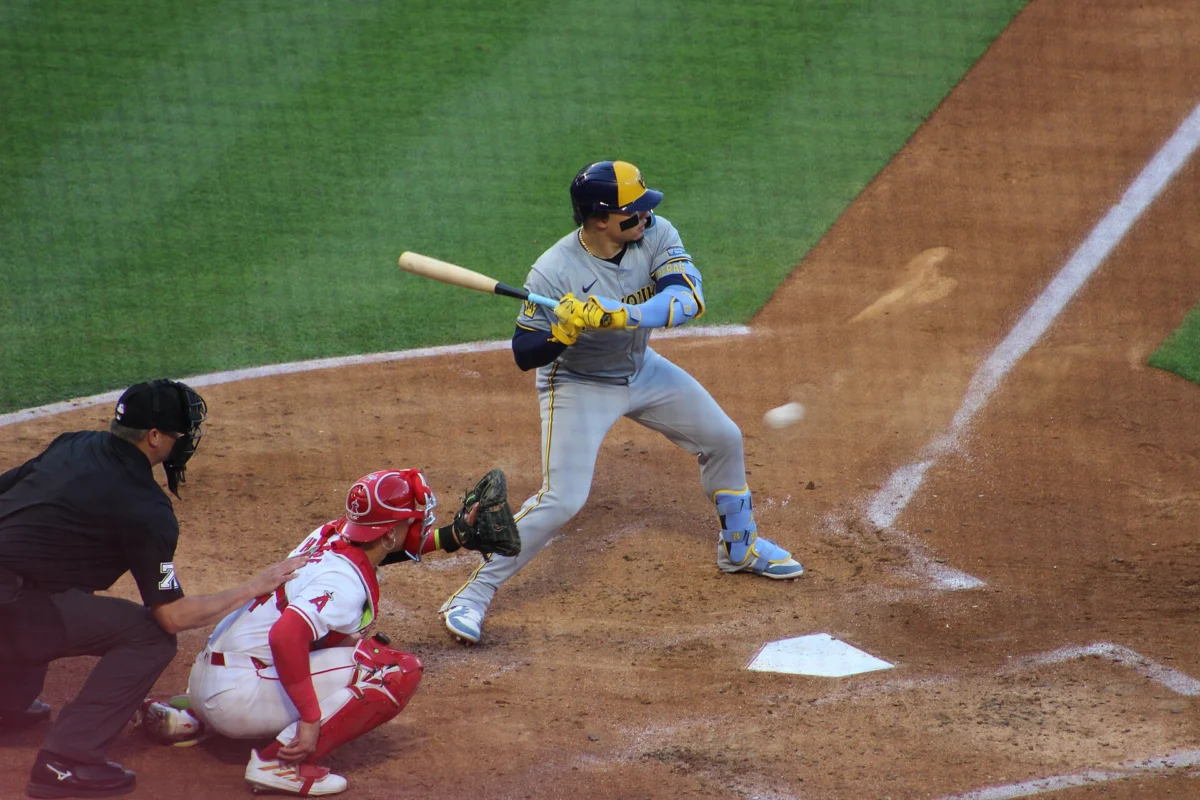
With two outs in the bottom of the 11th inning of Game 4, a 97 mph sinker to Yandy Díaz was called a ball. William Contreras tapped his helmet, and while the challenge was checked, the Milwaukee catcher and the Tampa Bay leadoff man stood and stared at each other. The call stood, by less than a tenth of an inch, and Contreras could not hold back a smirk. Díaz walked. The Rays stranded pinch runner Jorge Mateo, and an inning later they won 4-3 and kept the Series alive for one more night.
That staredown belonged to the first World Series ever played with a challenge system. The Automated Ball-Strike system arrived in the majors in 2026, and Contreras’s challenge in Game 1 was its first appearance in a Fall Classic. Milwaukee won the Series the next night. The 4-1 Game 5 win was the first title in franchise history.
In the third inning of Game 3, with two outs and Milwaukee up 2-0, Contreras tapped his head on a low pitch called a ball, and the review turned it into a strike. John Smoltz, calling the game for Fox, objected on the spot. “There’s just no need for it,” he said. “You’re up two to nothing, there’s no stress.” Smoltz took it back the next day. “I think this guy’s unbelievable,” he said on MLB Network’s MLB Now. “If I’m a pitcher on the mound and he’s fighting for me, then I’m happy about it.” One fan, posting on X, had been blunter the night before: “@smoltz_john you’re blowing smoke, you were complaining all night.”
Contreras had explained his rule before Game 3, on MLB Network, and it leaves no room for Smoltz’s version of the risk. “Whenever I want to challenge, I call it. I’m not afraid to lose my challenge,” he said. “I trust my pitcher. I don’t care about the numbers after the end of the season. But I like to know how the box is. It’s different with every hitter.” The system backs him up on the arithmetic. Only the batter, the pitcher or the catcher may challenge, by tapping a cap or helmet within about two seconds of the call, with no help from the dugout. Twelve Hawk-Eye cameras track the pitch, a graphic shows the result on the videoboard in about 15 seconds, and each team starts with two challenges. Win one and the team keeps it. Lose two and the challenges are gone, with one more granted per extra inning if none remain. A correct challenge costs nothing, which means the only real risk in Game 3 was being wrong, and Contreras spent the Series being right.
MLB.com’s numbers had him leading the majors with 185 regular-season challenges, 49 more than second-ranked Tyler Stephenson, at a 57% overturn rate. In the postseason he challenged more often and more accurately: 29 challenges through Game 3, more than any other catcher, at 66%. The Series path inside that total is what no single account put together. He stood at three overturned calls from five attempts before Game 3. He went four-for-four in Game 3. That made seven of nine through three games. USA Today’s mid-game note from Game 3, five successful challenges in seven attempts in the fourth inning, sits exactly on that path.
The first inning of Game 1 set the pattern. Contreras drove in a run with a single, finished two-for-three with a walk, threw out Victor Mesa Jr. and Jonathan Aranda trying to steal, and won two challenges that both became strikeouts for his pitchers. He added an RBI single in Game 2’s comeback from four runs down. He went three-for-five in Game 3. Game 4 was the quiet night: hitless in four at-bats. In the clincher, his sixth-inning double scored Christian Yelich to make it 3-0. Manager Pat Murphy called him “their MVP” during the Series, and Derek Jeter, Alex Rodriguez and David Ortiz all picked him as World Series MVP before Game 3. He already owned a ring from Atlanta’s 2021 title, which made him the one Brewer in the lineup who had done this before.
A computer called balls and strikes for the first time at the independent Atlantic League’s All-Star Game in July 2019, and the system went to the Arizona Fall League the same year. It reached Low-A ball in 2021, became a challenge system in the Florida State League in 2022, and split Triple-A in 2023 between games with full automation and games with challenges. Spring training in 2025 ran it at 13 venues, the All-Star Game used it that summer, and the Competition Committee approved it for the majors in September 2025. MLB found only 11% of players backed full automation, so the challenge version was the settlement: the human umpire still calls every pitch, and the cameras only speak when a player asks.
Andrew Painter, pitching for Philadelphia in Game 2 of the National League Wild Card Series, challenged a ball to Atlanta pinch hitter Dominic Smith with two outs in the 10th inning and the tying and winning runners aboard, and the overturned strike three ended the game and kept the Phillies’ season alive. Díaz, the Rays’ leadoff man, did not challenge a single pitch all season. He still ended up on the wrong end of the Series’ most famous challenge, winning it by less than a tenth of an inch and then watching the inning die behind him. The skill Contreras spent the season building is now part of the catcher’s job in a way it simply was not two years ago, and the team that had the best practitioner of it is the team holding the trophy.
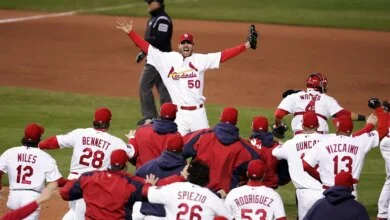
Trevor Megill got Richie Palacios to ground out to Brice Turang at second base to end Game 5. Milwaukee’s pitchers had allowed 12 runs across the five games, and the last one came on a two-out double in the ninth.