A $1 Trillion Check Promise With No Economic Blueprint
The White House declined to provide an economic impact analysis for a payout plan exceeding $1 trillion.
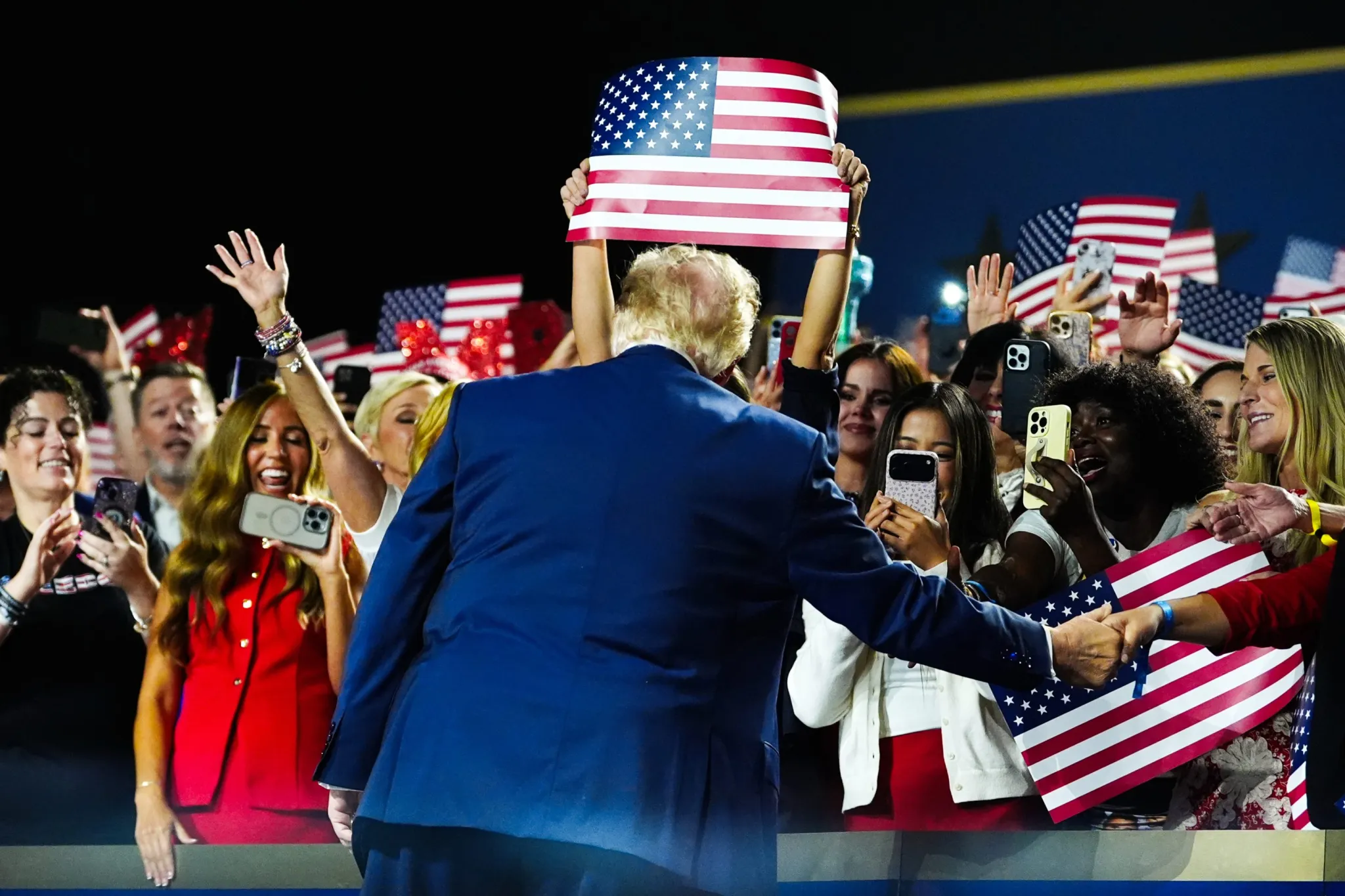
The White House has not produced an economic model for a proposal that would inject more than $1 trillion into the U.S. economy just weeks before the Nov. 3 midterm elections, according to Christopher Phelan, chairman of the White House Council of Economic Advisers.
Phelan told The Associated Press he would “refrain” from answering when asked whether the administration was calculating the fiscal and inflationary consequences of President Donald Trump’s pledge to send $5,000 checks to Americans. That silence leaves financial markets, congressional budget analysts, and voters without a framework to assess a plan the president acknowledges would cost in excess of $1 trillion.
Trump says the payouts are contingent on Republicans retaining control of both the House and Senate. The administration attributes the funding to trade deals, foreign investment commitments, government stakes in private companies, and oil and mineral agreements, according to the White House.

Economists have long warned that sudden, unfunded cash transfers of this scale risk accelerating inflation. The administration itself is attempting to frame the payments as relief from price increases that began in 2021 under then-President Joe Biden—a period Republicans at the time blamed on pandemic-era stimulus checks. Distributing another massive round of direct payments to counteract the effects of previous ones introduces a circular dynamic that monetary policy experts say could complicate the Federal Reserve’s efforts to stabilize prices.
The $5,000 promise is one element of a broader slate of financial pledges introduced ahead of the midterms. Trump has also proposed a $90 payment to 20 million Medicare enrollees, $500 rebates for individuals the administration says were overcharged for Obamacare plans, and automatic stock-investment accounts for every U.S. child, referred to as “Trump accounts.”
None of these proposals carry detailed legislative pathways or identified revenue streams. Previous iterations of similar ideas, including $2,000 dividends funded by tariff revenues and large refunds generated by Department of Government Efficiency spending cuts, never materialized, according to the AP.
Republican candidates running for Congress have largely kept their distance from the $5,000 figure. Campaign spending tracked by AdImpact shows no Republican television or digital advertisements promoting the checks. Pro-Democratic organizations such as Rolling Sea Action Fund are the only groups running ads about the proposal, using them to question its viability.
Voter confidence in the administration’s follow-through remains divided along partisan lines. An AP-NORC poll conducted in September found that roughly half of registered voters believe Trump does not keep his promises. About 3 in 10 said he tries but fails, while only 2 in 10 said he delivers. Among Republican voters, approximately half said he attempts to keep his promises but cannot, and 4 in 10 said he succeeds.
Trump has defended his record by citing a $1,776 “Trump dividend” previously sent to military troops. Those payments, however, were funded through a congressionally approved housing supplement rather than executive action, according to the AP.
At a recent rally in Georgia, Trump stipulated that the $5,000 could only be spent domestically, excluding purchases in China, Japan, or France. He joked that recipients should spend the money at his Mar-a-Lago club in Palm Beach, Florida, where he said it would buy “one hamburger and a small dessert.”
Bohrer reported from Wasilla, Alaska, and Barrow reported from Dalton, Georgia. Associated Press reporters Aaron Kessler and Linley Sanders in Washington and Lekan Oyekanmi in San Antonio, Texas, contributed.