Germany’s Mainstream Parties Lose Ground in Twin Election Shock
AfD and Die Linke victories leave Merz facing coalition turmoil
The Bundesrat, Germany’s upper chamber of parliament, is composed of representatives from state governments and can block or delay major federal legislation. The rise of populist parties on both the left and right at the state level threatens to severely restrict Chancellor Friedrich Merz’s ability to pass his signature tax and welfare reforms through the chamber.
Merz was forced to cancel a planned trip to New York for the United Nations General Assembly, remaining at CDU headquarters to manage the immediate political fallout. The twin defeats on Sunday came after a similarly severe setback for the CDU in Saxony-Anhalt two weeks earlier.



In Berlin, the electorate moved sharply in the opposite direction from Mecklenburg-Western Pomerania. Die Linke won first place with 25.7% of the vote, seven percentage points ahead of the CDU at 18.7%. The AfD finished third in the capital with 16.3%.
The result in Mecklenburg-Western Pomerania left the AfD, or Alternative for Germany, in first place with 38.2%. The predominantly rural state is in the former East Germany, while the SPD, led by incumbent state governor Manuela Schwesig, took second place with 35%.
Berlin’s Die Linke campaign was led by Elif Eralp, whose parents fled to Germany after the 1980 military coup in Turkey. Her platform centered on the city’s acute housing crisis, including a strict rent cap and the socialization of residential properties owned by large corporate real estate developers.
Eralp’s progressive, municipal-focused platform has drawn comparisons to left-wing political figures in the United States, including Zohran Mamdani in New York. To become Berlin’s governing mayor, she must negotiate a three-party coalition.

Her proposed real estate seizures are expected to become a major point of contention in the coalition talks because moderate potential partners regard the policy as legally and economically risky. In Mecklenburg-Western Pomerania, Schwesig is also expected to begin complex negotiations, but the coalition would exclude the election’s actual victors.
Mainstream German parties maintain a strict refusal to govern with the far right, a political boundary known as the Brandmauer, or firewall. The AfD is therefore highly unlikely to find a partner for forming a state government, while analysts warn that a coalition excluding the populist right could further alienate its voters.
The most damaging result for Merz’s CDU came in Mecklenburg-Western Pomerania, where the party fell to 4.9%. German parties must win at least 5% of the vote to enter parliament, a threshold historically known as the Fünf-Prozent-Hürde.
Established after World War II to prevent the extreme political fragmentation that destabilized the Weimar Republic, the threshold’s failure represented an unprecedented catastrophe for the CDU. The party has historically been one of Germany’s two major “people’s parties,” or Volksparteien.

The election results in Berlin and Mecklenburg-Western Pomerania exposed an historic fragmentation of Germany’s post-war political landscape, delivered unprecedented victories for populist parties and pushed the country’s traditional political center into a deep crisis. State-level coalition calculations have been paralyzed, threatening the stability of the federal government under Merz after the CDU suffered historic defeats.
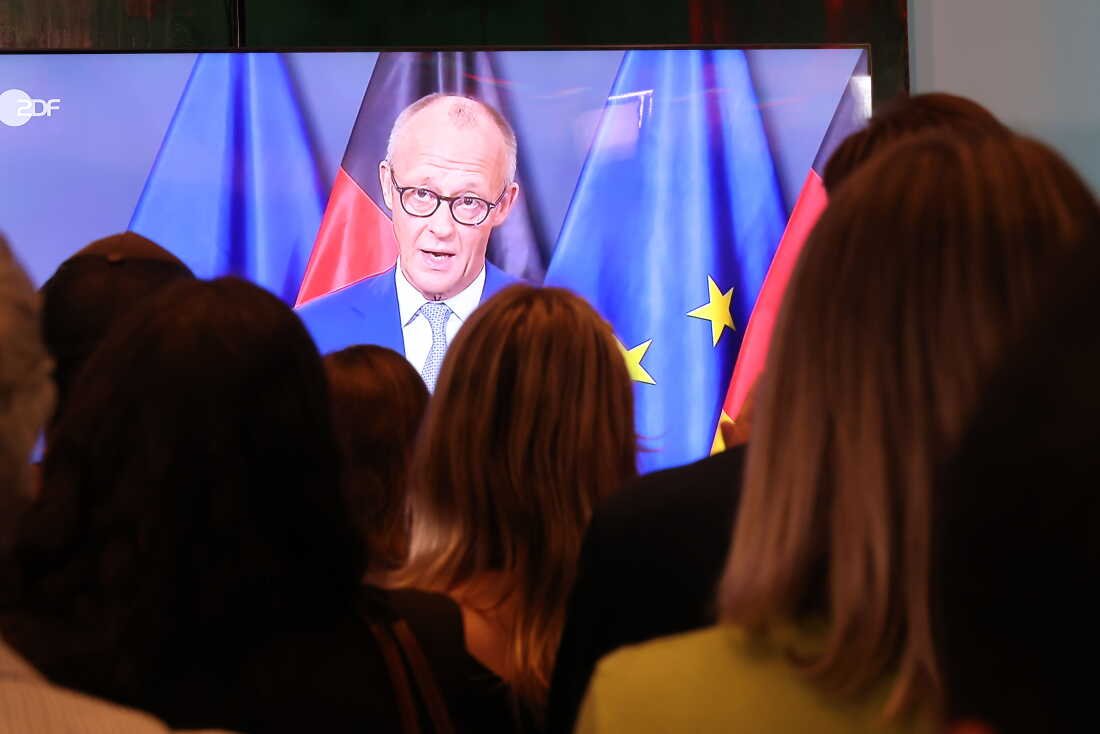
Despite mounting pressure and quiet discussions within his own party about his leadership, Merz has rejected calls to resign. In a public address, he called the election night a “disaster” for mainstream politics but said his federal agenda remained the only viable “antidote to the poison of authoritarianism.” He said the political climate required “backbone, steadfastness and patience,” attributes he pledged to demonstrate as chancellor.
Alice Weidel, the federal co-leader of the AfD, told public broadcaster ARD that Merz is “the wrong chancellor for the CDU” and accused him of pulling his party down with him.
Political experts note that removing a sitting German chancellor is a highly complex constitutional process. Sudha David-Wilp, a senior fellow at the German Marshall Fund, said Germany’s Basic Law requires a “constructive vote of no confidence,” meaning parliament must agree on a majority-backed successor before removing the incumbent.
David-Wilp said the high constitutional barrier, combined with Merz’s long-held personal ambition to hold the country’s highest office, makes a voluntary resignation or forced leadership change highly unlikely in the near term.