Fed Raises Rates as Inflation Stays Above Target and Trump Objects
Inflation pressure outweighs White House calls for lower borrowing costs
WASHINGTON — The Federal Open Market Committee voted unanimously to lift the benchmark interest rate by 25 basis points, setting a target range of 3.75% to 4.00%. Wall Street analysts and interest rate futures traders had widely anticipated the increase, with financial markets generally maintaining expectations based on baseline macroeconomic data rather than political commentary.
The move came even as the labor market remained steady. The Bureau of Labor Statistics reported that the U.S. economy added 162,000 jobs in August, while the national unemployment rate held at 4.1%. Federal Reserve Bank of Chicago President Austan Goolsbee described the contrast between employment stability and persistent inflation.
“On the real side, we’ve been stable, now inching toward dangers of overheat, and on the inflation side, after a couple of years of strong progress, it stalled out and started getting worse,” Goolsbee said. “But we’ve had one encouraging report, one okay report, and now our challenge is … the inflation.”


Annual U.S. inflation currently stands at 3.4%, above the Federal Reserve’s official 2% target. Consumer price inflation has remained above that threshold for more than five consecutive years. Recent upward pressure has also been driven in part by energy-sector supply-side disruptions tied to the ongoing geopolitical conflict between the U.S. and Iran in the Middle East.
Federal Reserve Chairman Kevin Warsh defended the decision as a response to the economic data. “The plain fact is that inflation is too high and has been for too long,” Warsh said. Warsh previously served on the Federal Reserve Board of Governors from 2006 to 2011 under former Chairman Ben Bernanke, taking part in monetary policy decisions during the 2008 global financial crisis.
The rate increase directly resisted explicit White House lobbying for lower interest rates. It also reaffirmed the central bank’s statutory mandate to curb elevated inflation. Under the Federal Reserve Act, as amended by Congress in 1977, the central bank has a legal dual mandate from Congress to pursue maximum employment and price stability.
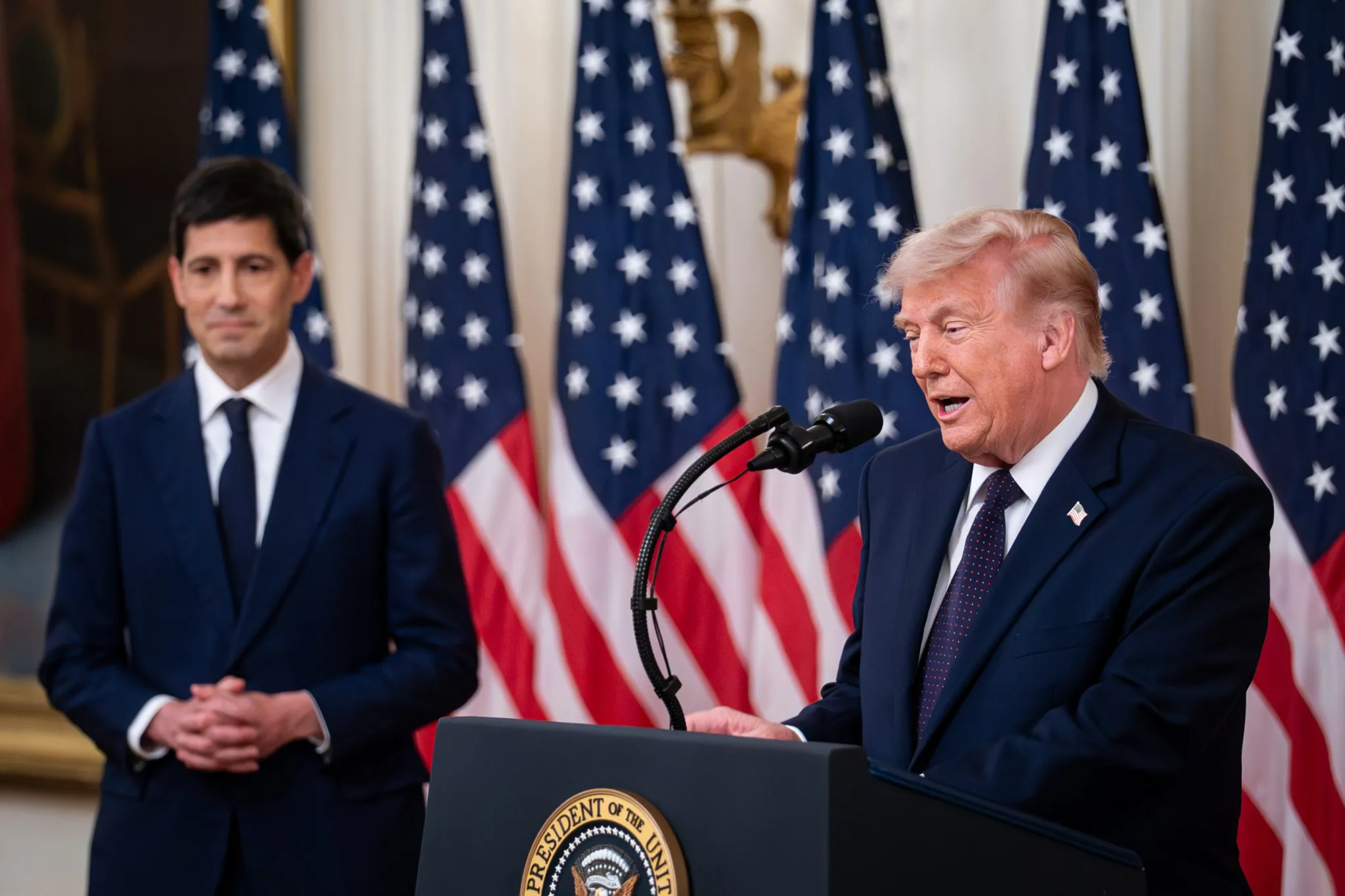
After the policy release, President Donald Trump criticized the increase while directing his objections toward the broader committee rather than Warsh, whom he nominated to lead the central bank.
“[Warsh] has got a very tough board,” Trump told reporters. “He’s got a board that was put there by a lot of other people, and the interest rates are too high. They’re not appropriate.”
Trump said he had previously discussed the board’s dynamic with Warsh ahead of the decision. “I talked to Kevin, and I said, ‘You might as well vote with the board because it’s not going to matter,’” Trump said. “The board is very hostile, they’re very political, they’re doing the wrong thing. They are a bunch of politicians or people put on by politicians, and it’s a shame because it’s too high.”
He also insisted that the domestic economy was strong enough to “barrel through” higher borrowing costs, while characterizing the central bank’s action as directed at his administration. “The problem they have is that we have the greatest economy in history … so they’re raising that only for political reasons, and that’s a raise against Trump,” he said.
The Federal Open Market Committee has 12 voting members: the seven members of the Board of Governors in Washington, the president of the Federal Reserve Bank of New York, and four of the remaining 11 regional Reserve Bank presidents, who serve one-year rotating terms. To preserve policy independence during deliberations, officials follow a strict policy blackout period that bars public statements or political consultations about monetary policy from the second Saturday before an FOMC meeting through the Thursday after the decision is announced.
The public dispute recalls tensions during the tenure of Warsh’s predecessor, former Fed Chair Jerome Powell. Trump appointed Powell in 2017 and later criticized him publicly during monetary tightening cycles. The latest increase in borrowing costs comes as economic conditions remain a major concern for Americans ahead of the upcoming midterm elections. A recent Pew Research study found that the general economy was the single highest concern among voters, at 29%, while cost-of-living affordability was identified separately as the top priority by another 15% of respondents.