

EU Revives 1980s Trade Tactic to Curb China’s Hybrid Car Surge
Brussels seeks a voluntary cap as Chinese hybrid imports surge
BRUSSELS — The European Commission is pressing Beijing to increase purchases of European goods as Brussels seeks to correct a trade imbalance that EU officials describe as an unsustainable tipping point. The proposal is part of a broader effort to persuade China to show restraint in several export sectors, including chemical manufacturing.
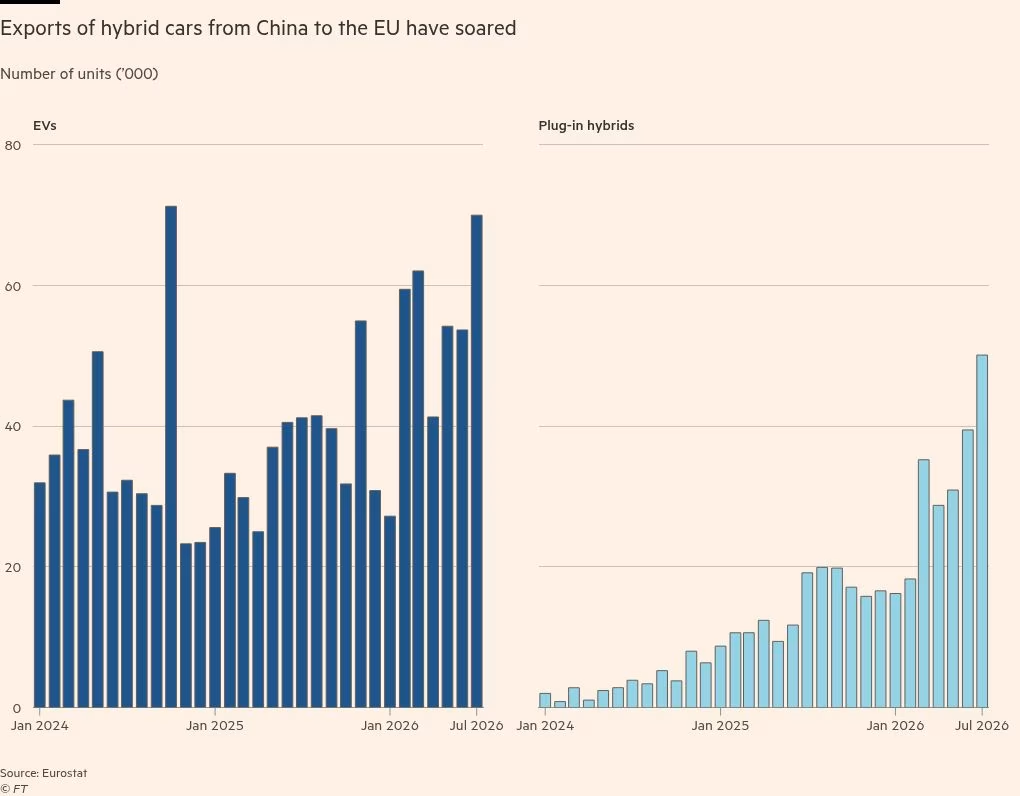
At the center of the dispute is China’s growing share of Europe’s hybrid vehicle market. Chinese imports now account for more than one-third of the European hybrid market, helped by a tariff loophole that allows low-cost Chinese models to avoid the stiffer duties imposed on other vehicles.
The EU is seeking a formal Chinese commitment to limit hybrid car sales to approximately 15 percent of the EU market. Officials and people familiar with the discussions say the approach is known as “managed trade” and is intended to avert a full-scale trade war.


The tariff gap widened in October 2024, when the EU imposed definitive anti-subsidy duties of up to 45 percent on battery-electric vehicles imported from China. Chinese automakers subsequently shifted their focus toward hybrids, which face only the standard, flat 10 percent EU import tariff.
Imports of Chinese hybrid cars rose from 3,800 vehicles in October 2024 to 50,000 by July 2026. The ten-fold increase, combined with falling average prices, led European brands including Volkswagen to lobby Brussels for punitive tariffs on hybrid imports equivalent to those imposed on fully electric models.

European automakers are introducing sweeping cost-cutting measures and major layoffs as the cheaper Chinese vehicles add to pressure on the industry. Volkswagen AG has faced historic structural challenges, including discussions of unprecedented domestic factory closures in Germany. Other major European automotive groups and industrial suppliers have also reported falling margins and job cuts, prompting calls for Brussels to intervene.
“If they will not limit their exports to our market then we will,” said an EU official, describing the policy as a necessary defensive measure. “This is about stopping deindustrialisation. We have to act. It’s about managed trade.”
The proposed voluntary export restraints closely resemble the European Community’s 1986 pressure campaign against Japan. At the time, Japan agreed to voluntarily cap its automotive exports to Europe. The arrangement continued in various forms until 1999 and ultimately pushed manufacturers including Toyota, Nissan, and Honda to establish manufacturing plants and supply networks within Europe to preserve market access.
A new export cap would face a more difficult legal environment. The World Trade Organization’s 1995 Agreement on Safeguards expressly prohibited such “gray-area” trade measures, making the revival of voluntary export restraints a complex question under international trade law.
European Commission President Ursula von der Leyen has called the current challenge a “second China shock.” During her annual State of the Union address, she said, “The second China shock is already here,” and noted that the EU’s trade deficit with China had reached €1 billion ($1.08 billion) per day. “Let me be clear: we will use all the tools at our disposal to rebalance our relationship. Words are good. But deeds are better.”
The EU has set an October deadline for “tangible results” in reducing the bilateral trade deficit. Negotiations are taking place through the newly established EU-China Trade and Investment Consultations (TIC) forum, which was created to address market access barriers.
EU Trade Commissioner Maroš Šefčovič is due to meet Chinese Commerce Minister Wang Wentao ahead of his expected trip to Beijing in the second week of October. Šefčovič has said he wants “positive outcomes” on trade rebalancing before that visit.
The talks are unfolding as Europe’s political position changes. EU member states have traditionally been divided over China trade policy, with Germany long concerned that retaliatory action could damage its premium auto exports. A stronger consensus for decisive action is now emerging between France and Germany, Europe’s two largest economies.
Beijing has repeatedly rejected accusations of unfair industrial subsidies. China’s Ministry of Industry and Information Technology says the competitive pricing of Chinese vehicles results from highly integrated supply chains, technological innovation, and manufacturing efficiency rather than government support.
China is also seeking the removal of EU export controls on high-tech goods and the withdrawal of sanctions on Chinese enterprises. Beijing has already begun retaliatory action through anti-dumping investigations and levies on European exports including cognac, pork, and dairy products, signaling that failure to reach a negotiated settlement could trigger a wider trade conflict.









