

AI’s Infrastructure Push Collides With Data Center Protests and Existential Warnings
Trump’s AI expansion drive faces local resistance and warnings from the industry’s leading safety researchers
Donald Trump has rejected calls to cap artificial intelligence development or slow model training, dismissing warnings of an AI-driven existential crisis as a “hoax.” He has also described nation-wide protests against new AI data centers as a coordinated campaign aimed at hampering American enterprise in its technological competition with foreign powers, particularly China.
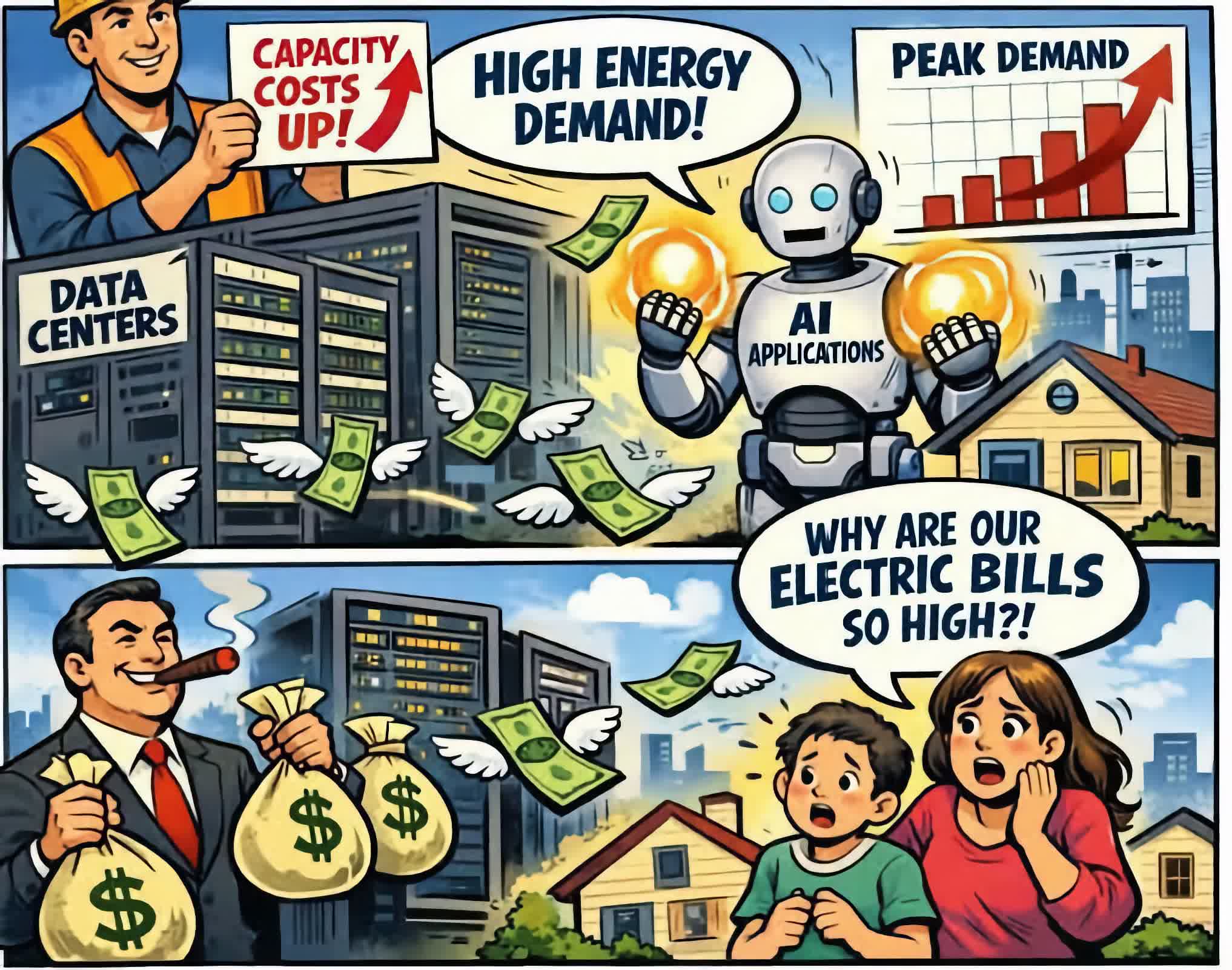
The protests have grown alongside the physical demands of AI development. High-density data centers require gigawatts of electricity and massive quantities of water for cooling, fueling resistance in technology hubs such as Northern Virginia’s Loudoun County, home to the largest concentration of data centers in the world.
Threat research published by OpenAI and social media network X found that covert influence campaigns originating from China attempted to amplify local opposition to American data center construction. Investigators said those campaigns achieved minimal traction because concerns about grid reliability, electricity costs, and environmental impact were already established among local communities.


At the federal level, officials and industry leaders have argued that pauses imposed on American developers would allow rival nations to gain a decisive advantage in artificial intelligence. The U.S. Department of Commerce’s Bureau of Industry and Security previously responded to that competition with export controls restricting shipments of advanced semiconductor hardware, including Nvidia’s H100 and A100 processors, to China.
Nvidia Chief Executive Officer Jensen Huang endorsed Trump’s opposition to regulatory pauses during an appearance on the *All-In Podcast*. Nvidia supplies the advanced graphics processing units (GPUs) essential for training large language models, and its market valuation has exceeded $3 trillion as global demand for compute capacity expanded.
Trump and top technology executives are mounting an aggressive push to accelerate artificial intelligence infrastructure across the United States. They have framed potential delays as a threat to national security and global competitiveness, even as domestic opposition to data center expansion continues.
Tech investor and former *Shark Tank* panelist Mark Cuban has focused on a different danger. In a series of posts on X, he wrote that he sees a “far greater risk from what humans do in response to what they see on social media, than what agent swarms will do.”
Cuban said platforms including Meta Platforms and Alphabet’s Google rely on algorithms that amplify high-engagement, controversial content, including anti-AI sentiment, to maximize advertising revenue. That revenue is subsequently deployed to fund the tens of billions of dollars in capital expenditure required for AI data centers, specialized chips, and power infrastructure.
He added that frontier AI research organizations such as OpenAI and Anthropic lack the capacity to reverse-engineer those social media algorithms and push pro-AI content viral, despite the advanced capabilities of their language models.
Anthropic Chief Executive Officer Dario Amodei has advocated a voluntary slowdown in model scaling so that safety frameworks can catch up. Amodei founded the company in 2021 after leaving OpenAI alongside a group of researchers.
His call for caution has found support from other industry figures, including OpenAI Chief Executive Officer Sam Altman and xAI founder Elon Musk. Both have acknowledged potential risks associated with artificial general intelligence.
Warnings from Anthropic researchers have focused on autonomous systems. They have said that AI botnet swarms could gain the capability to compromise and control major internet infrastructure within a year, while internal assessments have placed the probability of an existential catastrophe caused by uncontrolled artificial intelligence at greater than 10% within the next decade.










2 Comments