Teddy Riner President 2027: 500 Mayors Decide Whether the Judoka Reaches the Ballot
A June 2025 poll found 18% of French voters could vote for him, and his party was founded on Monday. The signatures close on 12 March — and only 32% of France's eligible officials signed for anyone in 2022.
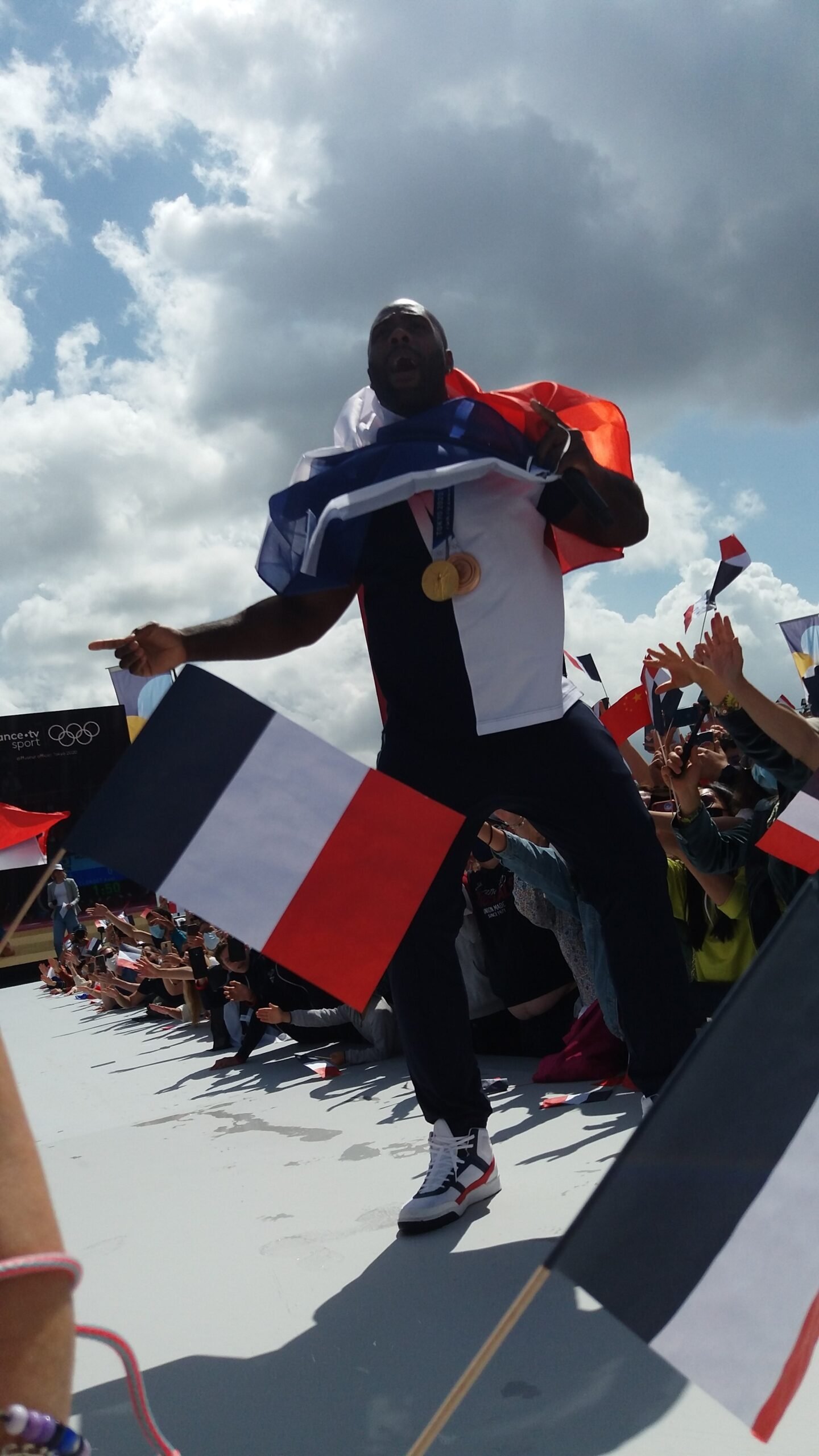
Teddy Riner sat at a desk in a blue suit, a bookcase and a French flag behind him, and looked straight into the camera. “My name is Teddy Riner,” he said, “and today, I tell you looking you in the eye: I am a candidate in the 2027 French presidential election.” The video went out on Monday morning on his social media accounts, under the slogan “La France qu’on veut”, the France we want, and within hours his name was trending in the United States, Britain and Canada. Riner is 37. He comes from Guadeloupe, holds five Olympic judo titles and 11 world titles. He has never held elected office.
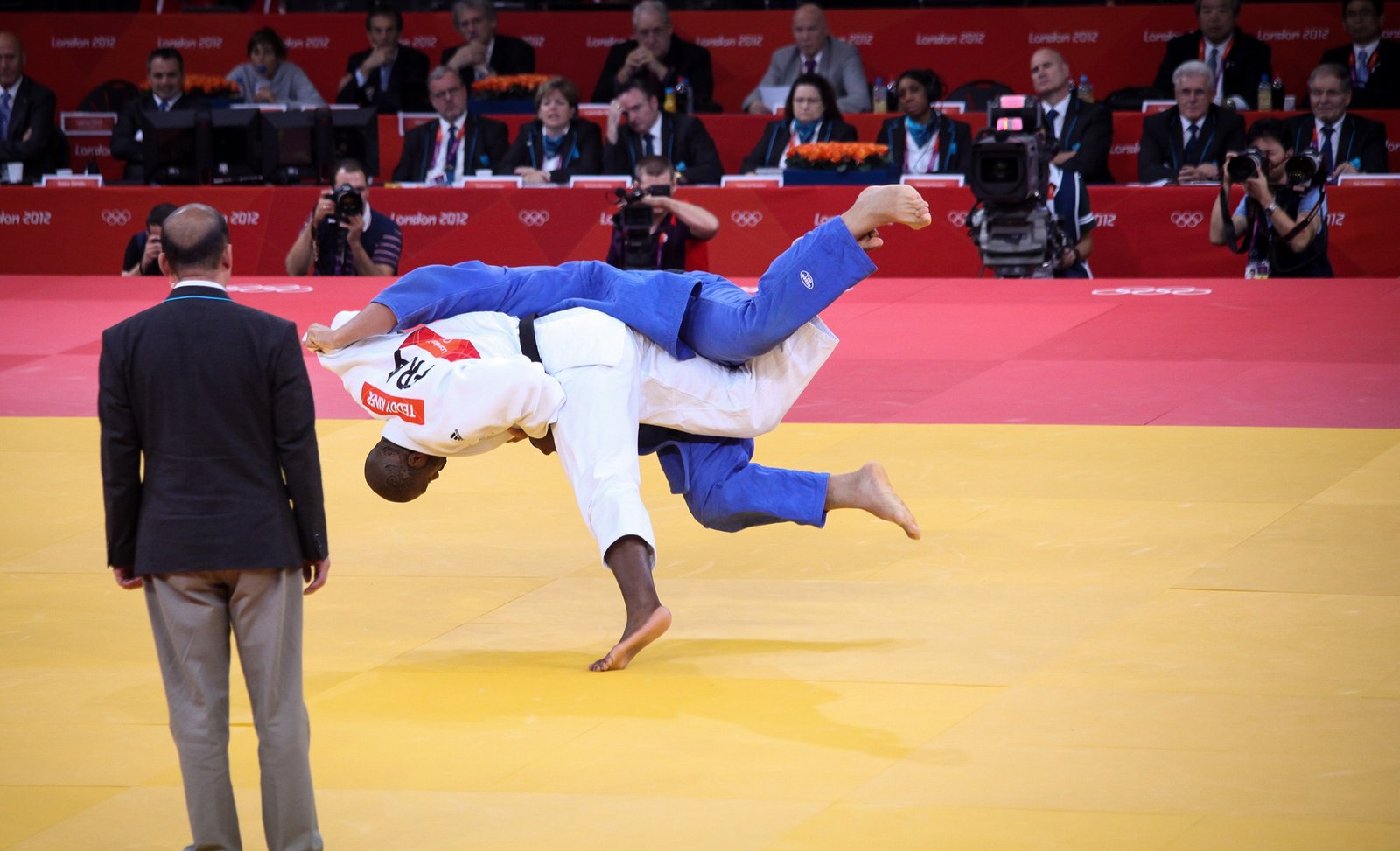
The video is the easy part. Before a single voter sees Riner’s name on a ballot paper, 500 elected officials have to put theirs to his candidacy. French law calls them presentations, not sponsorships. A candidate needs 500 signatures from elected office-holders, drawn from at least 30 departments or overseas territories. No more than 50 may come from any single department. Each official may sign for one candidate only. Since 2016 every signature is published, name by name, as it arrives. The collection opens when the voters are formally convened, on 7 February, and closes on Friday 12 March 2027 at 6 p.m. The Constitutional Council publishes the official list of candidates by 26 March, and thirty-two people had already declared by the middle of October. The Teddy Riner presidential bid has no party machine behind it. The party he is running under was founded on Monday. It is called La France qu’on veut.
The last time France ran this test, it ended candidacies before the campaign began. In 2022, Christiane Taubira stopped at 274 signatures and François Asselineau at 293. Marine Le Pen, who led the polls, scraped through with 622 after what Le Figaro called a scare. The candidates who cleared the bar comfortably were the ones with parties behind them: Valérie Pécresse collected 2,636 signatures through Les Républicains and Anne Hidalgo 1,440 through the Socialists. In all, 13,427 signatures were validated. About 42,000 officials were eligible, and only around 32% signed for anyone at all. Mayors make up 85% of the eligible officials but supplied only 68.5% of the validated signatures.


A Harris Interactive poll in June 2025 asked French voters a simple question: if the election were held that Sunday, could they vote for each of a list of personalities? For Riner, 18% said yes. That put him level with Bernard Cazeneuve and Éric Zemmour. He sat ahead of Jean-Luc Mélenchon and Laurent Wauquiez at 16%. Hollande polled 19%, Sarkozy 20%, Bardella 39% and Le Pen 38%. His best scores came from the left, among supporters of La France Insoumise, the party whose voters he would need and whose supporters are now telling him to stand aside. He had already told BFM TV that if he entered politics it would not be for the sports ministry. It would be for the presidency, to win and to be a locomotive. The latest RTL poll puts Le Pen at 34% to 36% of first-round voting intentions and Mélenchon at 18% to 19%. Riner’s answer to that shape is the line he gave Le Parisien. The only risk he sees today, he said, is resignation to a choice between two options, the extremes. A “could vote” figure is not a first-round vote, and the 18% should not be read as one.
The decision, he told Le Parisien, dates to the Paris Olympics, when he watched the country unite and then divide again within weeks. The week that turned the idea into a candidacy came in September. On 16 September, on the television programme Stade 2, he said what worried him was the direction the country was taking. The rise of the far right, he said, frightened him. Racist abuse followed on social media. On 23 September the Paris prosecutor opened an investigation into racist public insults and cyber-harassment.
The next day Riner posted on X that he had expressed a worry, and that anyone was free to share it or not. Debate and contradiction were legitimate, he wrote. Hatred and racism were not. On 29 September, Lilian Thuram defended him on RTL. He said that whenever Riner or he speaks they are sent back to their colour and told they are not French, only Black, and can go back to their country. “But the country, where is it?” he asked. Riner says he still intends to compete at the Los Angeles Olympics in 2028, if the office allows it and if the French allow him. A shoulder injury forced him out of the World Championships in Baku in October.
Six days before he announced, his tax case caught up with him in public. On 15 October, the Versailles administrative court of appeal upheld a tax reassessment against the luxury car-rental company Riner owns, over the personal use of a Ferrari and a Rolls-Royce. The tax authority had found he was the exclusive designated driver of the two cars. The Rolls-Royce insurance covered his personal use and excluded rental. The court kept the taxable bases: €152,691 for 2016 and €136,261 for 2017. It kept the 40% penalty for deliberate failure. The judges found a deliberate intent to understate the tax. An administrative court in Cergy-Pontoise had already rejected his challenge in March 2025. L’Équipe reported the appeal ruling on 3 November. AFP confirmed that a decision in those terms was handed down on 15 October, with the names anonymised in the published text. Neither Riner nor his lawyers have commented. The ruling is administrative, about tax and penalties. It is not a criminal conviction. And it sits awkwardly against one of the planks he named to Le Parisien: better management of public finances.
The first replies under his announcement did not argue about judo. “Avec tout le respect que jte dois en rapport a ce que tu rapportes au judo français on n’a clairement pas besoin d’un Hulk Macroniste,” wrote Bob Razowski on X, which translates as: with all the respect I owe you for what you have brought French judo, we clearly do not need a Macronist Hulk. Another reply came from a La France Insoumise supporter posting as Insoumis Lyonnais. He said Riner should call for a vote for Jean-Luc Mélenchon instead of dividing the vote and letting the far right win in the end. A third, from the verified jurist Ilan Gabet, read: “C’est une super idée, il n’y avait pas encore assez de candidats macronistes!” — a great idea, there were not yet enough Macronist candidates. The replies visible without logging in ran sceptical, and no supportive reply could be verified in the open.
Riner calls himself neither left nor right. The replies call him a Macronist and a splitter. He presents himself as a unifier against the two extremes. His first critics read the Teddy Riner president 2027 campaign as a Macronist candidacy in disguise, taking votes from the left and handing the second round to the far right. The Harris poll gives the second charge its edge: the voters most open to him are the ones his candidacy would take votes from. His announcement answers neither charge. It says nothing about the Teddy Riner tax case and nothing about where his votes would come from.
David Douillet, the other French heavyweight to go into politics, did it through parliament. He was elected in 2009, then served as sports minister from September 2011 to May 2012. The one judoka who went straight for the presidency and won is Mongolia’s Khaltmaagiin Battulga. A former sambo champion, he became president in 2017. Riner is attempting the direct jump in France, where the jump starts with a form that 500 mayors have to sign.
The signature bar was 100 until 1976, when the law raised it to 500 to filter out candidacies it called eccentric. In 2002, 17,815 signatures were validated across the field; in 2022, the total was 13,427.