Mitsubishi Pajero Took 4,000 Orders Before Anyone Knew the Price
Four thousand orders, no price, a Thai factory, and four in five buyers from rival brands.
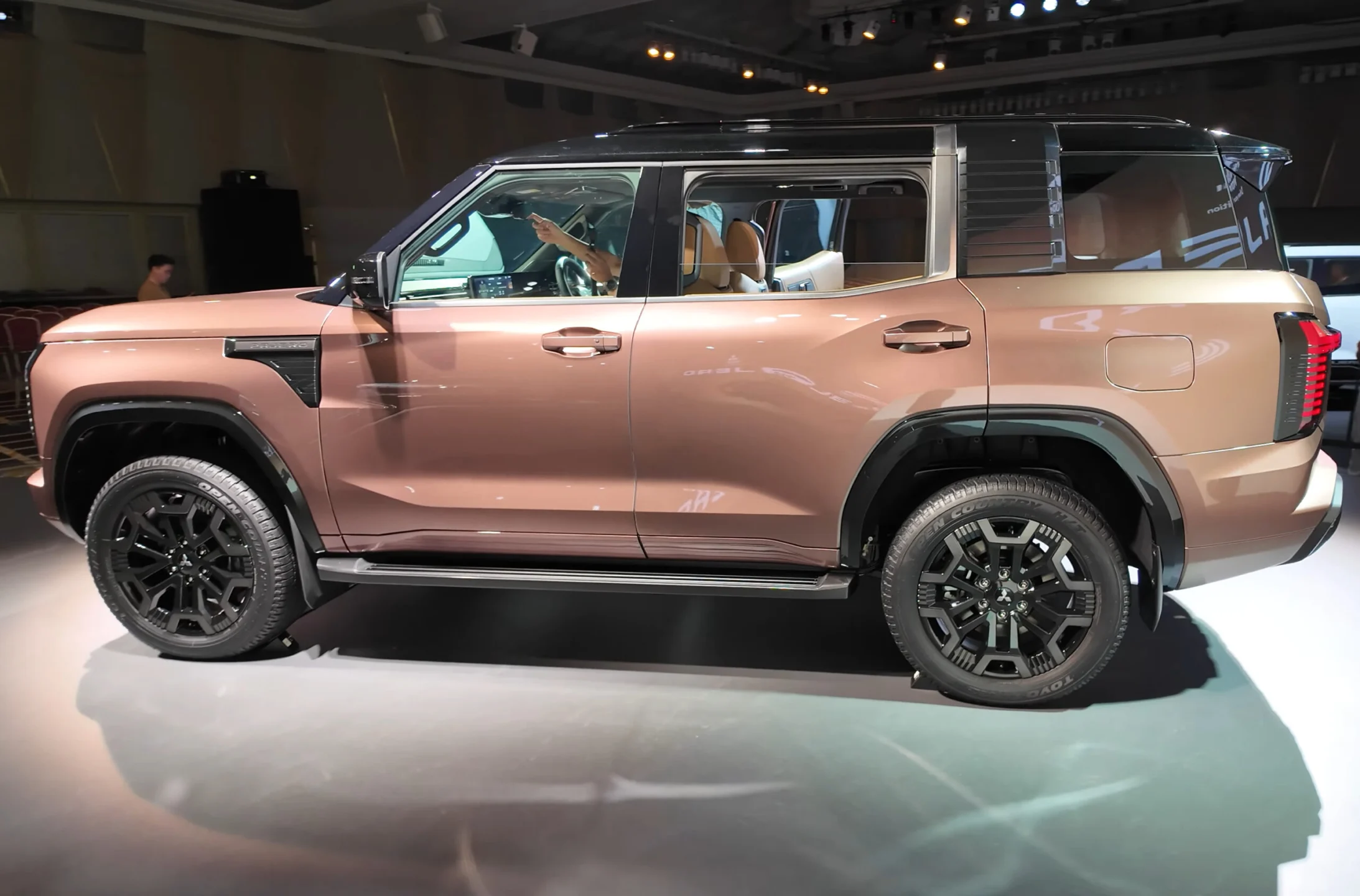
By October 14, more than 4,000 people in Japan had ordered a car Mitsubishi had not yet priced. The order books had opened on October 1. The prices arrived on October 29, when Mitsubishi Motors announced the all-new Pajero would go on sale in Japan on December 17, from 6,193,000 yen to 7,950,800 yen. By the day before that announcement, the count stood at about 5,500, already past the 4,000 Mitsubishi had set itself for the whole fiscal year to March.
Japan gets four trims, split two ways. Super Exceed and Exceed are the flagship pair, dressed for pride of ownership in Mitsubishi’s phrase, with the Super Exceed adding camel-and-black semi-aniline leather and a 12-speaker Yamaha system developed with Yamaha. GLS and GSR lean the other way, toward the cross-country brief, with an 18-inch wheel and tyre package instead of the 20-inch set on the flagship pair. Every version is the same car underneath. The specification sheet published with the prices lists a 2.4-litre clean-diesel turbo making 150 kW and 480 Nm through a new eight-speed automatic, returning 12.1 kilometres per litre on Japan’s WLTC test. Super Select 4WD-II offers rear-wheel drive, full-time four-wheel drive, locked centre differential and locked low range, with seven drive modes from Eco to Rock. The ladder frame underneath uses more high-tensile steel with a bigger cross-section. Ground clearance is 230 mm on the 20-inch tyres, with a 30.4-degree approach angle. The cabin carries the old car’s triple-meter cluster forward as a digital multi-meter display, and the C-pillars borrow the roll bar of the first-generation Pajero. It is 4,920 mm long. The second row slides 150 mm so the third row can be reached without a contortion.
The Sakahogi plant in Gifu prefecture built Pajeros from 1982 until it closed under a board decision taken in July 2020. It built 3.2 million of them, 645,984 for Japan, before the site was sold to Daio Paper for about 4 billion yen. The town around the plant had been nicknamed Pajerotown. The new car is the first Pajero assembled in Thailand, at Laem Chabang, on a line it shares with the Triton ute, and the two vehicles share only the front frame section and the front floor. The frame is Triton-derived and heavily reworked, with a new five-link rigid rear axle in place of the ute’s leaf springs. More than 3.29 million Pajeros were produced across four generations, and the name’s competition record runs to 12 Dakar Rally overall wins, seven of them in a row from 2001 to 2007.

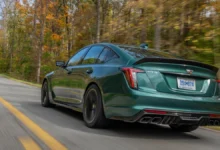
Automotive News reported that 80 percent of the Pajero’s customers in Japan came from competitors, with the reborn car pulling new blood into what its first paragraph called a beleaguered brand. The figure is a reported share, and the part of the article visible without a subscription carries no breakdown of it. The order book itself counts orders, not the cars its buyers previously owned.
Tony Johnston, who runs Mitsubishi Motors in New Zealand, said the response had surprised even the company. “Pajero has a special place in Mitsubishi’s history and among Kiwi drivers, but even we’ve been a little surprised by the response,” he said. His team had been driving pre-production cars around Wellington during local testing, he said, “and we’ve been inundated with people wanting to stop, take photos and videos, ask questions and have a look inside.” The car arrives in New Zealand in December as a VRX at $79,990 plus on-road costs and an Exceed at $86,990.
In Australia, Mitsubishi Motors counted more than 3,000 pre-registrations of interest before launch. Drive reported some 11,000 people had put their names down without driving one. The two counts measure different things and come from different sources. The Australian car starts at $68,490 before on-road costs for a five-seat GLS, $69,990 with seven seats, $79,990 for the Exceed and $84,990 for the GSR, all with the same engine, four-wheel-drive hardware and 3,500 kg braked towing capacity. The warranty runs to 10 years or 200,000 km only if every logbook service is done at a Mitsubishi dealer. Otherwise it reverts to five years or 100,000 km.
The people who have driven it, on dirt in South Australia, came back with a split verdict. CarsGuide’s Andrew Chesterton called the car “shockingly good when you meet it in person” and “the best vehicle the brand has launched in years”, after lapping the same off-road circuit in the old Pajero and the new one and finding the difference staggering. The Pajero has no hybrid or plug-in version at launch. Chesterton noted that Mitsubishi “has dodged electrification entirely for Pajero”, fitting a single-turbo diesel, and that the off-road camera image was blurry and underwhelming, with a raised floor in the third row that leaves adults tilting toward the centre. CarExpert’s first off-road drive praised the build quality and the cabin and called the engine “merely adequate, if not underwhelming” and the car “hardly a bargain buy”. Both drives used pre-production GSRs at a 4WD park, at low speed, with no public-road driving allowed. No Australian first drive has yet tested the car on a public road.
Kunitoshi Itagaki, Mitsubishi’s chief product specialist, confirmed in September that the Nissan Patrol and the Toyota LandCruiser 300 were in the benchmarking pool, along with premium SUVs and Chinese four-wheel drives, and that some ideas from the Chinese cars were carried into the finished Pajero. The engine gap to those benchmarks is wide. The LandCruiser’s 3.3-litre diesel V6 makes 227 kW and 700 Nm against the Pajero’s 150 kW and 480 Nm, and the Patrol’s 3.5-litre petrol V6 makes 317 kW and 700 Nm. The finished car is smaller than both benchmarks in length, width and height. At 2,870 mm, the Pajero’s wheelbase is 20 mm longer than the LandCruiser 300’s.
In Japan, the Pajero starts 107,800 yen below the Land Cruiser 300’s entry GX diesel at 6,300,800 yen. The top Super Exceed at 7,950,800 yen sits 799,700 yen below the Land Cruiser ZX diesel. Toyota’s move helps explain the gap. The updated Land Cruiser 300, on sale in Japan from October 1, dropped its petrol V6 and added hybrid ZX and GR Sport versions at 9,801,000 and 10,200,300 yen, leaving the diesel GX as the only way in under 7 million yen. In Australia the Pajero opens $30,780 below the LandCruiser 300’s $99,270 starting price and $30,500 below the Patrol’s $98,990, while the GSR at $84,990 still sits below both rivals’ entry points. The company behind those prices reported, for the fiscal year ended in March 2026, net sales of 2,896.5 billion yen, operating profit down 45.6 percent to 75.5 billion yen and net profit down 75.6 percent to 10.0 billion yen. First-half operating profit fell 81 percent. Keisuke Kishiura, acknowledging soaring fuel prices as a headwind at the Tokyo announcement, said: “We hope to increase sales by communicating the merits of the Pajero effectively.”
In Thailand, where the car is built, it has been on sale since October 19. Sales there passed 1,500 before Japan’s prices were announced, from 1,499,000 baht for the GLS to 1,999,000 baht for the Super Exceed.