Anthropic Undercuts OpenAI With $20 Personal AI Agent
The standalone mobile app runs on a dedicated virtual machine using Opus 5.5, sharing quota limits with existing Pro tier subscriptions.
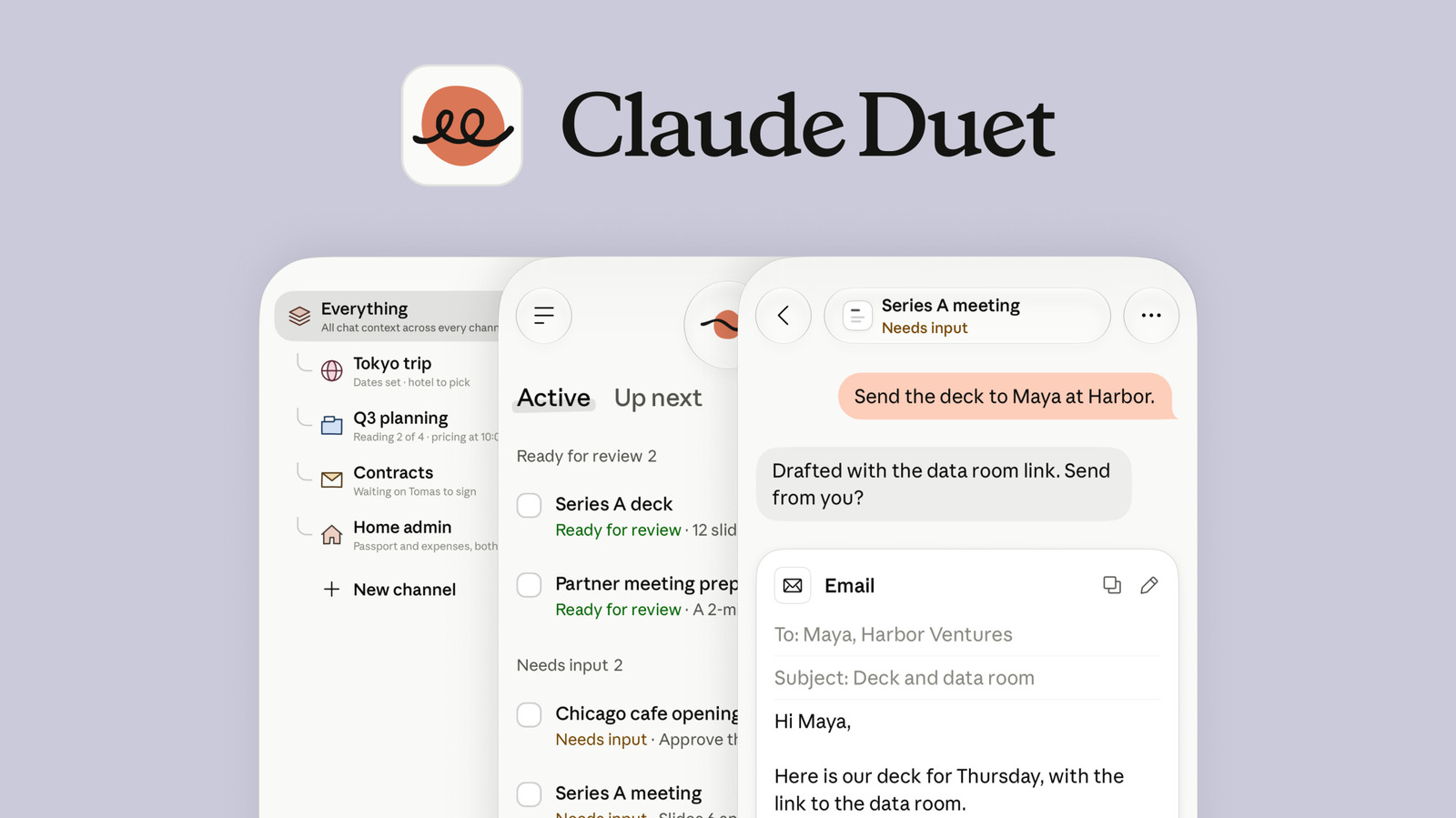
The race to build a persistent, background-running artificial intelligence agent just hit a pricing wall. Anthropic announced Wednesday that its new personal agent, Claude Duet, will be available to subscribers of its $20 per month Pro plan once it exits the current research preview phase. That price point directly targets OpenAI’s Dots, which remains locked behind a $100 per month Pro tier subscription.
For consumers weighing whether to hand over access to their digital calendars, emails, and connected apps, the financial barrier has historically been the deciding factor. By anchoring Duet at the standard Pro tier, Anthropic is attempting to make autonomous agents a mass-market utility rather than a premium experiment. The rollout begins with a waitlist restricted to existing U.S.-based Claude subscribers.


Duet operates on Opus 5.5, according to Anthropic, but its architecture marks a departure from standard chatbot interfaces. The company is releasing standalone Android and iOS applications because the agent does not require an active user session. It runs on its own virtual machine, executing tasks in the background while the user is offline. Those tasks range from scheduling meetings to building dashboards across dozens of tools, creating sales forecasts, and prototyping web apps, the company stated.
Background execution introduces a severe technical constraint: rate limits. Because Duet shares usage quotas with all other Claude tools, including Code, continuous operation could quickly exhaust a subscriber’s monthly allocation. Anthropic says it engineered a specific workaround by programming the agent to check connected accounts only every few hours rather than continuously monitoring them. Users will also have manual controls to set messaging frequency and filter topics, though the company noted it is still tuning the system based on tester feedback.
Security protocols for this type of persistent access remain the primary friction point for adoption. Anthropic said Duet incorporates a new classifier and system prompt designed to prevent sensitive data leaks. Passwords and sign-in tokens are never directly visible to the agent, according to the company. Data related to health or personal finances requires explicit user permission before Duet can process or share it. Anthropic promised further details on these safety protections in the coming days.
Meta’s Muse already occupies space in this emerging market. But the economic split between Anthropic’s $20 threshold and OpenAI’s $100 requirement suggests the next battleground for AI dominance will be decided less by model benchmarks and more by how much consumers are willing to pay for software that acts without supervision.