Power Grid Bottlenecks Are Breaking the AI Data Center Boom
Utility suspensions and local protests are forcing operators to slash forecasts and freeze expansion plans.
The artificial intelligence buildout has hit a physical wall. Electricity grids cannot expand fast enough to power the massive computing facilities being proposed worldwide, and local opposition is forcing utilities to halt upgrades. The financial damage is already showing up on balance sheets.
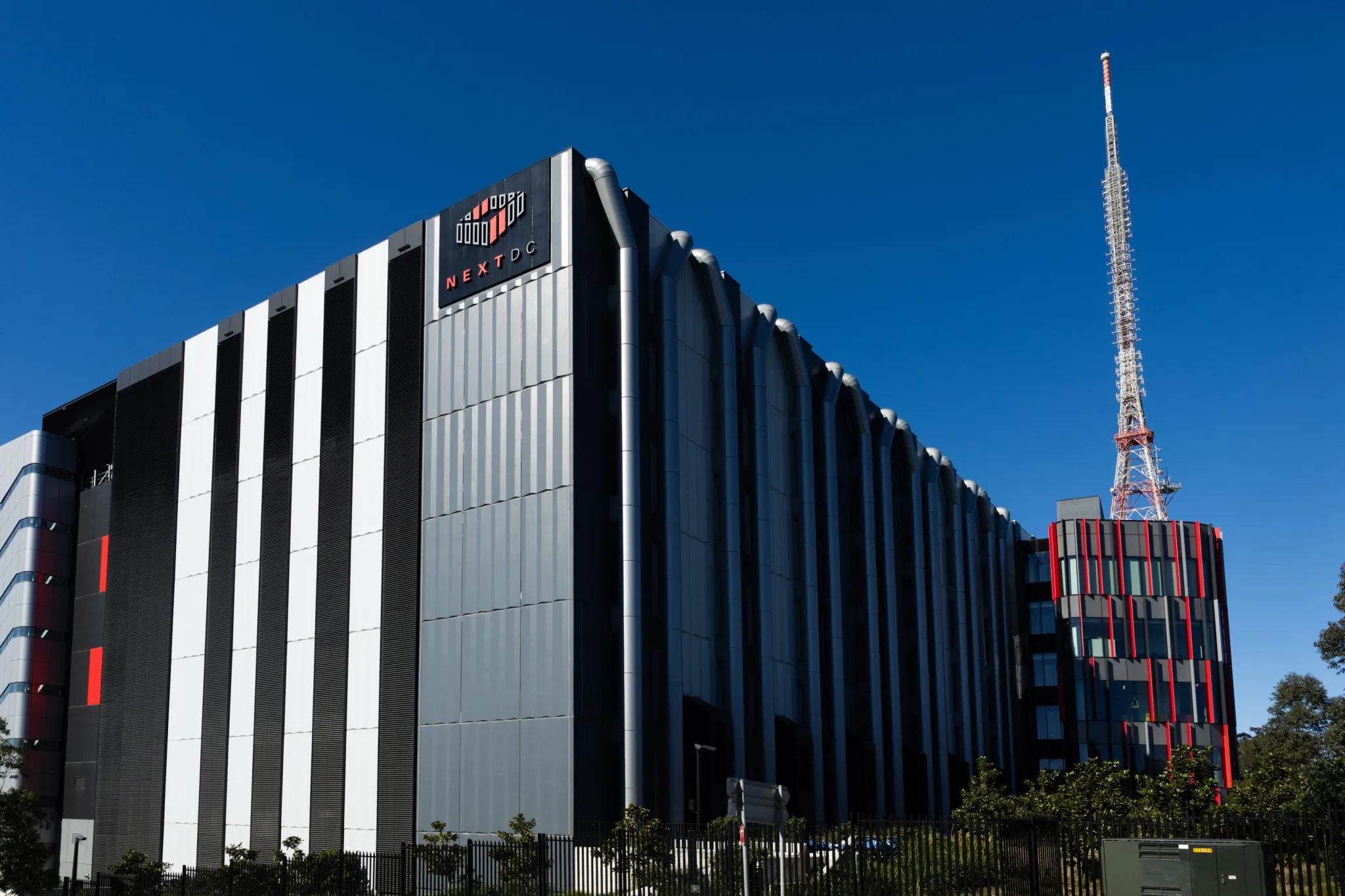
Brisbane-based NextDC slashed its annual revenue forecast by roughly 22% on Wednesday, according to an exchange filing with the Australian Securities Exchange. The data center operator now expects between 475 million and 500 million Australian dollars ($333 million to $350 million), down from a prior range of 615 million to 640 million Australian dollars. Earnings before interest, tax, depreciation, and amortization (EBITDA) guidance fell to between 245 million and 265 million Australian dollars ($172 million to $186 million). Shares cratered 41.7%.
The immediate trigger was Jemena, an electricity provider supplying power to NextDC’s M3 Melbourne facility. Jemena suspended part of its network improvement works last month. It does not expect to restart them before February 2027. Craig Scroggie, NextDC’s CEO, said in the stock filing that Jemena attributed the suspension to community and stakeholder opposition, along with the absence of local council consent pending further consultation.
NextDC responded by cutting capital expenditure by 750 million Australian dollars ($527 million) and placing land acquisitions and new development projects “on hold for the foreseeable future.”
Why are data centers facing such fierce resistance? A single hyperscale facility can consume as much electricity as a small city. In Australia, residents near proposed sites have raised alarms over strained power and water supplies, alongside noise pollution from industrial cooling systems running around the clock. These concerns mirror battles playing out across the United States, where county boards in states like Virginia, Georgia, and Indiana have increasingly rejected or delayed zoning permits for server farms over the past two years.
Grid operators face structural constraints. High-voltage transmission projects typically require five to ten years of planning, permitting, and construction. AI demand is arriving on a timeline measured in months. When utilities pause work due to municipal pushback, developers lose their power connections, and without those connections, they cannot sign the lease agreements that underwrite their financing.
Capital markets are repricing that risk aggressively. On Oct. 9, Firmus, another Australian data center operator, abruptly canceled what was set to be one of the country’s largest IPOs, pivoting instead to private fundraising after investors questioned its debt load and lack of a construction track record. Days later, on Oct. 13, AirTrunk, a Blackstone-owned data center operator, postponed a Singapore listing for its real estate investment trust, according to media reports.
The strain extends well beyond equity markets. Bonds from U.S.-based neocloud CoreWeave plunged below 80 cents on the dollar last week, a threshold indicating severe financial stress. Tesla CEO Elon Musk reacted to the drop by posting “yikes” on his social media platform X. In South Korea, shares of cloud provider Elice Group fell 32% on their first day of trading on Oct. 20, though they rebounded 30% the following session, hitting the daily limit.
More delays appear imminent. Singapore-based DayOne Data Centers is considering shrinking or postponing its upcoming U.S. IPO, Bloomberg reported Wednesday, citing unnamed sources. DayOne did not immediately respond to Fortune’s request for comment and declined comment to Bloomberg.