Lightsource bp Tests Solar Build Innovations to Unlock Project Finance for Gigawatt Farms
Field validation targets lender due diligence for 2028+ gigawatt projects
LONDON — The bottleneck holding back gigawatt-scale solar isn’t panel efficiency or land availability. It’s whether lenders will finance construction methods that haven’t been proven at scale.
Lightsource bp, the UK-headquartered independent power producer backed by BP, is moving four construction innovations from modeling into field trials across Australia and the United States with a singular goal: producing the performance data that project finance banks and insurers require before committing capital to multi-gigawatt developments.
“Bankability is the hurdle,” said Chris Buckland, the company’s global technical director. The NextGen Solar Programme, which has so far relied on supplier data and internal analysis, now enters a validation phase designed to satisfy due diligence committees at institutions that underwrite utility-scale renewable assets.
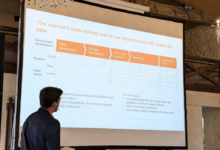
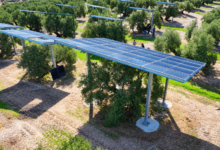
The four innovations — automated GPS-guided piling, frameless steel-framed modules, press-fit bolt-free racking, and on-site pre-assembly — collectively promise a 22% reduction in direct installation costs and a 30% compression in build schedules, according to the company’s investigation-phase findings. But supplier claims alone don’t clear credit committees.
Trials on active projects will test automated piling rigs, robotic module placement, and advanced cable harnessing under real operating conditions. Initial results are targeted within 18 months. The timeline matters: utility-scale solar development cycles typically span three to five years from site control to financial close, meaning innovations validated now feed projects reaching final investment decisions around 2028.
Lightsource bp’s assessment drew on newly developed offerings from manufacturers in China, Europe, and North America. The steel-frame module design, which replaces aluminum, remains under confidentiality agreements that prevent disclosure of cost comparisons — a detail that will factor into lender scrutiny of supply-chain resilience and material price volatility.
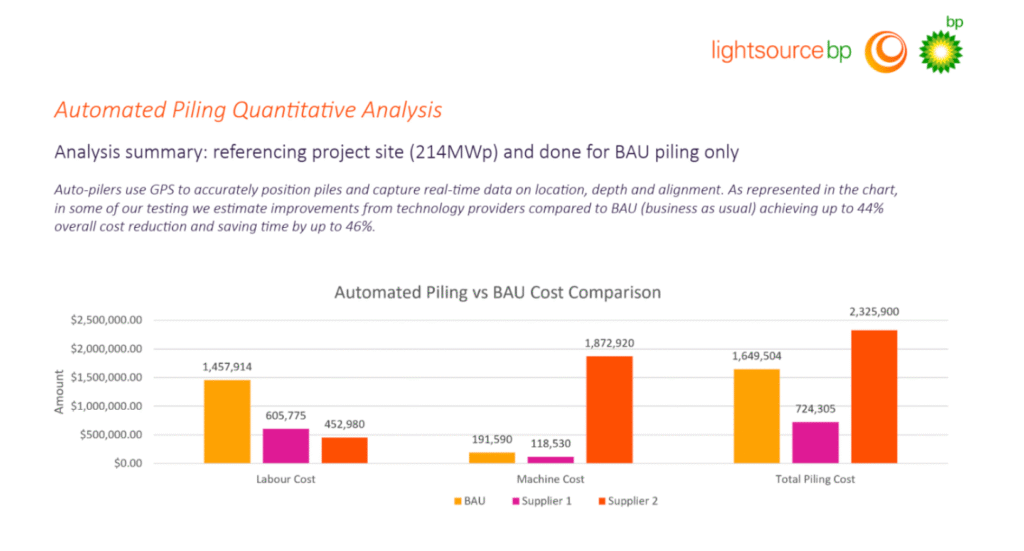
Automated piling alone, using GPS precision to replace manual pile driving, showed a 12.5% installation-time improvement in the company’s analysis. The press-fit module system, which eliminates clamps and bolts, accounts for the bulk of the 30% combined time savings when paired with the new racking design. Both reduce on-site labor hours, a variable that directly affects construction-period interest carry and contractor risk premiums in project finance models.
“Demand for solar energy is rising, and building for gigawatt scale is constrained by existing construction methods, impacting some projects’ commercial viability,” Buckland said. The validation phase is structured to produce the empirical dataset that turns “commercial viability” from a projection into a credit memorandum line item.