Wabi launches multiplayer AI: The end of the solo chatbot?
How shared AI threads replace single-conversation chatbots
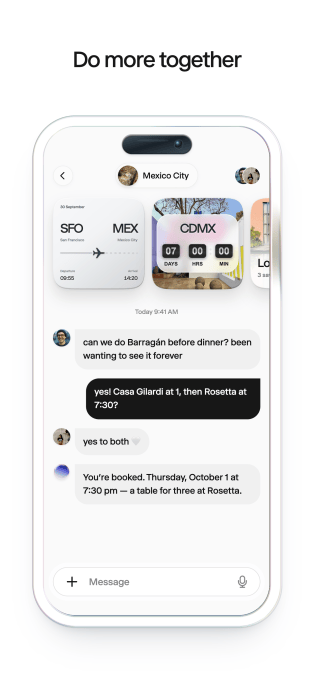
Eugenia Kuyda’s new app Wabi isn’t trying to replace your inbox or book your next flight alone. Instead, it’s betting that personal AI makes most sense when it’s shared — a multiplayer assistant where couples, families, or friends can run multiple task-specific threads together.
The launch Monday is a pivot from how Kuyda, formerly CEO of Replika, first described the company last year. Then, Wabi was pitched as a social platform for building and sharing mini apps. Over the past year, the team concluded users want personal software but “don’t want to spend a lot of time, or any time, building it.” With Wabi 2.0, the agent now builds the apps automatically.
Connect it to your email, and it spins up threads and apps right away — a health thread with a weight-loss tracker, a family thread with nearby children’s events. You can also request custom apps or start new threads manually.


“It’s doing what Instinct and Muse do, but it also has all these apps, which helps users do more stuff,” Kuyda said.
The multiplayer angle is where the real differentiation sits. “It’s not just everything in one single thread like with Instinct and Muse, where you get buried in the information that it sends you everyday,” she said. Single-thread chatbots degrade over time — more context, more hallucinations, more safety-guardrail failures, according to interviews with AI researchers.
Threads double as group chats. In Kuyda’s own thread with her boyfriend, apps at the top of the screen include a live music tracker, a daily relationship question, a running restaurant list, shared calendar events, and a co-reading list with next-read suggestions. Her family thread tracks her daughter’s schedule, finds kid-friendly events, and quizzes her on Japanese.
Inside any shared chat, participants can share as much or as little as they want — email, calendar, even bank account details. Access is scoped per chat, and everyone in the group sees when someone’s personal information is requested.
On privacy, Wabi is SOC 2 compliant, with security controls independently audited. Most user data is stored in the U.S., and the app runs entirely in the cloud, Kuyda said.
The arc from Replika to Wabi is striking. Kuyda left Replika after 12 years, where the AI was built to make people feel less lonely. “To a degree, that is [in Wabi] as well. AI can bring people together,” she said — whether it’s planning a concert together or picking the next book to read side by side.
Wabi is free for now. The company hasn’t settled on a business model, and Kuyda said Wabi is in talks to raise more funds. Twelve years after she demoed IO — Luka’s first conversational product — at TechCrunch Disrupt, the technology has finally caught up to her original vision.
When you purchase through links in our articles, we may earn a small commission. This doesn’t affect our editorial independence.