Laplace Intelligence Uses AI to Crash-Test Robots
The Ann Arbor startup extracts accident data from police reports to generate unpredictable failure scenarios for self-driving trucks and warehouse robots.
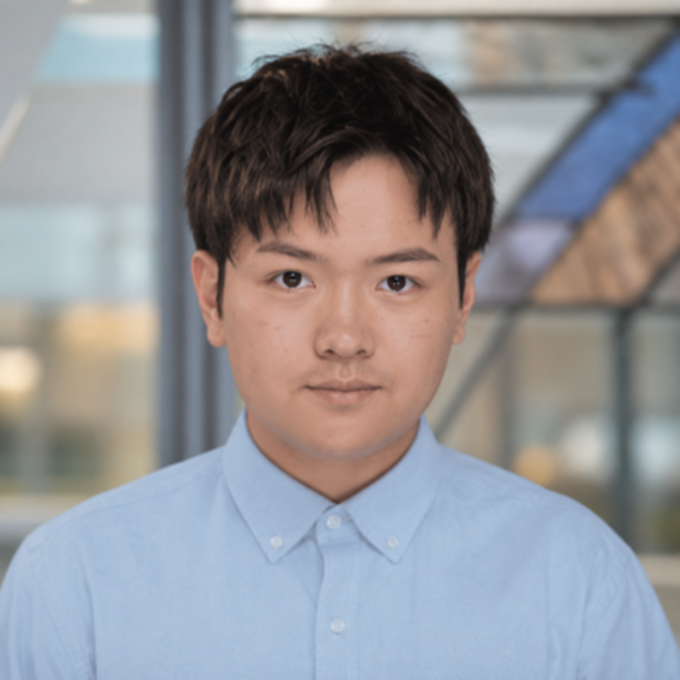
Ann Arbor-based startup Laplace Intelligence has begun generating revenue by deploying artificial intelligence agents to deliberately crash-test autonomous vehicles and robots in simulated environments, targeting a gap left open as generalized robotics move toward real-world deployment.
The company builds high-fidelity simulations reconstructed from actual map data, then unleashes automated red-teaming software to probe those environments for failure points. Rather than relying on human engineers to script rare edge cases, the system designs its own collision scenarios using inputs scraped from police reports and news coverage of past accidents.
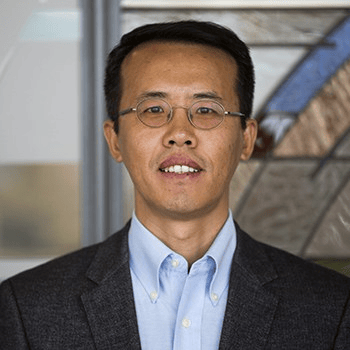
Co-founders Howie Sun and Henry Liu spun Laplace out of the University of Michigan a year ago. Sun spent eight years researching how to challenge autonomous driving AI in simulation. In 2023, the pair published findings on the subject that landed on the cover of Nature, prompting direct inquiries from self-driving companies looking to implement the methodology.

The platform relies on a post-trained version of Nvidia’s Cosmos world simulation architecture. Developers feed it reference material — a single Google Street View image, for instance — and the system generates a true-to-scale interactive environment. It pulls real-time congestion data from navigation providers like TomTom to populate roads with dynamic traffic. During testing, other simulated actors react to anomalies. If a test vehicle swerves into oncoming lanes, surrounding cars alter their trajectories to avoid collisions rather than allowing objects to clip through one another, a common flaw in generative world models.
“There’s less data on generalized robotics,” Sun told TechCrunch. “No one knows what the edge cases will be in the real world.”
Customers currently include Texas-based autonomous trucking firm Bot Auto and a major Japanese automotive manufacturer. Most contracts are project-based, though the company reported turning a modest profit. Laplace is also running a free smart city pilot for San Jose, California, focused on traffic operations alongside Nvidia and T-Mobile, and has entered early-stage work with partners developing humanoid robotics for warehouses.
Laplace is one of 20 startups competing in Startup Battlefield 200 at TechCrunch Disrupt in San Francisco this week, scheduled to present Tuesday afternoon. The pitch comes as the company seeks outside funding to scale operations against larger incumbents. Applied Intuition, a late-stage simulation competitor, has raised $1.2 billion to date at a $15 billion post-money valuation.
The startup takes its name from an 1814 thought experiment by French scholar Pierre-Simon Laplace, who theorized that knowing the exact state of every particle in the universe would allow total prediction of the future.