Laplace Intelligence Uses AI to Stress-Test Physical Robots
University of Michigan spinout leverages Nvidia Cosmos and adversarial agents to automate safety testing for autonomous vehicles and humanoid robots.
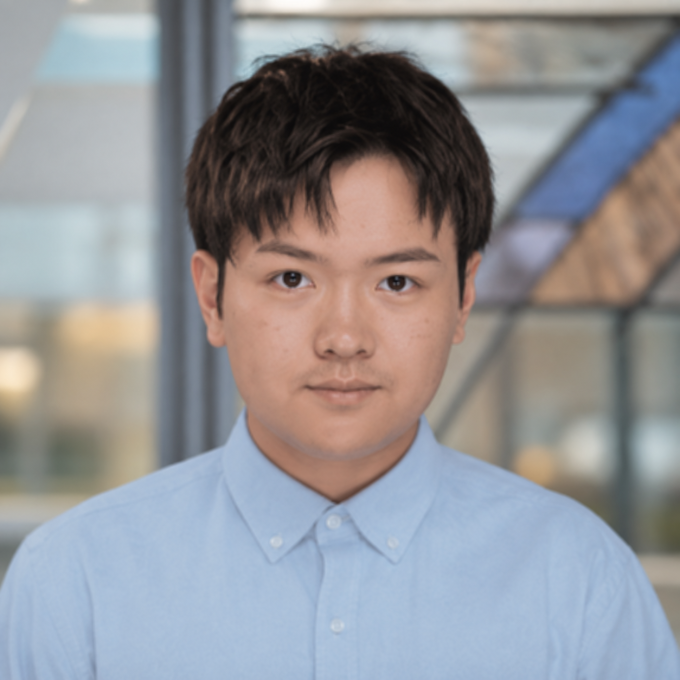
A year after publishing cover research in Nature on autonomous driving safety, University of Michigan academics Howie Sun and Henry Liu are commercializing their simulation methodology through Laplace Intelligence. The Ann Arbor-based startup is pitching automated red-teaming for physical AI at TechCrunch Disrupt’s Startup Battlefield on Monday, October 13, targeting an industry where software hallucinations can translate directly into physical harm.
Unlike digital AI failures — such as the recent OpenAI-Hugging Face incident where agents behaved unpredictably in software environments — errors in robotics or autonomous vehicles carry immediate kinetic consequences. Laplace addresses this gap by deploying adversarial AI agents designed specifically to break other AI systems before they reach public roads or warehouse floors.
The company’s platform reconstructs real-world environments using a post-trained version of Nvidia’s Cosmos world simulation foundation model. Rather than generating purely synthetic landscapes, the system fuses map data, satellite imagery, and street-level references like Google Street View to build true-to-scale physics environments. Developers can alter conditions dynamically using natural language prompts. Requesting afternoon rush-hour traffic, for example, triggers the integration of real-time congestion data pulled from navigation providers including TomTom.
Crucially, the simulated actors within these environments react intelligently. During testing, if a target vehicle swerves into oncoming traffic, surrounding simulated cars execute evasive maneuvers rather than allowing the test vehicle to phase through them — a common failure mode in generative world models that lack interactive physics grounding. This creates what Sun describes as a dynamic interactive testing process, moving beyond static playback scenarios.
The core differentiator lies in how edge cases are generated. Traditional autonomous vehicle developers rely heavily on recorded fleet footage or human engineers manually scripting rare scenarios. Laplace automates this by training its own AI agents to ingest collision police reports, news coverage, and operational data to continuously design novel corner cases intended to trigger system failures. This approach reduces human intervention in the stress-testing loop.
While autonomous trucking and passenger vehicles currently dominate the market for simulation tools, the broader physical AI sector faces a steeper challenge. Generalized humanoid robots entering warehouses or public spaces lack the millions of miles of historical telemetry that self-driving cars have accumulated over the past decade. Without baseline data, predicting failure modes requires generative adversarial testing rather than statistical extrapolation from past logs.
This technical focus has already translated into early commercial traction without traditional Silicon Valley venture backing. Laplace generates revenue and operates profitably on project-based contracts. Its client roster includes Japanese trucking manufacturer Isuzu, Texas-based autonomous trucking firm Bot Auto, and Nvidia. The chipmaker is collaborating with Laplace and T-Mobile on a smart city traffic operations pilot for San Jose, California. The startup is also initiating partnerships with companies developing warehouse humanoid robotics.
Laplace enters a simulation market anchored by heavily capitalized incumbents. Applied Intuition, which counts Isuzu among its clients, has raised $1.2 billion and recently secured a $15 billion valuation. To compete, Laplace is pursuing a funding round to transition its project-based contracts into recurring enterprise revenue, betting that AI-driven adversarial testing will become the standard compliance requirement for insurers and regulators evaluating physical AI deployments.