U.S. 10-Year Yield Spike Outpaces G7 as Debt Hits $40T
Moody's chief economist warns of a debt spiral after the federal deficit reached $2 trillion for the fiscal year ending in October.
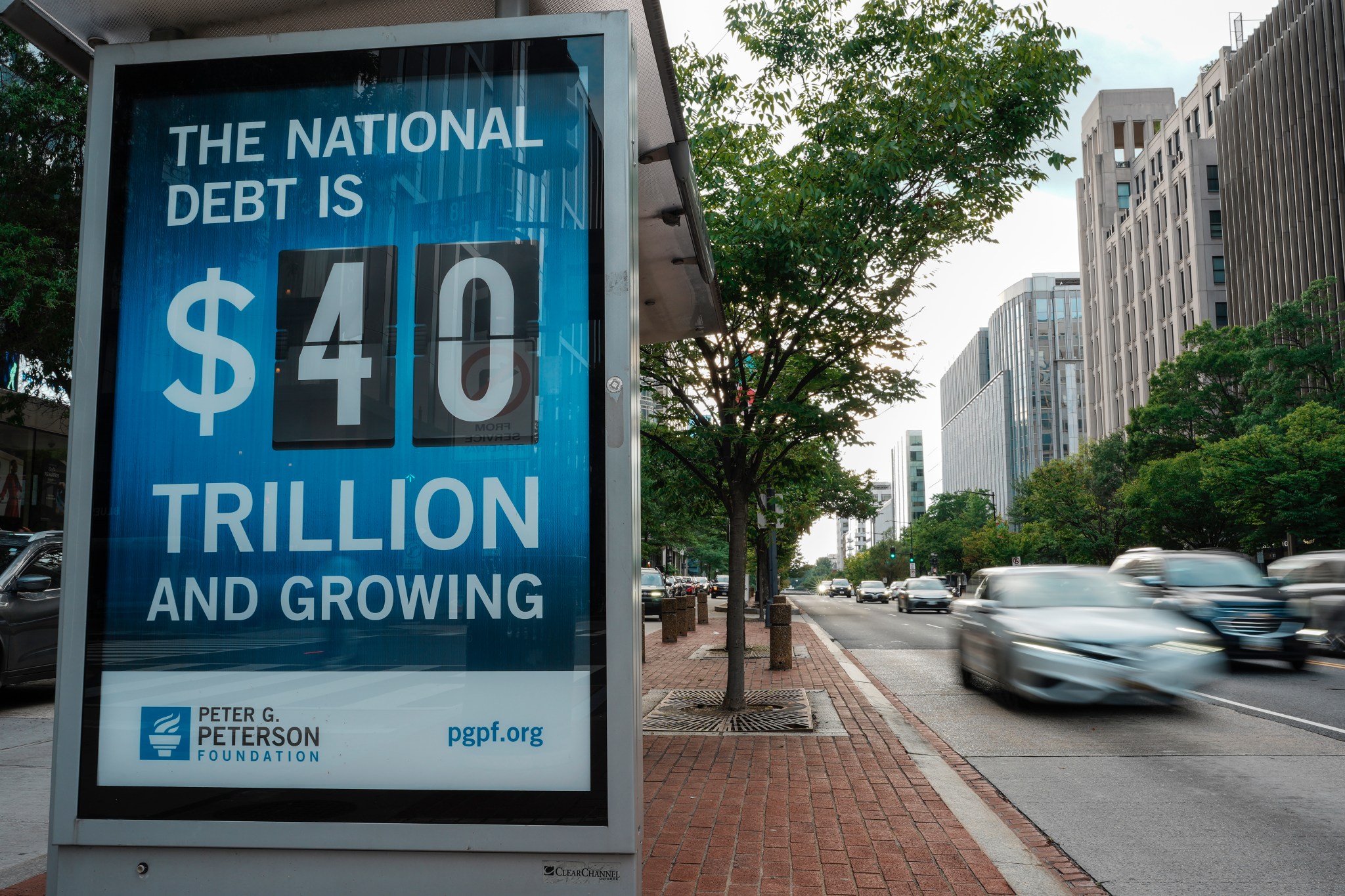
The U.S. 10-year Treasury yield climbed roughly a full percentage point this year, outpacing every other major economy and signaling that global investors are pricing in mounting fiscal risk. The jump coincides with a national debt burden exceeding $40 trillion and a debt-to-GDP ratio of 126%, according to government data.
Mark Zandi, chief economist at Moody’s, wrote in a note late Sunday that the rate movement points to early signs of a debt spiral. His assessment followed a U.S. Treasury confirmation that the federal deficit reached $2 trillion for the fiscal year ending in October. More than half of that shortfall went directly toward interest payments alone.
“Global investors see all this and appear to be demanding a higher rate to compensate for the mounting risk,” Zandi wrote. “A vicious cycle threatens to take hold, with higher rates adding to the interest payments and debt load, which in turn pushes rates up even more.”


Treasury Secretary Scott Bessent has pushed back against alarm over domestic borrowing costs. He argued that rising U.S. yields would warrant concern only if they were idiosyncratic rather than tracking a broader global trend.
That broader trend is real. The International Monetary Fund reported last week that long-term sovereign yields have increased sharply across advanced economies. Between February and September of 2026, the average 10-year government bond yield among G7 nations rose by over 1 percentage point, hitting its highest level in nearly two decades, the IMF said.
Zandi acknowledged the global context but maintained that the scale of American borrowing sets it apart. Because Treasuries function as the global benchmark for pricing risk, he wrote, the U.S. situation is “far and away the most important one.”
Economists outside Moody’s have outlined different mechanisms for how sustained deficits could break. Bridgewater Associates founder Ray Dalio has previously warned that America faces an economic “heart attack” driven by debt saturation. Kent Smetters, a professor of business economics and public policy at the University of Pennsylvania’s Wharton School, told Fortune he expects the U.S. will ultimately inflate its way out of a crisis.
Historical precedent offers limited comfort. During the 2023 debt ceiling standoff, Fitch Ratings downgraded the United States from AAA to AA+, citing repeated political brinkmanship over borrowing limits and what it called a deterioration in fiscal governance. That downgrade followed S&P Global’s similar action in 2011. Both episodes triggered immediate spikes in short-term Treasury bill yields before markets stabilized.
Unlike those earlier periods, current interest expenses consume a larger share of federal revenue than defense spending. The Congressional Budget Office projected earlier this year that net interest costs would exceed $1 trillion annually by the end of the decade if rates remain elevated.
Fortune Daily breaks the traditional barrier between audience and newsroom. The show transforms Fortune’s trusted reporting into actionable, conversational, and entertaining insights for an emerging class of business leaders. Watch here.
Countries carrying heavy interest burdens generally recorded the steepest yield increases this year, according to Zandi’s analysis.