

Qatar, TotalEnergies to Build Solar Plant in Lebanon
Doha commits to fully financing the renewable energy project outside the state budget while coordinating southern reconstruction efforts with Washington.
QatarEnergy and France’s TotalEnergies have agreed to jointly develop a solar power plant in Lebanon, marking the first concrete step in a broader Qatari intervention aimed at stabilizing the country’s collapsed electricity grid and funding reconstruction in its war-damaged south.
Lebanese Prime Minister Nawaf Salam confirmed Friday that Qatar will finance, construct and operate the renewable energy project entirely outside the Lebanese state budget. The arrangement shields the initiative from Lebanon’s paralyzed public finances and protects it from the entrenched political interference that has historically derailed infrastructure development in the country. Salam said he will present the electricity sector plans to the Lebanese Cabinet shortly.
The financial structure of the agreement is significant for a country where sovereign debt defaults have frozen access to international capital markets since 2020. By positioning the investment through state-backed Qatari entities partnering with a Western energy major, the project bypasses the need for Lebanese government borrowing or guarantees. TotalEnergies already holds deep roots in the country as the operator of Block 9 in Lebanon’s offshore maritime zone, making the French firm a logical partner for Doha’s entry into the domestic power market.

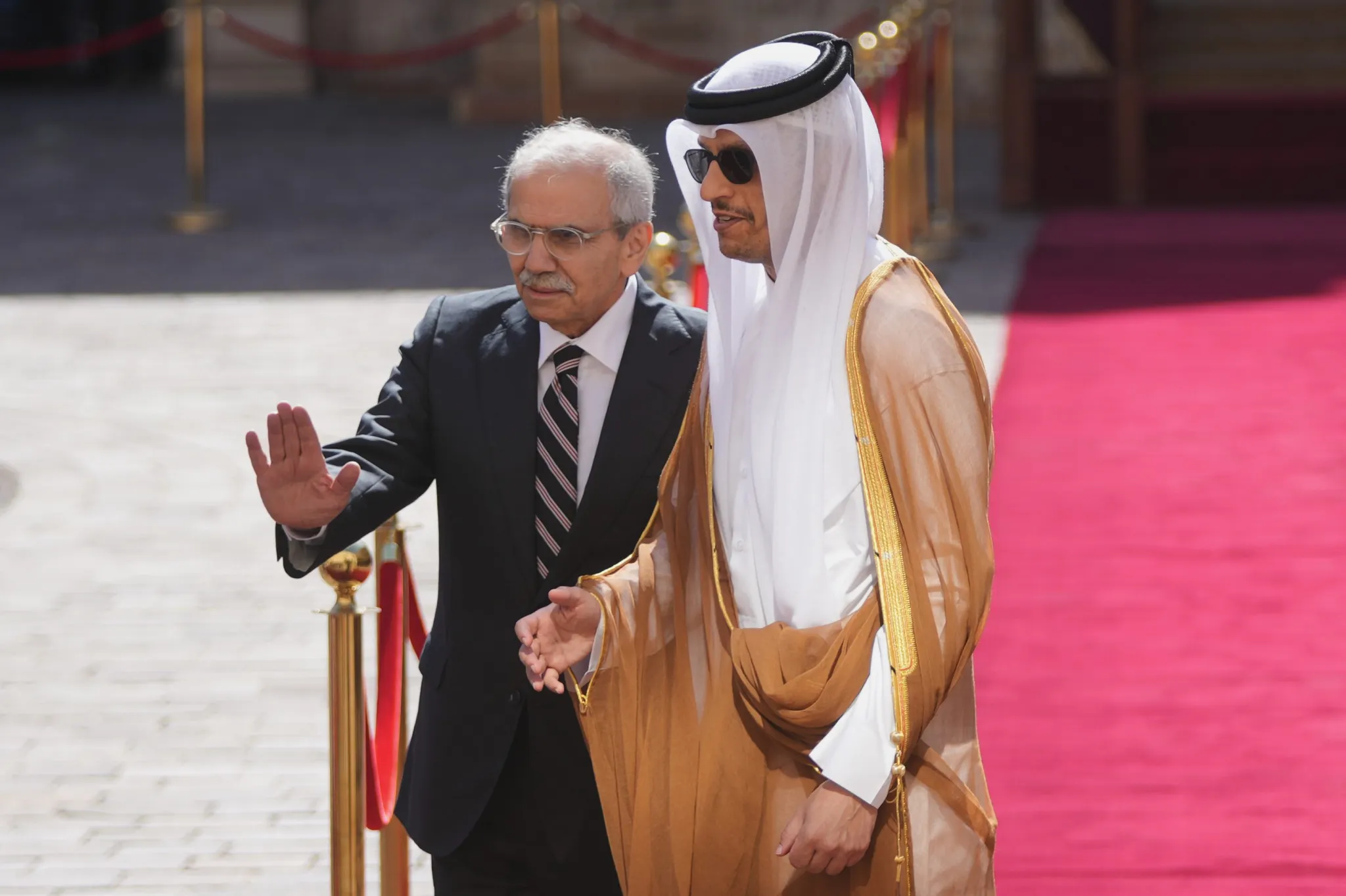
Qatari Prime Minister Sheikh Mohammed bin Abdulrahman Al Thani announced the partnership following talks in Beirut with Salam, President Joseph Aoun and Parliament Speaker Nabih Berri. Al Thani described the solar facility as an initial project designed to anchor a larger investment portfolio intended to generate returns for participating Qatari companies while injecting capital into the Lebanese economy.
The intervention targets a utility sector that has functioned as one of the primary engines of Lebanon’s economic collapse. Électricité du Liban, the state power monopoly, has accumulated approximately $40 billion in losses over the past three decades, driven by outdated generation infrastructure, severe technical transmission losses, artificially suppressed tariffs and chronic overstaffing tied to sectarian patronage networks. For years, the state covered fuel procurement shortfalls by drawing unauthorized advances directly from the Central Bank, a practice that drained foreign currency reserves and accelerated the financial meltdown that began in late 2019. Most households currently receive only a few hours of state-supplied power daily, forcing widespread reliance on expensive, unregulated private diesel generators.
Beyond the power sector, Doha is positioning itself as the lead coordinator for rebuilding southern Lebanon, working alongside the United States to prepare for the return of displaced populations. More than 300,000 people remain unable to return to their homes despite a June ceasefire that halted the latest escalation between Israel and Hezbollah, according to the International Organization for Migration. At the peak of the conflict, which erupted after Hezbollah fired rockets into northern Israel in early March following U.S. and Israeli strikes on Iran on Feb. 28, roughly 1.2 million Lebanese were displaced.
Israeli forces captured dozens of towns and villages in southern Lebanon during the war and have conducted large-scale structural demolitions in occupied areas over the past several months. Al Thani called for a complete Israeli withdrawal and a cessation of attacks inside Lebanese territory.
Doha’s expanding footprint in Beirut also extends to the military. Qatar has committed tens of millions of dollars to the Lebanese Armed Forces since the onset of the economic crisis, stepping into a vacuum left by traditional Western donors whose security assistance has fluctuated amid political instability. Al Thani reaffirmed Friday that Qatar will continue funding the army, characterizing the military as the sole national institution capable of safeguarding Lebanon’s security and internal cohesion.
According to the International Organization for Migration, more than 300,000 Lebanese remain displaced from the south as of the latest assessments following the June ceasefire.









