AI-Built Zelda: Link’s Awakening PC Port Hits Public Beta
Built primarily with Anthropic's Claude, the native recompilation targets a 2019 Switch release as similar projects for Mario titles surface.
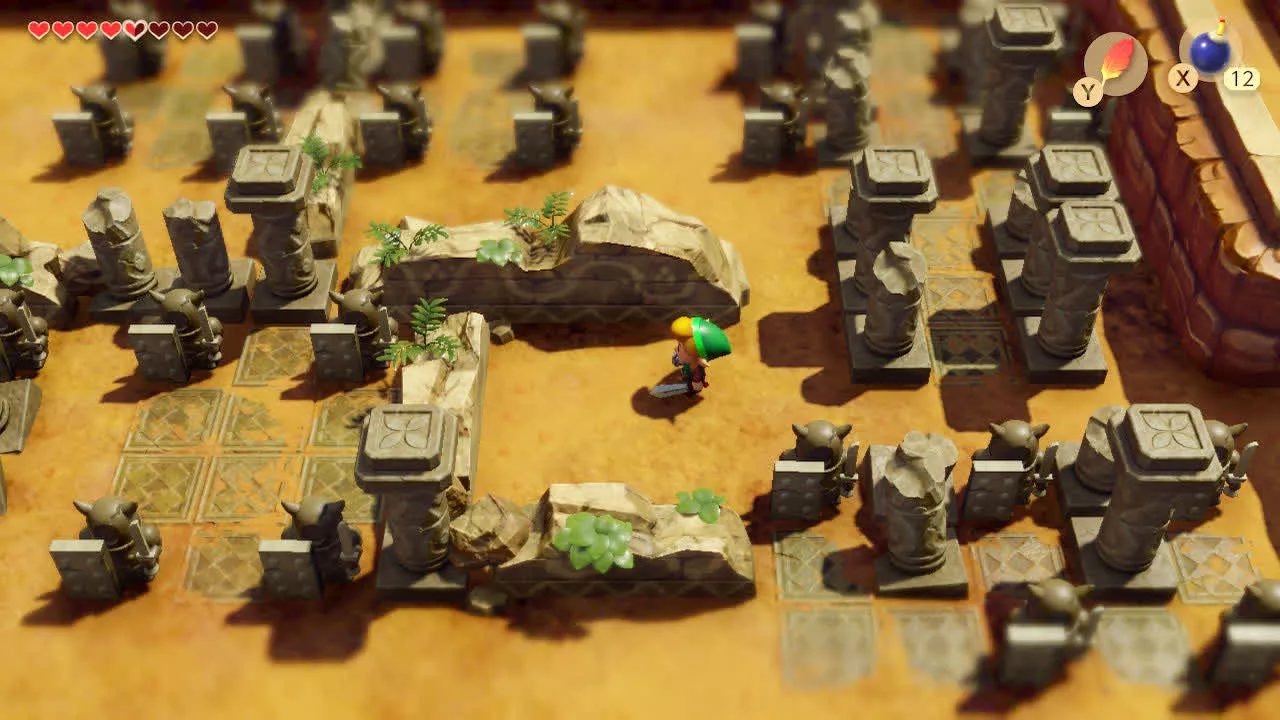
A fan-made PC port of the 2019 Nintendo Switch remake of The Legend of Zelda: Link’s Awakening has entered public beta on GitHub, marking a significant escalation in the community-driven effort to reverse-engineer modern console software. Unlike the wave of decompilation projects that have historically targeted hardware from the 1990s and early 2000s, this release reproduces a title released just seven years ago for a platform Nintendo only recently began phasing out with the introduction of its successor hardware.
The project was built almost entirely using Anthropic’s AI coding agent, Claude. Developer peiikai utilized the tool to decompile the original code, write the vast majority of the new source code, and generate the repository’s documentation. This approach reflects a broader shift across the reverse-engineering community, where large language models are rapidly dismantling technical barriers that previously stalled volunteer efforts for years.
Before AI-assisted coding became widely accessible, static recompilation — the process of translating compiled machine code back into human-readable source code that can be recompiled for a different architecture — required deep expertise in assembly language and months of manual labor. Projects like the decades-long efforts to fully decompile Super Mario 64 or Ocarina of Time relied on teams of specialized programmers. AI tools now automate much of the pattern recognition and syntax translation required to bridge proprietary console architectures and standard x86 or Arm PC environments.


Running natively on Windows, macOS, Linux, and experimentally on Arm-based Linux systems, the port offers technical advantages that official emulation cannot easily match. Native recompilation bypasses the heavy CPU overhead typically associated with emulating the Switch’s Nvidia Tegra X1 processor. Players must independently supply their own legally obtained game files to compile the executable, a standard practice within the scene designed to navigate copyright enforcement.
The transition to native PC hardware unlocks several features absent from the original Switch release. The port supports arbitrary display resolutions and multiple aspect ratios, removing the constraints of the handheld’s fixed 720p and 1080p outputs. Peiikai integrated full keyboard support, alternate controller button prompts, optional 360-degree analog movement replacing the original eight-way directional input, and a comprehensive randomizer. The randomizer shuffles items and quests, supporting unique per-seed save files to extend replayability.
Despite these additions, the reliance on generative AI introduces distinct stability challenges. Automated code translation frequently struggles with complex memory management, proprietary graphics pipelines, and edge-case logic that human engineers would intuitively resolve. Peiikai has cautioned that the current build remains in beta and contains several serious known issues that prevent a flawless reproduction of the retail experience. AI agents excel at syntactic translation but often lack the architectural context required to guarantee runtime stability without extensive human debugging.
The Link’s Awakening release is not an isolated experiment. Early development footage has already surfaced showing active recompilation efforts targeting Super Mario Odyssey, originally released in 2017, and Super Mario Bros. Wonder, which launched in late 2023. Neither project has published source files yet, and both remain highly unstable. However, captured video demonstrates Super Mario Odyssey approaching 60 frames per second when executed on a laptop equipped with an Nvidia RTX 3050 GPU, suggesting that viable performance on mid-range consumer hardware is achievable even at this preliminary stage.
Nintendo has historically maintained one of the most aggressive intellectual property enforcement postures in the gaming industry, routinely issuing DMCA takedowns against fan games, ROM hosting sites, and emulator-adjacent tools. In early 2024, the company pursued legal action against prominent Switch emulator developers, ultimately forcing the shutdown of Yuzu. While static recompilations occupy a legally distinct gray area compared to traditional emulators — as they distribute newly written source code rather than proprietary firmware or decryption keys — the rapid application of AI to recent commercial releases significantly compresses the timeline between a game’s retail availability and its community preservation.