

Marissa Mayer Launches Dazzle AI, Warns Tech Was ‘Cavalier’
The former Yahoo CEO's new startup uses smartphone camera rolls to automate personal tasks amid growing public skepticism toward artificial intelligence.
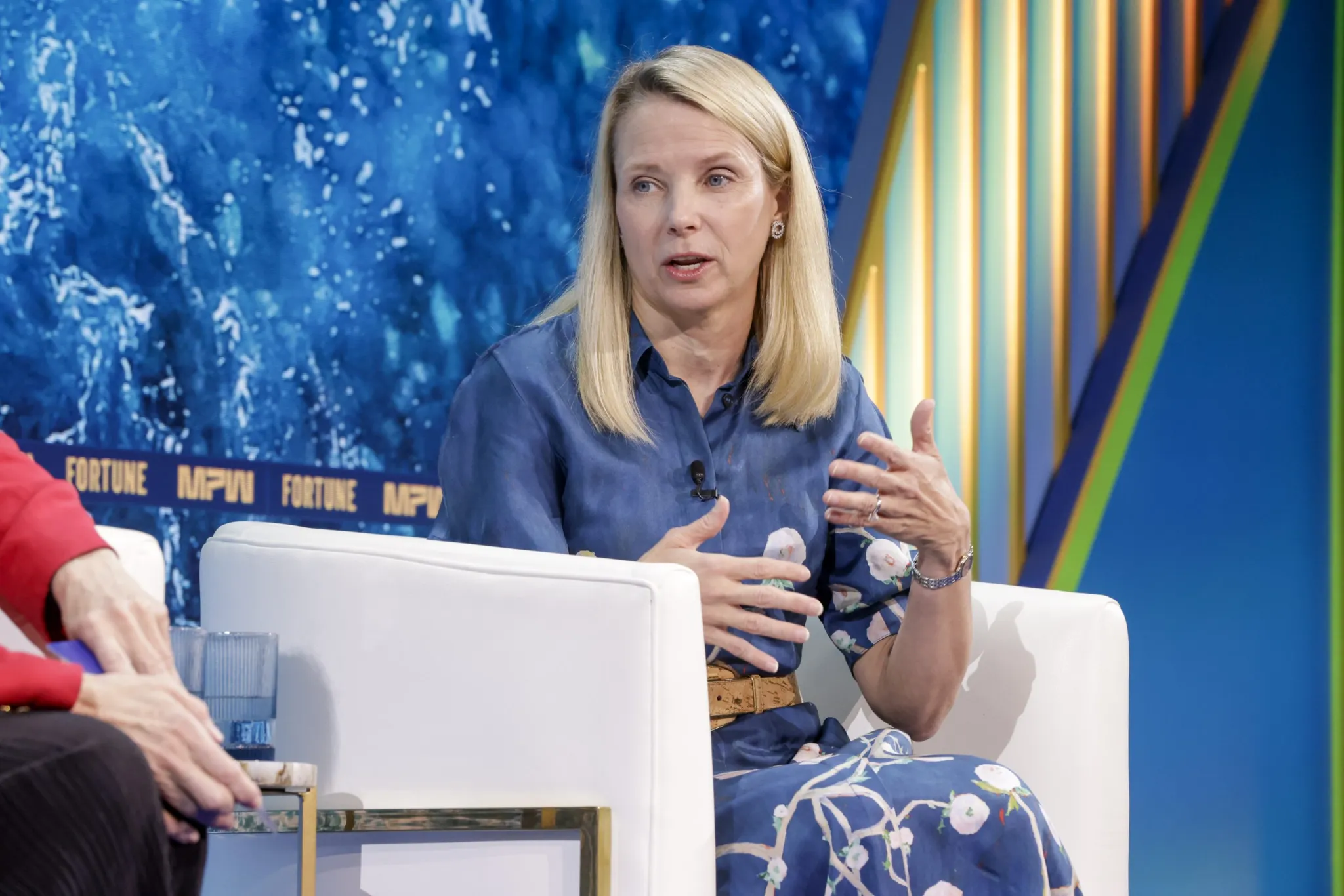
Marissa Mayer formally launched Dazzle AI on Sept. 29, introducing a personal assistant application that mines smartphone camera rolls to automate daily tasks. The startup, which raised an $8 million seed round at a $35 million valuation earlier this year, represents the former Yahoo CEO’s latest attempt to build consumer software after winding down her previous venture, Sunshine, in 2025.
Dazzle operates on a premise derived from Mayer’s research at Sunshine: roughly 60% of photos stored on a typical device are meant for sharing, while the remaining 40% function as functional memory aids. Users photograph dentist appointment cards, children’s shoe sizes, or event flyers not for nostalgia but as visual reminders. Dazzle pairs that contextual data with human and artificial intelligence agents designed to execute the underlying tasks automatically, generating what Mayer described as a self-completing to-do list.
“If I had to be your personal assistant for a week—booking travel, buying gifts, buying clothes, keeping track of kids’ schedules—I’d ask for your camera roll,” Mayer said during a conversation with Fortune executive editorial director Diane Brady at the Most Powerful Women Summit in California.


The product arrives as public trust in artificial intelligence continues to erode across the United States. Recent polling by organizations including Gallup and the Pew Research Center has consistently shown growing American anxiety over AI’s impact on employment and privacy, a sharp reversal from the widespread enthusiasm that greeted generative models in 2023. Mayer attributed part of that backlash to the technology sector itself, arguing that the industry’s early positioning of AI was “perhaps too cavalier.”
That miscalculation left consumers questioning how enterprise-level adoption would affect jobs, families, and children. Mayer maintained the technology could improve all three, though she cautioned against false certainty regarding the trajectory of frontier models.
“We have a new form of intelligence, and anyone who says they know how this is going to play out is either lying or arrogant or both,” she said. While acknowledging the possibility of negative outcomes, she estimated those odds at well below 50%, pointing toward potential breakthroughs in medicine and science.
Privacy remains the central friction point for any application requiring deep access to personal photo libraries. Unlike cloud-based image generators that process prompts remotely, Dazzle demands continuous visibility into a user’s most intimate digital archive. To mitigate risk, the platform allows users to grant full, partial, or zero access to their images, and immediately discards sensitive photos upon detection. The service currently operates on an invite-only basis. Mayer indicated the company will eventually rely on subscription fees, transaction fees, or a combination of both, while maintaining a free tier.
Mayer noted that early adopters skew male, a demographic trend common in beta-stage productivity tools. She expressed hope that the broader AI ecosystem would attract more female builders, emphasizing the necessity of diverse voices shaping foundational technologies.
Her return to the startup arena follows a turbulent period in Silicon Valley leadership. Mayer joined Google as employee number 20 and became one of its most visible executives before taking the helm at Yahoo in 2012, making her the youngest woman to lead a Fortune 500 company at the time. Her tenure drew intense scrutiny, particularly her decision to take a brief maternity leave—a choice she defended by noting Yahoo “couldn’t afford to have a CEO who was out for three or six months.” She departed after Verizon acquired Yahoo’s core assets and real estate for $4.8 billion in 2017.
Dazzle is currently accepting users through its waitlist as it prepares to scale beyond its initial invite-only cohort.









