Barn Owls Nest in Manhattan Water Tower, a First
Residents mistook the owls' screeching for a person in distress before identifying the historic roost near Central Park
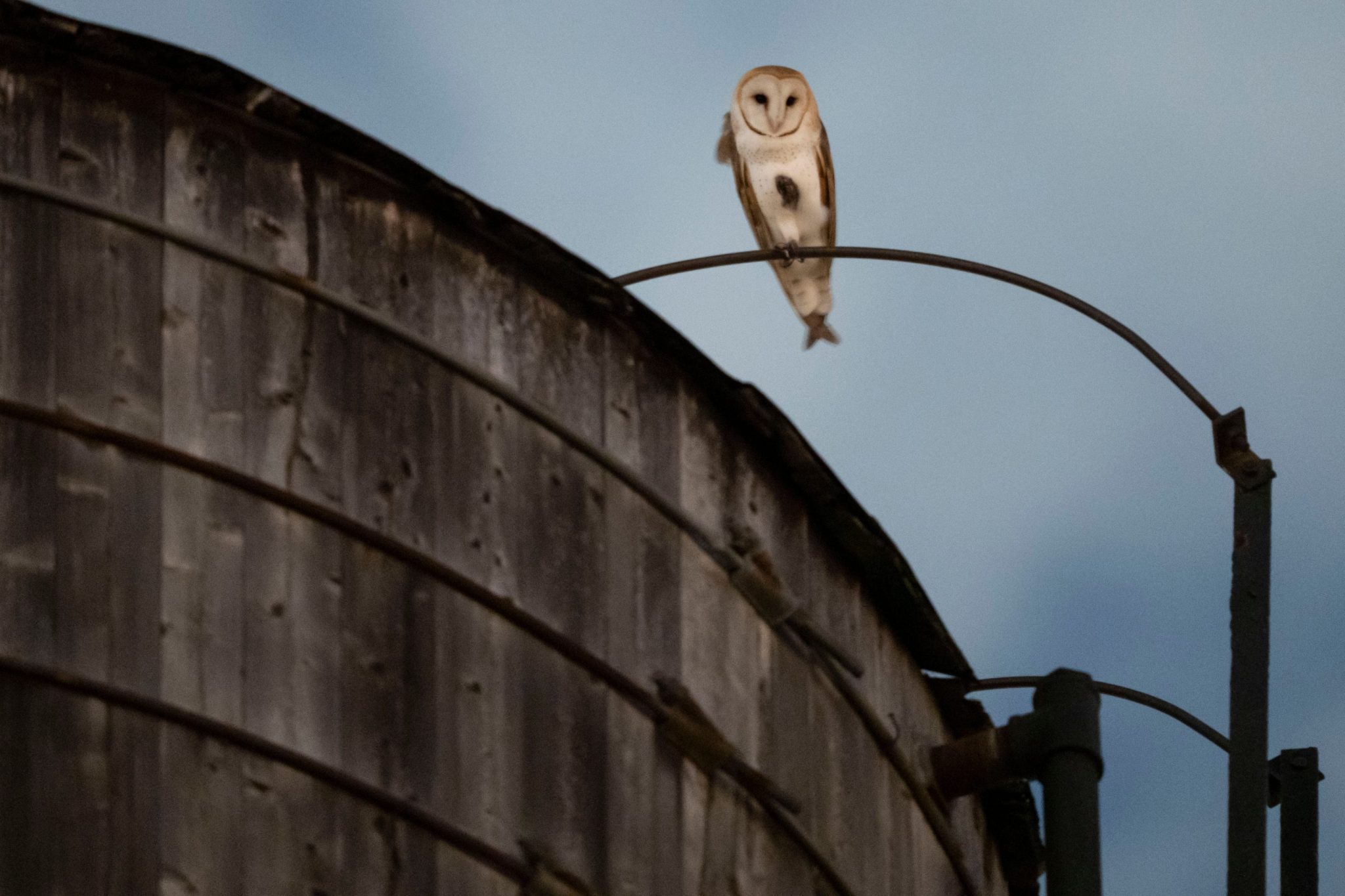
A family of barn owls breeding inside a wooden water tower on West 75th Street marks the first documented nesting of the species in Manhattan in recorded history. The discovery has transformed a quiet Upper West Side block near Central Park into a nightly observation site for wildlife photographers and local residents.
David Barrett, who operates the Manhattan Bird Alert tracking account, confirmed the presence of at least one adult and five fledglings at the structure. He observed an adult delivering rodents to the roost, indicating active hunting behavior. Some photographers monitoring the site believe a second adult and up to six fledglings are present.
Andrew Farnsworth, a migration ecologist at the Cornell Lab of Ornithology, said collective ornithological records contain no previous evidence of barn owls nesting anywhere in Manhattan. The species typically favors hollow trees, abandoned buildings, and agricultural structures. New York sits at the northern edge of the barn owl’s natural range, where populations have experienced severe long-term declines, according to the state Department of Environmental Conservation.


The birds’ presence went unexplained for weeks before their identification. Residents reported piercing screeches beginning in early September. Thomas Obersteiner described the calls as sounding like someone in distress, prompting him and his wife to check on their children multiple times. Barn owls produce a harsh, rasping scream rather than the hooting call associated with most owl species, a vocalization adapted for communication across open terrain that carries distinctly through dense urban corridors.
Elisabeth Williams identified the source on Oct. 6 after spotting multiple owls on the water tower, having previously seen a single bird perched on a nearby apartment windowsill. She alerted local media, triggering widespread attention.
Wooden rooftop water towers are ubiquitous across New York City, required by building codes for structures taller than six stories to maintain adequate water pressure. Their cedar or redwood construction provides insulation against temperature extremes, creating sheltered cavities that mimic the tree hollows and cliff ledges barn owls historically occupy. Urban ecologists increasingly view aging infrastructure as accidental habitat for displaced wildlife, though such colonization remains exceptionally rare for sensitive raptors.
Jessica Wilson, executive director of NYC Bird Alliance, noted the event has drawn both dedicated birders and the general public. Nocturnal raptors rarely establish territories in densely populated areas due to light pollution, noise, and limited prey bases.
Rodenticide exposure represents the most immediate threat to the family. Anticoagulant rat poisons accumulate in rodent tissue and transfer to predators, causing fatal internal bleeding. Secondary poisoning has devastated raptor populations globally. In 2023, New York State enacted restrictions on certain anticoagulant rodenticides to protect wildlife, but enforcement gaps and legacy chemicals remain persistent hazards in urban environments.
Manhattan has a history of high-profile avian visitors. Pale Male, a red-tailed hawk, nested above Fifth Avenue for three decades until his death in 2023. Flaco, a Eurasian eagle-owl released from the Central Park Zoo by an unknown individual in 2023, became a citywide fixture before dying in February 2024 after striking a window. American woodcocks continue their annual spring stopovers in Bryant Park during northward migration.
Obersteiner has opened his adjacent roof deck to photographers, hosting groups of up to 20 people on recent evenings.
The fledglings are expected to disperse from the water tower within weeks as they reach full independence. Local observers continue documenting the adults’ nightly hunting routes over Central Park and the surrounding blocks as of mid-October.