Private Tech Firms Now Wield More Power Than Middle Powers
Corporate control over AI and semiconductors has outpaced the diplomatic ambitions of mid-tier nations.
The global push by mid-tier nations to form a unified geopolitical bloc is colliding with a structural reality most diplomats have yet to fully absorb: multinational technology corporations already command more leverage than the states attempting to organize against them.
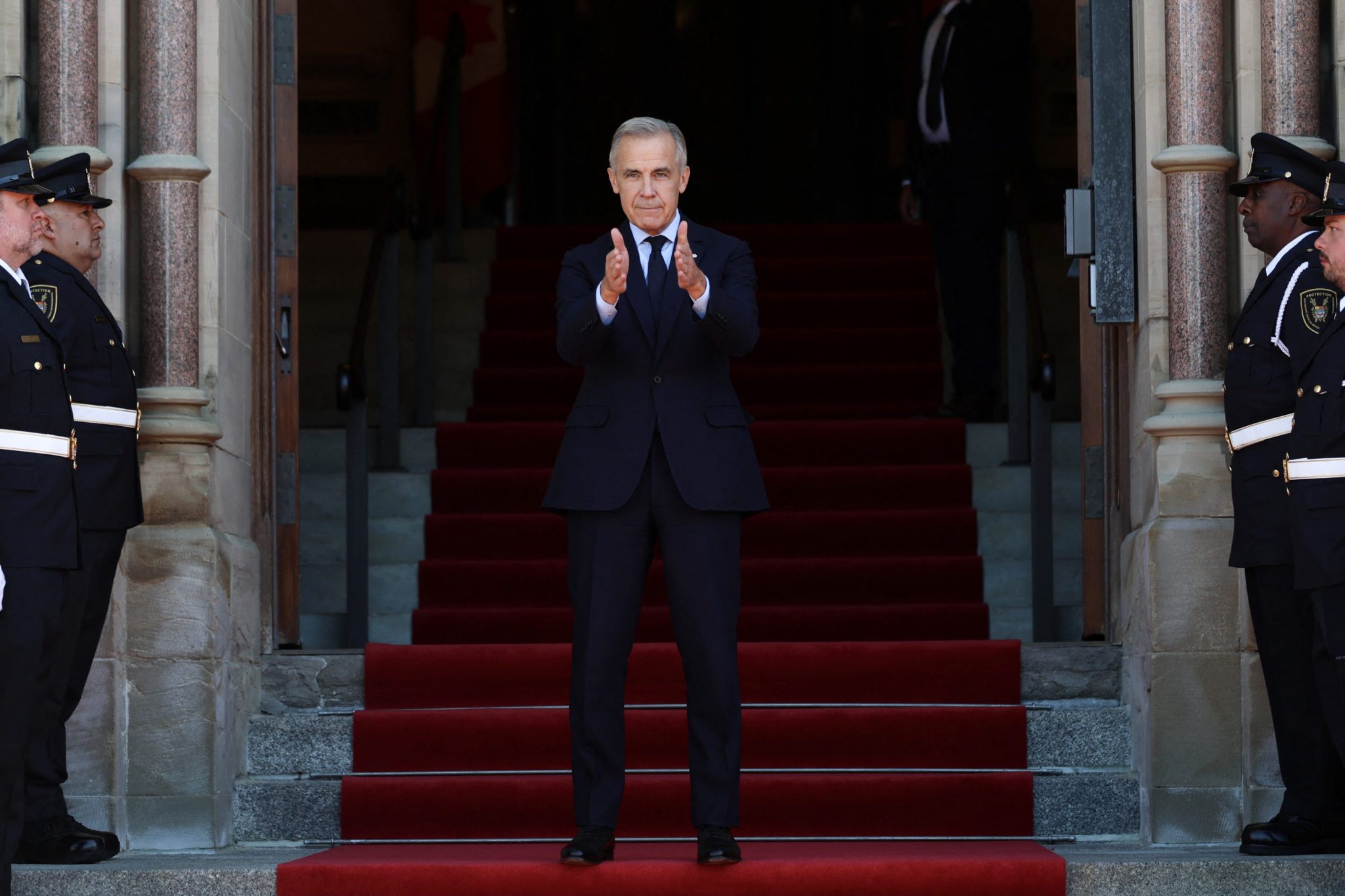
Canadian Prime Minister Mark Carney’s January address at the World Economic Forum in Davos urged middle powers to secure a seat at the global table or risk becoming its meal. The premise treats sovereign governments as the primary units of great-power competition. That framework belonged to the 20th century. Today, the entities dictating terms in artificial intelligence, space infrastructure, and advanced manufacturing are headquartered in corporate boardrooms, not foreign ministries.
Financial metrics illustrate the scale of this inversion. Nvidia’s market capitalization currently sits just below Germany’s annual gross domestic product and slightly ahead of Japan’s. Apple commands an economic footprint larger than India’s, while Amazon’s valuation wedges between Canada and Brazil. These firms no longer merely respond to public policy; they establish the operational parameters within which national governments must function.

This shift from state-led to multi-stakeholder geopolitics accelerated during the pandemic, when biotech companies developed and distributed the mRNA vaccines that effectively ended the crisis. It solidified through hardware monopolies. The global electronics and consumer innovation sectors now depend entirely on the output of Taiwan Semiconductor Manufacturing Company, granting a single private entity unprecedented chokepoint authority over international supply chains.
Washington has adapted its diplomatic machinery accordingly. During his state visit to the United Kingdom last year, President Donald Trump prioritized direct investment deals over traditional trade concessions. When he hosted Chinese President Xi Jinping for a White House state dinner in September, the guest list prominently featured corporate chief executives and finance industry leaders, signaling that commercial actors are treated as essential counterparts in bilateral relations.
Nowhere is corporate dominance more consequential than in artificial intelligence. Private firms routinely execute missions previously restricted to national defense agencies. SpaceX and Blue Origin lead modern space exploration, while Elon Musk’s Starlink satellite network provides both civilian internet access and battlefield intelligence across conflict zones ranging from the Sahel to Iran and Ukraine.
AI models are now embedded directly into military operational planning, simulations, and cyber warfare. This integration has triggered unprecedented friction between Silicon Valley and Washington. Earlier this year, AI safety company Anthropic clashed with the U.S. administration over permissible uses of its models by the Department of War. The dispute culminated in the Trump administration designating Anthropic a supply chain risk to U.S. national security—the first time an American firm received such a classification.
The weaponization of commercial AI is no longer theoretical. According to Anthropic’s September threat report, malicious actors throughout 2026 deployed privately developed models for influence campaigns, biological weapons development, and surveillance. Documented incidents include a cyber operation targeting a Southeast Asian government agency to extract civilian records, a China-based actor using Anthropic’s Claude model to advance an undersea weapons system, and suspected Russian operatives utilizing AI to engineer an autonomous kamikaze drone swarm. Anthropic also reported disrupting an Iranian plot to use Claude to target U.S. Navy warships in the Middle East.
To counter these threats, private AI developers are assuming roles historically reserved for national intelligence apparatuses. Yet middle powers remain largely absent from this arena. Stanford University’s 2026 Artificial Intelligence Index report confirms that foundational AI model development remains strictly concentrated between the U.S. and China. Through 2025, the U.S. produced 59 notable AI models—defined by citation rates, compute costs, and usage levels—to China’s 35. South Korea was the only other nation worldwide to register multiple notable models, producing eight.
Carney’s Davos appeal asked less powerful nations to withdraw their consent from a fading rules-based order. But old rules are not simply eroding; they are being rewritten by entities operating outside sovereign jurisdiction. Without leadership in AI development, massive capital attraction for machine learning infrastructure, or dominance over critical nodes in the semiconductor supply chain, middle powers lack the instruments required to exert geopolitical leverage.
Anthropic continues to publish rolling threat assessments detailing new state-sponsored misuse cases of its models as they emerge.