OCC Finds All 9 Largest U.S. Banks Debanked Customers
Federal investigators reviewed 420,000 pages of documents to expose how vague reputation risk policies targeted legal industries and political groups.

A sweeping federal investigation has confirmed that every major U.S. bank systematically restricted financial services to customers based on political affiliations, religious beliefs, and lawful business activities between 2020 and September 2025.
The Office of the Comptroller of the Currency released a 47-page report Wednesday detailing how the nine largest institutions it supervises — JPMorgan Chase Bank, Bank of America, Citibank, Wells Fargo Bank, U.S. Bank, Capital One, PNC Bank, TD Bank, and BMO Bank — maintained policies that denied or limited access to banking services for constitutionally protected reasons. The OCC reviewed nearly 100,000 consumer complaints and examined approximately 420,000 pages of internal documents to reach its findings.
Comptroller Jonathan Gould characterized the evidence as irrefutable, stating that fair access to financial services is a mandate rather than an aspiration. The investigation was launched under an executive order President Donald Trump signed in August 2025 directing regulators to determine whether banks had been required or encouraged to restrict accounts over political or religious views.

Unlike traditional account closures driven by fraud detection, anti-money laundering compliance, or credit risk, debanking occurs when financial institutions sever relationships with legally operating customers due to perceived reputational threats. Under the Bank Secrecy Act and related federal statutes, banks are obligated to monitor for illicit finance. However, the OCC found that the nation’s largest lenders blurred the line between genuine regulatory compliance and ideological screening, using vaguely defined “reputation risk” frameworks to justify cutting off clients.
Specific incidents outlined in the report include a payment processor owned by one of the banks closing a merchant account in February 2021 because the business sold merchandise promoting Trump and the Make America Great Again brand. Two years later, another institution refused to provide financial services to a public education organization solely because its political arm endorsed Democratic candidates. Organizations classified as bipartisan continued receiving services without interruption.

The restrictions extended well beyond partisan politics. The OCC identified formal and informal policies across the surveyed banks targeting entire legal industries. Sectors flagged for heightened scrutiny or outright exclusion included oil and gas exploration, coal mining, firearms manufacturing and distribution, private detention facility operations, tobacco and e-cigarette retail, and digital asset firms. This sector-wide approach mirrors what cryptocurrency advocates and House Republicans have previously described as a coordinated regulatory pressure campaign against blockchain companies.
The mechanics of such widespread industry blacklisting rely heavily on the structure of U.S. bank supervision. National banks operate under OCC charters, while state-chartered institutions answer to the Federal Reserve or the Federal Deposit Insurance Corporation. Because these agencies possess broad discretion over safety-and-soundness examinations, banks frequently adjust their risk appetites based on examiner expectations, even when those expectations arrive as informal guidance rather than binding rules. Wall Street sources indicated prior to the August 2025 executive order that Biden-era regulators used this leverage to pressure institutions into scrutinizing accounts for political reasons.
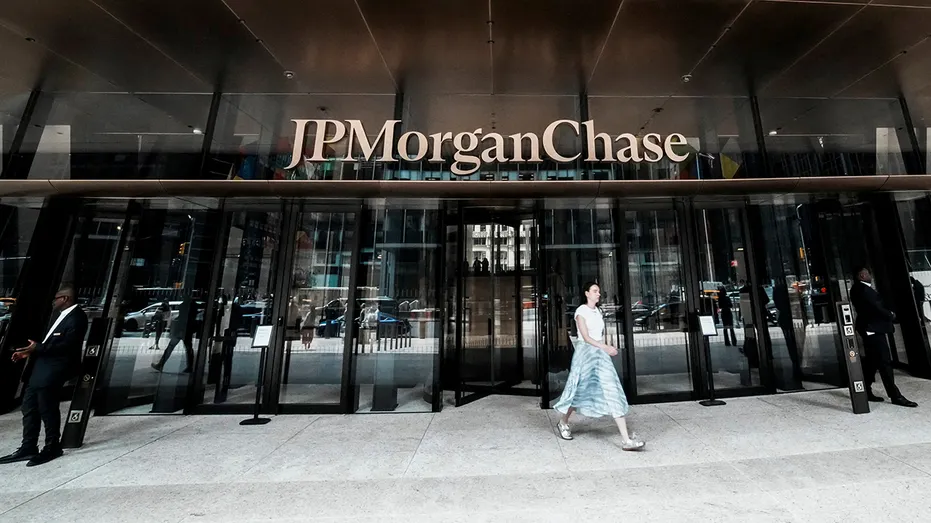
JPMorgan Chase, which serves nearly 90 million customers and small businesses globally, acknowledged the historical interactions cited in the report. In a statement, the bank said its current policies prohibit discrimination based on political or religious views but agreed that years of operating under a regulatory environment prone to second-guessing decisions fostered a culture of excessive caution across the industry. Wells Fargo declined to comment, while BMO Bank directed inquiries to the Bank Policy Institute, a trade group representing large lenders. The institute stated the industry supports fair access and looks forward to working with Congress on additional proposals.
Senate Banking Committee Chairman Tim Scott, R-S.C., called the findings damning and pledged further committee action when Congress returns from recess. Rep. French Hill, R-Ark., who leads financial services oversight efforts in the House, has tied the OCC’s findings directly to broader legislative pushes aimed at refocusing bank examination standards and advancing asset tokenization frameworks free from legacy banking bottlenecks.
The personal dimensions of the issue have also shaped the political response. Trump has repeatedly claimed he was targeted by politically motivated debanking and previously announced plans to sue JPMorgan Chase over post-Jan. 6 account actions. Melania Trump wrote in her memoir that a long-standing banking relationship was terminated abruptly, and that Barron Trump was subsequently denied a new account following the events of Jan. 6, 2021.
The OCC initially announced its review of the nine largest banks by asset size in September 2025 and published preliminary findings in December 2025. The agency is now evaluating specific regulatory actions designed to strip reputation risk of its current function in bank decision-making and formally prohibit discrimination against prospective customers based on political or religious beliefs.