The ‘Broken Rung’ Stalls Women’s First Promotion to Manager
A rollback in corporate diversity commitments has widened the first-promotion gap, leaving Black women facing the steepest career setbacks since 2021.

Corporate America’s gender gap is no longer primarily a ceiling problem. It is a foundation problem.
For every 100 entry-level men promoted to manager in 2025, only 93 women advanced alongside them. That seven-point deficit at the first step of the corporate ladder creates a structural bottleneck that no amount of executive mentorship or C-suite diversity initiatives can fully repair downstream. When fewer women secure early management roles, the pipeline feeding senior leadership shrinks permanently.
This phenomenon, widely tracked as the “broken rung,” has proven remarkably resistant to standard corporate interventions. Data compiled through Lean In and McKinsey & Company’s annual Women in the Workplace report — the largest continuous study of women in corporate America, tracking hundreds of companies and millions of employees since 2015 — shows that the disparity compounds at every subsequent level. Because men routinely outnumber women in managerial pools from the outset, they inevitably dominate director, vice president, and C-suite selections years later.


The fragility of recent progress is most visible among Black women. In 2021, when nine out of 10 companies elevated diversity metrics to strategic priorities, promotion rates for Black women nearly reached parity. By 2025, that momentum had collapsed. Only 60 Black women were promoted to manager for every 100 men, signaling a severe regression tied directly to shifting corporate resource allocation.
That retreat aligns with a broader pullback across U.S. business. Following the Supreme Court’s 2023 decision striking down race-conscious admissions in higher education, legal challenges against corporate diversity programs multiplied. Major employers subsequently scaled back or renamed employee resource groups, reduced dedicated diversity staffing, and altered public commitments. The result is measurable: without sustained institutional pressure, historical hiring biases quickly reassert themselves in first-time promotion cycles.
Addressing the broken rung requires structural changes to how companies evaluate early-career talent. Organizations that have successfully narrowed the gap typically audit their promotion criteria to eliminate subjective assessments that favor candidates who resemble existing managers. Standardizing interview rubrics, requiring diverse candidate slates for open supervisory roles, and tracking internal mobility data by demographic category are practices that yield faster results than generalized leadership training.
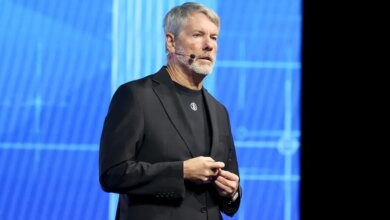
The urgency of fixing entry-level advancement has pushed unconventional leadership models into view. Bridget Griswold, 25, now runs Lean In, the nonprofit founded by former Meta COO Sheryl Sandberg to operationalize workplace equity. Griswold transitioned into the chief executive role after serving briefly as a product manager at Meta, an appointment orchestrated by Sandberg herself.
Gen Z executives leading established organizations they did not found remain statistically anomalous. Corporate boards traditionally rely on decades of tenure as a prerequisite for top appointments, a convention that inherently delays younger demographics from assuming operational control. Griswold has faced public scrutiny over her age, a reaction she attributes to entrenched expectations rather than capability gaps.
“When a young man gets a big job in our world, it’s not really that interesting, because it happens often,” Griswold said Tuesday during Fortune’s Most Powerful Women conference in Santa Barbara, California. “When a young woman gets a big job, which happened to me, it’s a little more interesting because it’s rare.”
Her appointment underscores a tension within corporate equity efforts: organizations advocate for systemic change while frequently defaulting to traditional markers of seniority when filling their own executive seats. Lean In operates under the premise that waiting for conventional readiness timelines perpetuates the very exclusion it campaigns against.
The organization continues to publish its benchmark workforce data annually, pressuring employers to disclose internal promotion disparities. As companies finalize their 2026 talent strategies this quarter, the latest figures confirm that without deliberate, audited intervention at the entry-to-manager transition point, representation targets at the top remain mathematically unreachable.