
U.S. Takes Equity Stakes in Quantum Firms in $300M CHIPS Act Push
Commerce Department Secures Minority Stakes in Three Quantum Hardware Developers via $300 Million CHIPS Act Investment
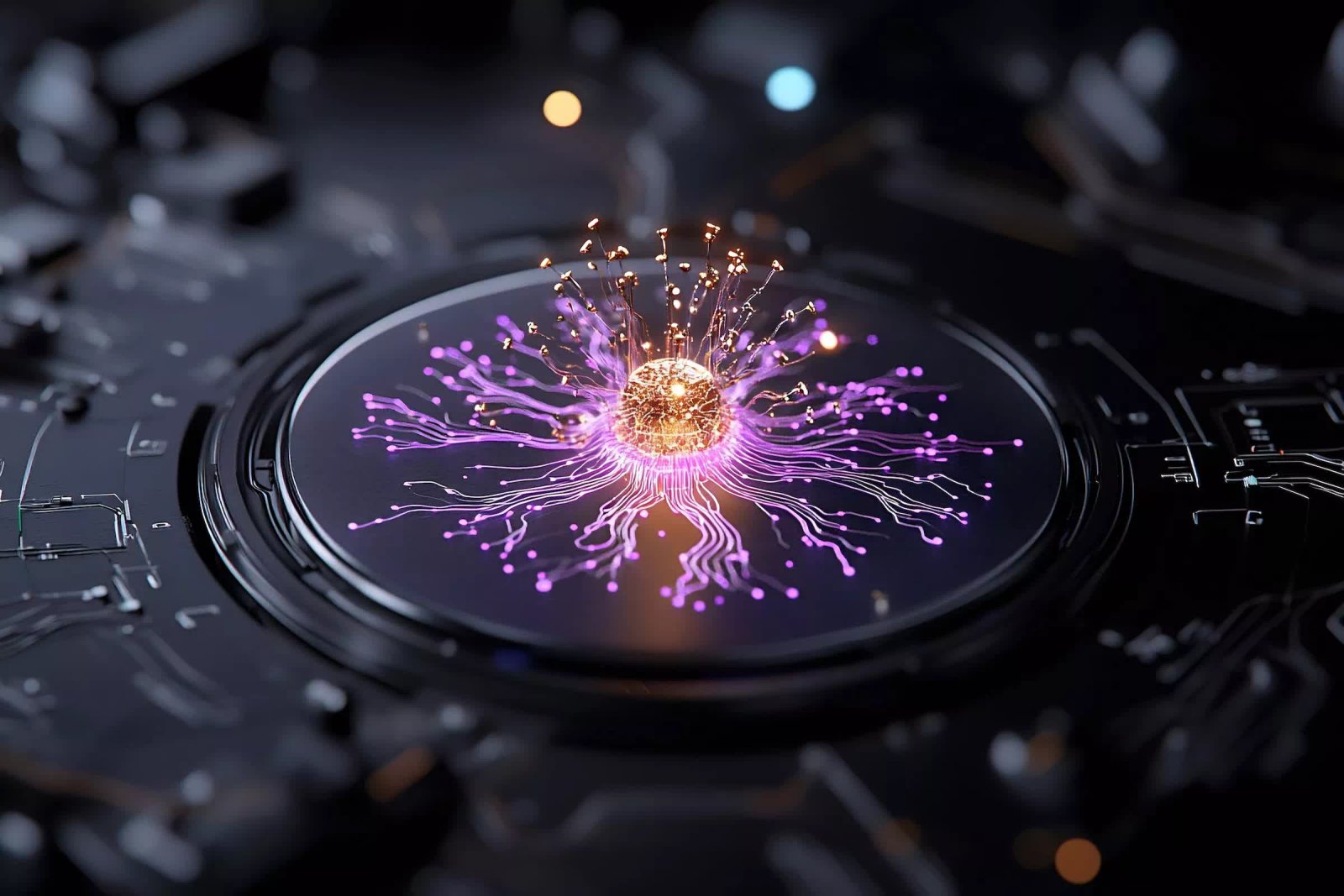
The U.S. Department of Commerce has finalized agreements to inject $300 million of research and development funding from the landmark CHIPS and Science Act into three prominent quantum hardware companies: Rigetti Computing, D-Wave Quantum, and Quantinuum. Under the terms of the deals, each company will receive $100 million, while the federal government will take minority ownership stakes in all three. This highly unusual equity-based funding structure—coordinated by the Commerce Department’s CHIPS Program Office—marks a major departure from traditional federal research grants.
Quantum computers, which leverage the principles of quantum mechanics to process information, possess the theoretical capability to break standard modern cryptographic protocols, revolutionize logistics, and rapidly accelerate the discovery of new military-grade materials and pharmaceuticals. Because of these sweeping defense implications, Washington has increasingly treated quantum hardware as a protected national asset, tightening export controls and seeking to localize every stage of its production.
To anchor this domestic production ecosystem, the Commerce Department also finalized a separate, five-year, milestone-based agreement worth $375 million with GlobalFoundries, the third-largest semiconductor foundry in the world. The new five-year agreement builds on a prior transaction in July, when the federal government announced a $300 million package for GlobalFoundries to develop silicon photonics for data centers, in exchange for a 1% equity stake in the chipmaker. GlobalFoundries, which was spun off from Advanced Micro Devices (AMD) in 2009 and is headquartered in Malta, New York, is already a vital contractor for the U.S. defense establishment through the Department of Defense’s Trusted Foundry program.

Quantinuum, formed in 2021 through the high-profile merger of Honeywell Quantum Solutions and the UK-based Cambridge Quantum Computing, relies on a “trapped-ion” architecture. This method uses electromagnetic fields to suspend individual charged atoms (ions) as qubits. Quantinuum will use its $100 million to advance integrated photonics, combining optical components and electronic circuitry onto compact, unified microchips. The company is partnering with GlobalFoundries to manufacture next-generation ion traps, and is collaborating with Monarch Quantum to develop integrated lasers and advanced optical systems.
Rigetti Computing, founded in 2013 and based in Berkeley, California, specializes in superconducting quantum computing—the same technology pursued by tech giants like IBM and Google. Superconducting qubits require temperatures colder than deep space to function. Rigetti plans to deploy its $100 million to address the structural and materials-science challenges of scaling these processors, specifically by expanding the cryogenic testing capacity and production throughput at “Fab-1,” its proprietary quantum device fabrication facility in Fremont, California.
The federal capital injection targets the immense engineering and physical bottlenecks that have long prevented quantum systems from achieving fault tolerance—the point at which quantum processors can correct their own errors and run continuous, reliable algorithms. Under the new initiative, GlobalFoundries will act as a primary manufacturing partner for the hardware developers, bridging the “valley of death” that often prevents deep-tech startups from scaling up their physical hardware.
D-Wave Quantum, based in Burnaby, British Columbia, represents a unique international inclusion in the CHIPS Act funding. D-Wave is a pioneer in quantum annealing, a specialized form of quantum computing optimized for complex mathematical search and optimization problems. Despite its Canadian headquarters, D-Wave has maintained a long-standing relationship with the U.S. intelligence and defense communities through its U.S. subsidiary, D-Wave Government Inc., and was an early recipient of investment from In-Q-Tel, the venture capital arm of the Central Intelligence Agency. D-Wave will use the $100 million to fund microelectronics research and development, focusing on high-performance semiconductor prototypes designed to support scalable quantum architectures.
By linking these three distinct hardware developers with GlobalFoundries’ high-volume manufacturing capabilities, the Commerce Department is attempting to construct a self-sustaining domestic supply chain. The federal intervention comes amid an accelerating global race for quantum supremacy, primarily between the United States and China. By taking direct financial positions, the U.S. government is securing a long-term voice in the commercialization of dual-use technologies that are critical to national security, cybersecurity, and advanced manufacturing. The funding is designed to transition quantum hardware from delicate laboratory prototypes to commercial-scale fabrication. Rather than funding software applications or theoretical physics, the Commerce Department is strictly prioritizing tangible hardware: processors, advanced lasers, optical arrays, and specialized cryogenic systems. The initiative signals that the U.S. government is no longer content to merely fund academic research, but is actively steering the industrialization of the private quantum sector to ensure that the hardware of tomorrow is designed, manufactured, and owned within the United States.