

Texas-Tennessee Game Brought Secret Service Radio Coordination to Neyland Stadium
Neyland Stadium opened gates early for the 101,915-fan sellout as Air Force One arrived in Knoxville.
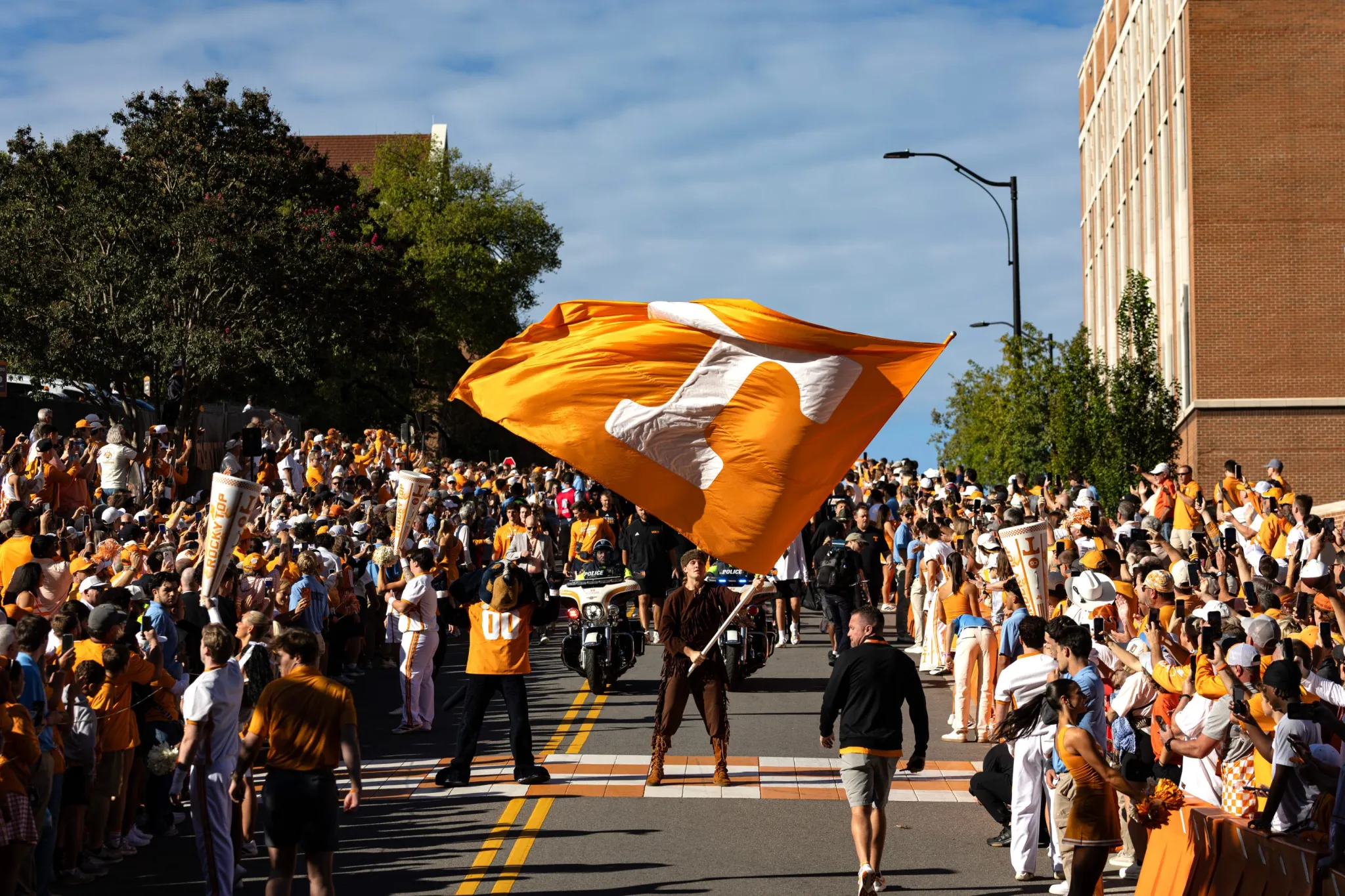
KNOXVILLE, Tenn. — Radio frequencies and presidential security preparations were coordinated ahead of Saturday’s game between No. 1 Texas and No. 14 Tennessee, after communication failures reported at a previous high-profile football game raised questions about possible interference. The top-15 Southeastern Conference matchup was played before 101,915 fans at Neyland Stadium, the venue’s 30th consecutive sellout.
SEC officials, ESPN/ABC broadcast technicians and staff from both universities coordinated designated wireless channels with Secret Service frequency coordinators. The measures were intended to guard against interference from protective signal-jamming devices or high-powered military-band communications. Game officials retained authority to call official timeouts if a major communications failure occurred during play.
College football rules allow coaches to communicate plays directly to one player on the field through a helmet headset marked with a green dot. That communication can continue until 15 seconds remain on the play clock. Texas head coach Steve Sarkisian said athletic departments had been advised to prepare for a potential total loss of coach-to-player and coach-to-coach headset communications whenever presidential security transport enters, exits or changes position within a stadium perimeter.


The precautions followed reports from the College Football Playoff national championship game in New Orleans, where Indiana beat Miami 27-21. Indiana head coach Curt Cignetti said on his weekly radio show that helmet and headset communications went completely dead for two to three critical plays in the fourth quarter. Pool reports confirmed the president departed with fewer than eight minutes remaining, the same window in which Cignetti said he lost audio, shortly before Miami running back Malachi Toney scored on a misdirection touchdown run.
Miami officials also reported headset failure on the team’s final offensive possession, which ended with a game-clinching interception for Indiana. The White House denied in a statement on X that presidential movements caused audio failures for either program. The incident prompted revised technical protocols for future games. The NFL declined to comment on whether similar frequency coordination takes place at Super Bowls, where the president previously attended and departed at halftime.
Security screening at Neyland Stadium, which holds 101,915 people, was adjusted to avoid delaying kickoff. University of Tennessee officials opened stadium gates 30 minutes earlier than standard protocol and offered half-price concession discounts to fans who entered early. The stadium reached half capacity 90 minutes before kickoff and was nearly full an hour before the game.
Air Force One made a low-altitude flyover above the stadium before landing in Knoxville at 11:28 a.m. ET, according to traveling pool reports. The motorcade arrived at the stadium gates at 11:59 a.m. ET, during the national anthem. The game kicked off at noon.
The president sat inside the stadium alongside Tennessee U.S. senators, including Marsha Blackburn, who is campaigning for governor of Tennessee. The president’s recent sporting-event appearances also included the CFP national championship in New Orleans; a Super Bowl in Las Vegas; Game 3 of the NBA Finals between the Knicks and Spurs in New York; the Daytona 500 in Daytona Beach; and the FIFA World Cup final in East Rutherford, New Jersey.
Saturday’s game was Texas redshirt freshman quarterback Arch Manning’s first career appearance at Neyland Stadium. His uncle Peyton Manning played quarterback for Tennessee from 1994 to 1997, led the Volunteers to the 1997 SEC Championship and was selected first overall in the 1998 NFL Draft.
The appearance took place during an active midterm election season and amid congressional debate over federal oversight of college athletics, including Name, Image, and Likeness legislation, athlete employment classification and the execution of the *House v. NCAA* antitrust settlement.









