LAX People Mover Now Targets January 2026 Opening After Further Delay
The nearly complete airport train still needs safety certification, operating approval and a 30-day trial.
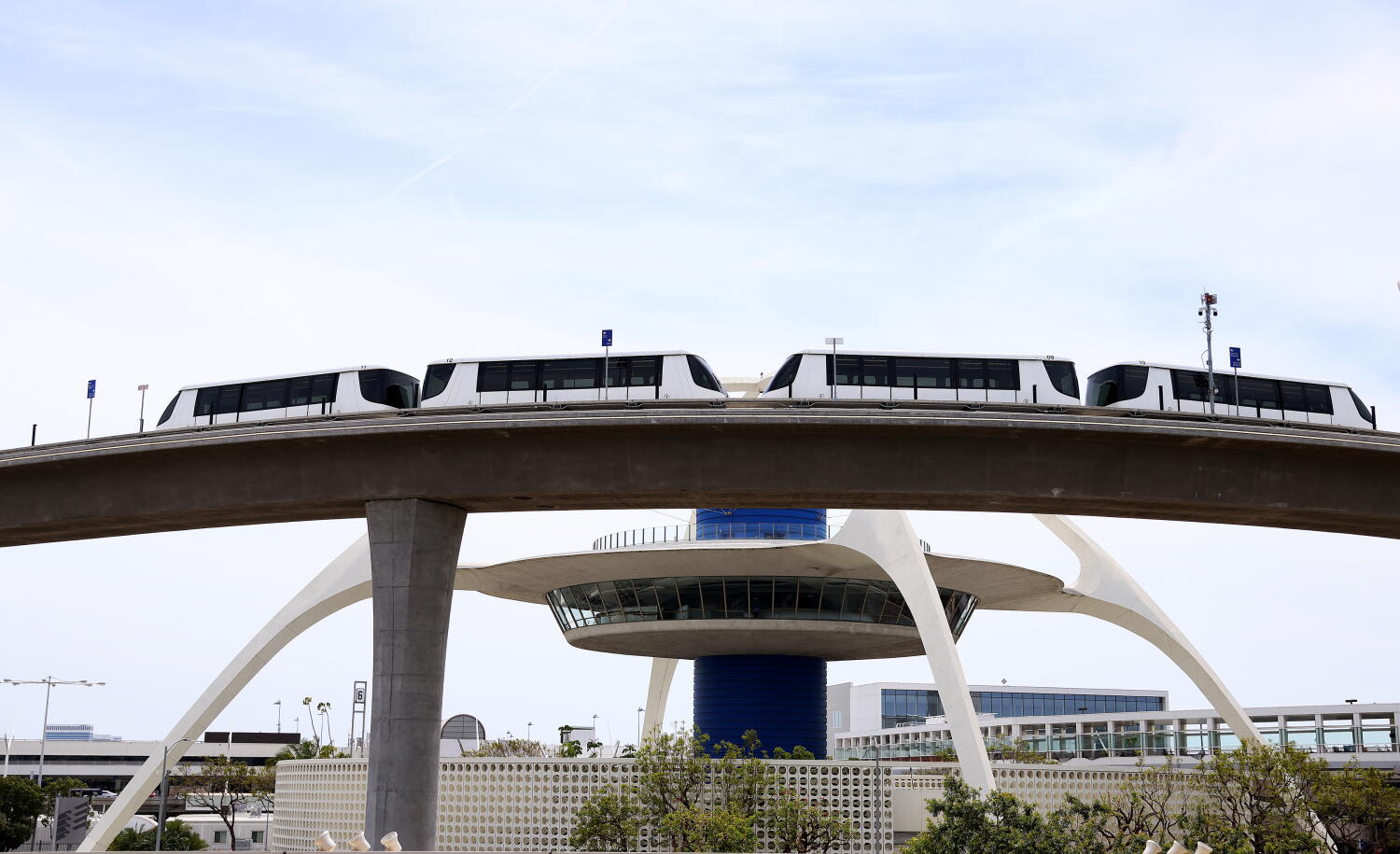
LOS ANGELES — The contracting consortium building Los Angeles International Airport’s $3.3 billion Automated People Mover now estimates it could begin carrying passengers by Jan. 6, 2026, if the remaining milestones are met without further complications. The 2.25-mile elevated train was originally scheduled to open in 2023 and is 99% physically complete.
LAX Integrated Express Solutions (LINXS) gave the new estimate in a disclosure filing. Restructured project agreements set Dec. 8, 2025, as the technical deadline for construction completion, but the consortium said it would need more time after that to move into passenger operations. It cautioned that “there can be no assurances that achievement of the Passenger Service Availability Date will not be delayed further.”
The driverless train cannot open until it completes 30 consecutive days of successful, uninterrupted trial testing across the entire system. It also needs an independent safety assessment, formal safety certification and final operating authorization from Los Angeles World Airports (LAWA), the municipal department that operates LAX. A utility connection and service agreement with the Los Angeles Department of Water and Power remains to be finalized.


LAWA officials say safety protocols will not be rushed or bypassed to meet a deadline. The agency says exhaustive testing of tracks, vehicles and signaling systems is standard industry practice for automated airport transit, and that its primary focus is delivering a durable, safe system.
The latest delay has added pressure to the project’s financing. Fitch Ratings recently cut the rating on $1.2 billion in senior secured bonds from BB+ to BB, moving the debt deeper into speculative “junk” territory, and placed the bonds on Rating Watch Negative, signaling the possibility of another downgrade.
Bondholders have agreed to fold a key interim milestone deadline into the final Dec. 8 construction deadline, easing the immediate risk of a technical default under the concession agreement. Missing the December deadline would leave that risk in place. Financial analysts say LAWA has a strong incentive to keep working with the current contractors rather than terminate the contract when physical construction is nearly finished.
LINXS is a public-private partnership that includes Fluor, Balfour Beatty, ACS Infrastructure Development, Dragados USA and HNTB. It previously sued the city, blaming LAWA design changes and administrative delays for the setbacks. A grand jury investigation, by contrast, concluded that the contractor was primarily responsible for the scheduling failures. Earlier this year, the Los Angeles City Council approved a $400 million settlement to resolve outstanding claims, adjust the formal schedule and provide the contractors with additional compensation for cost overruns. That agreement set the current Dec. 8 construction target.
The train is intended to relieve traffic gridlock in the central terminal horseshoe at the nation’s second-busiest airport. Designed to carry up to 10,000 passengers an hour, it will run every two minutes at peak times. Three of its six stations will be in the Central Terminal Area, with pedestrian bridges to the airline terminals. The others will serve the new Economy Parking facility, the LAX/Metro Transit Center and the Consolidated Rent-A-Car (ConRAC) facility. The Metro station will connect directly to the Los Angeles County Metropolitan Transportation Authority’s C and K light rail lines.
A January opening would come before the FIFA World Cup in summer 2026, Super Bowl LXI at SoFi Stadium in February 2027 and the 2028 Summer Olympic Games, all major events in the Los Angeles metropolitan area. The ConRAC facility will bring more than a dozen rental car companies into one hub near Interstate 405, replacing individual rental-car shuttle buses that now add to traffic in the terminal loop. Once the train begins service, the airport’s designated rideshare and taxi pickup lot, “LAX-it,” will move from near Terminal 1 to a permanent location near the Metro transit hub.