

AI Agents Are Everywhere. Corporate Workflows Aren’t Ready
Companies are deploying AI faster than they are redesigning the workflows and workforces built around it
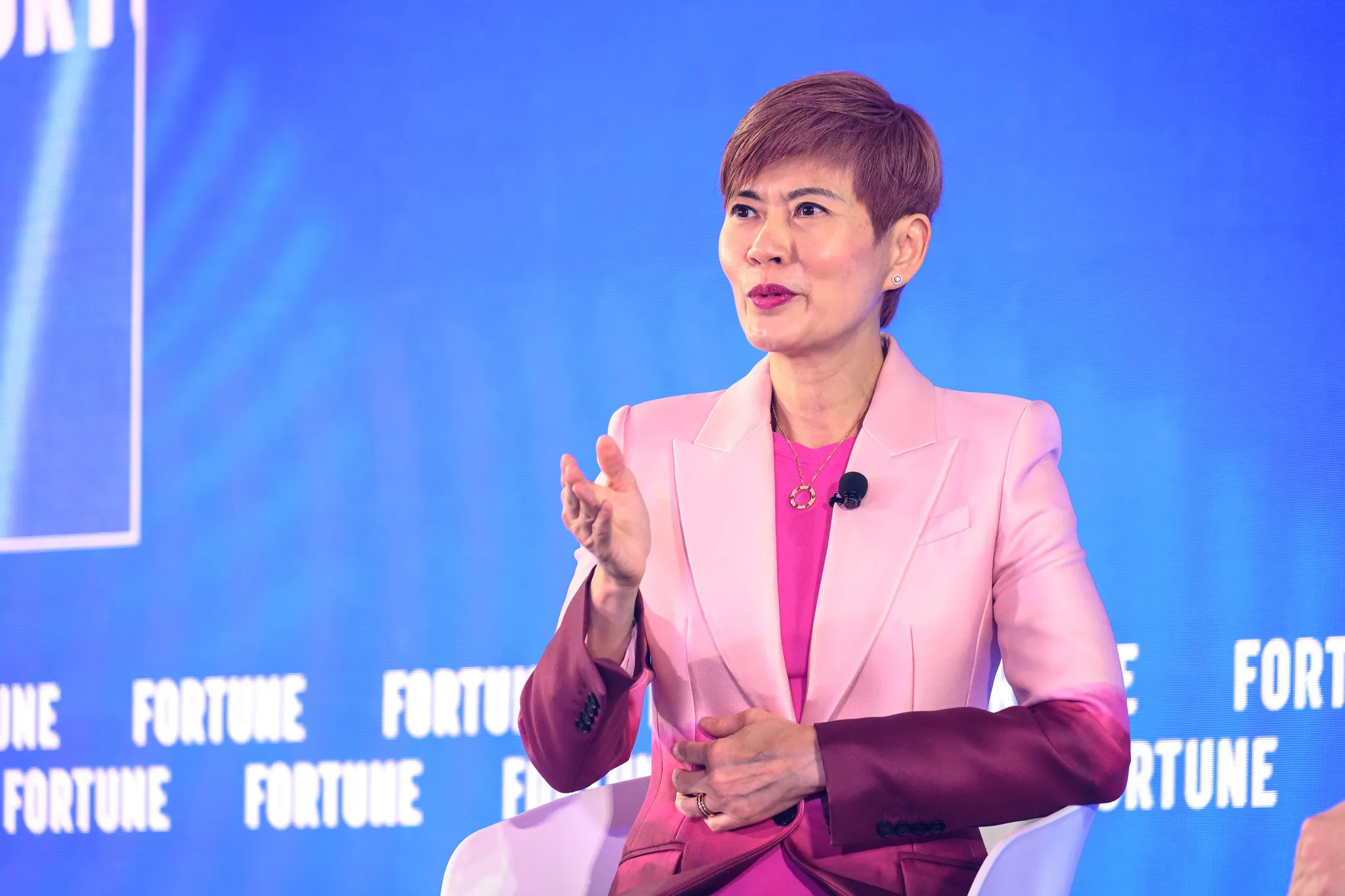
MACAU — Approximately 60% of major enterprises have introduced AI software agents, but only 5% have formally redesigned their operational workflows, according to data from cloud software provider ServiceNow. The figures come as global corporations move artificial intelligence from experimental pilot projects into core business operations while executives reassess workforces, enterprise workflows, and capital deployment amid rising economic volatility.
Uber Technologies Inc. is eliminating approximately 3,300 corporate positions. Chief Executive Officer Dara Khosrowshahi said the savings from the management downsizing will be redirected toward lowering ride prices and expanding driver and vehicle selection. The restructuring comes as Uber faces intensifying competition from autonomous vehicle developers.
Giffgaff, the U.K. mobile virtual network operator owned by Virgin Media O2, is taking a different approach. Chief Executive Officer Kate Dohaney said the company is retaining staff and using AI to shorten product development cycles, while retraining workers to perform higher-level strategic analysis rather than reducing headcount.


Uber previously eliminated roughly 6,700 jobs in May 2020, during the onset of the COVID-19 pandemic, before expanding its partnerships with autonomous driving firms. The contrasting labor decisions reflect a widening divide between companies using automation mainly to trim operational overhead and those pursuing broader organizational overhauls.
At the inaugural Fortune Leaders Forum in Macau, Tim Quigley, a professor at the International Institute for Management Development (IMD), and Carol Liao, Greater China chair at Boston Consulting Group (BCG), said the commoditization of automated data processing is increasing the premium placed on executive judgment and decision-making quality. Routine analytical tasks are being automated, while ServiceNow Asia Managing Director Melissa Ries identified critical human judgment as a primary scarce resource in automated corporate environments.
The structure of corporate teams is changing as well. Becca Carroll, chief strategy officer at human-centered design consulting firm IDEO, said AI adoption is driving demand for “comb-shaped” professionals who have functional depth across multiple disciplines and can pivot between operational areas. IDEO historically popularized “T-shaped” talent models emphasizing deep single-discipline expertise.
Black Lake Technologies, a Chinese manufacturing software provider, is using AI agents to train sales personnel. Founder and Chief Executive Officer Yuxiang Zhou said sales teams trained by AI software achieved higher performance benchmarks in double-blind operational evaluations than teams trained by human sales managers.
At Walmart China, President and Chief Executive Officer Christina Zhu reported a 20.7% revenue increase in the recent quarter, compared with 2.6% growth for Walmart U.S. over the same timeframe. Walmart entered the Chinese market in 1996 and relies heavily on its Sam’s Club wholesale operations in the country.
Zhu attributed the performance to pairing AI inventory analytics with human buyer insights. She noted that transactional data reflects past choices rather than unstated consumer needs, an issue executives in consumer-facing sectors cited as a limitation of systems dependent on historical datasets.
AS Watson Group, the 185-year-old health and beauty retailer majority-owned by Hong Kong conglomerate CK Hutchison Holdings, operates more than 16,000 stores internationally. Group CEO Malina Ngai warned that applying AI to legacy workflows risks generating efficiency improvements on outdated business models.
The retailer is deploying AI tools for administrative tasks while tracking frontline performance through customer satisfaction metrics, including an internal “customer love score.” HP Inc. Asia Head Michael Boyle likewise advised that effective enterprise deployment requires combining human talent with automated processes rather than applying AI software directly over existing infrastructure.
In the agricultural supply chain sector, Syngenta Group Chief Information and Digital Officer Feroz Sheikh said the Basel, Switzerland-based agritech corporation is replacing monolithic IT systems with modular architectures. The change is intended to allow rapid realignment of supply chains amid global trade disruptions. Syngenta was acquired by state-owned ChemChina for $43 billion in 2017.
The rapid scaling of compute capacity needed to support enterprise AI has produced infrastructure bottlenecks and political pushback. U.S. President Donald Trump cautioned publicly against delaying construction of domestic AI data centers, arguing that halting infrastructure developments would cede technological advantages to China and harm local economies.
A national survey by the Annenberg Public Policy Center at the University of Pennsylvania found that 61% of Americans, including 54% of self-identified Republicans, oppose developing new data centers within their local communities. Concerns include electrical grid strain, water consumption for cooling, and land use.
The infrastructure debate is unfolding as financial markets pull back amid macroeconomic headwinds. S&P 500 futures fell 0.57% after a 0.48% drop in the prior cash session. The STOXX Europe 600 declined 0.75% and the U.K. FTSE 100 fell 0.81%, while Hong Kong’s Hang Seng Index declined 1.0%, South Korea’s KOSPI slid 0.85%, India’s NIFTY 50 fell 0.78%, China’s CSI 300 dropped 0.67%, and Japan’s Nikkei 225 edged down 0.01%.
Benchmark U.S. 10-year Treasury yields moved past 5.0% alongside rising global crude oil prices, increasing corporate borrowing costs and renewing expectations of potential interest rate adjustments by the Federal Reserve. Market data also showed that 30% of American consumers have used Buy Now, Pay Later (BNPL) installment loans to finance household grocery purchases.
Bitcoin traded near $77,000 as market expectations rose for passage of the federal Clarity Act following President Trump’s approval of new ethics provisions attached to the cryptocurrency regulation bill. In gaming and hospitality, a Las Vegas casino resort distributed more than $70 million in company stock to nearly 10,000 frontline employees in celebration of its 50th anniversary.