

Women CEO Pipeline Stalls as Board Representation Declines
Corporate DEI rollbacks and shifting board priorities are stalling female executive advancement despite rising demand for AI-fluent leaders.
The number of women serving on Fortune 500 corporate boards has declined for the first time in more than a decade, signaling a structural retreat in female executive advancement even as companies race to fill leadership roles requiring fluency in artificial intelligence.
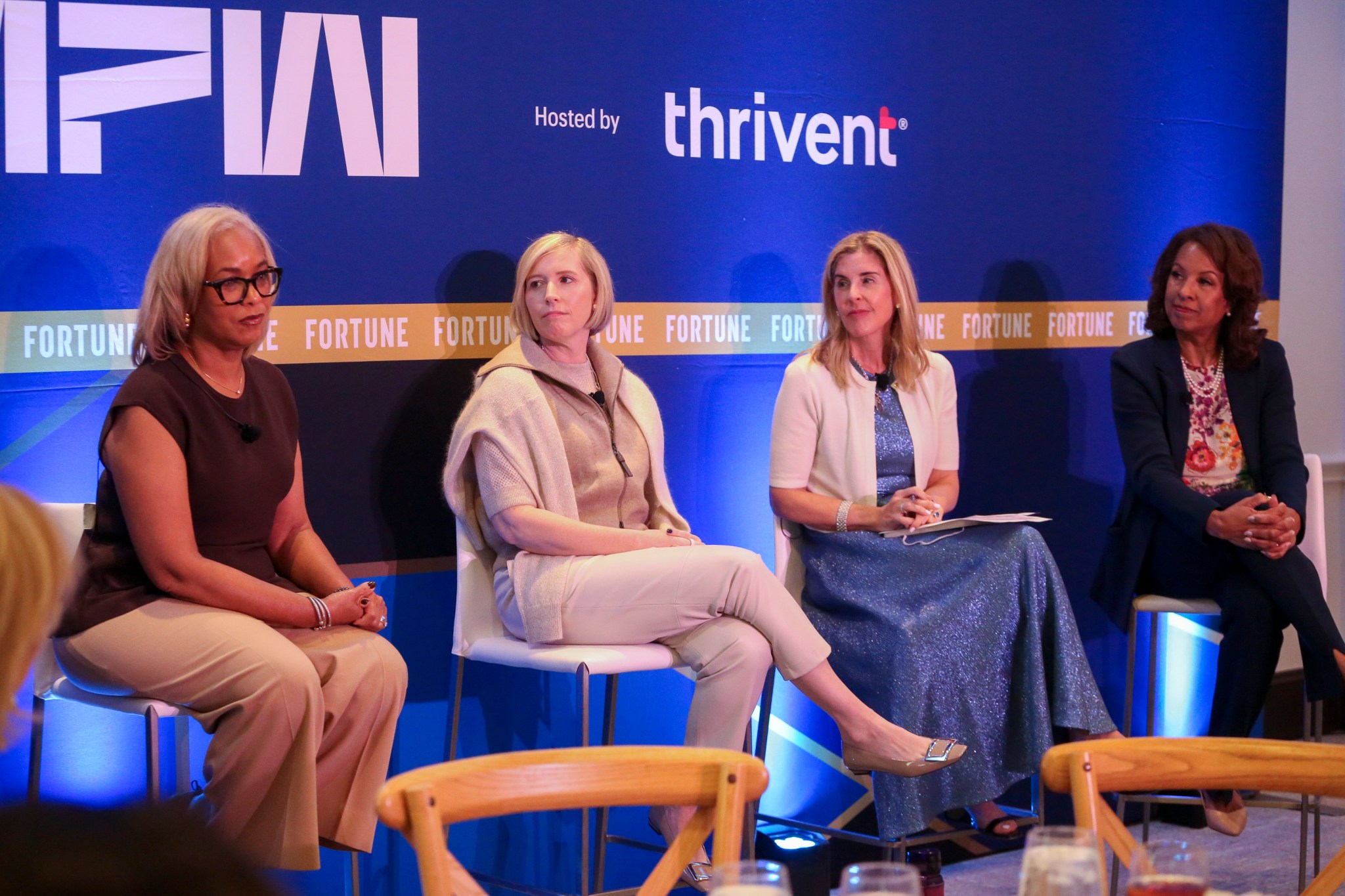
Women currently lead 56 Fortune 500 companies, representing 11.2% of the index. While that figure marks an increase from 7.4% six years ago, momentum has fractured at the levels immediately below the chief executive office. Female representation across both C-suite positions and board seats has stalled near 30%, according to data discussed Monday at the Fortune Most Powerful Women Summit in Santa Barbara, California.
The plateau arrives as corporate America broadly scales back formal diversity initiatives. Over the past two years, dozens of major U.S. employers have dismantled or restructured their diversity, equity, and inclusion programs following legal challenges, shareholder pressure, and shifting political dynamics. That institutional pullback has removed dedicated infrastructure previously used to identify, train, and sponsor high-potential female executives for top-tier roles.


Kelly Baker, executive vice president and chief human resources officer at financial services firm Thrivent, attributed the deceleration directly to organizations deprioritizing leadership cultivation amid broader economic uncertainty. “If you take your foot off the pedal at all, you will start to stall,” Baker said.
Toni Townes-Whitley, a former Fortune 500 CEO and Nasdaq corporate board member, pointed to a wider cultural shift. She noted that reduced corporate dialogue around workplace diversity has coincided with increased external skepticism regarding women’s capabilities, creating friction not only among hiring managers but within boardrooms themselves.
A persistent bottleneck remains at the final stage of executive succession. Only 36% of working women have considered or expressed interest in becoming a CEO, according to Jenna Fisher, managing director at global leadership advisory firm Russell Reynolds Associates. The deficit is not rooted in qualifications but in self-perception. Hayden Brown, president and CEO of freelance marketplace Upwork, recalled that despite growing up in a household deeply focused on women’s professional empowerment, she did not view herself as a viable chief executive until her company’s board chair explicitly told her she should pursue the role a decade ago.
Brown now actively edits the language in books she reads with her children, replacing adjectives like “smart” with “hard-working” to reinforce traits associated with leadership resilience rather than fixed ability.
Closing the ambition gap requires intervention beyond individual households. Executive search professionals distinguish between mentors, who offer private career guidance, and sponsors, who publicly advocate for candidates during closed-door succession planning meetings. Corporate governance experts note that because men continue to hold the vast majority of senior executive and board chair positions, male sponsorship remains a mechanical necessity for advancing female candidates through the final stages of CEO selection.
Technological disruption may be altering the traditional criteria for executive selection. Research from Russell Reynolds Associates indicates women are currently outpacing men in AI adoption and implementation, driven by higher rates of adaptability. As boards increasingly prioritize leaders capable of navigating rapid technological shifts over those with conventional operational backgrounds, early proficiency in generative AI tools could serve as a differentiator for female executives competing for open seats.
Despite the contraction in formal DEI programming, Fisher noted that underlying demand for women in executive and board roles remains intact, driven by investor expectations and the operational complexity of modern enterprises.
As of October 2026, the 56 women leading Fortune 500 companies represent the highest raw total in the list’s history, though the pace of new appointments has slowed significantly compared to the record-setting gains recorded between 2020 and 2023.









