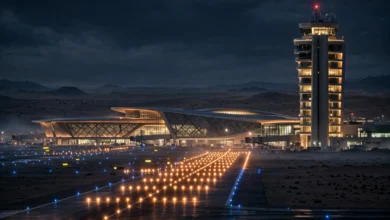
Western Sydney Airport Opens Sunday as a Freight Hub That Happens to Sell Tickets
The A$5.6 billion build opened to passengers on October 25 — but its real business started three months earlier, after dark, with cargo.
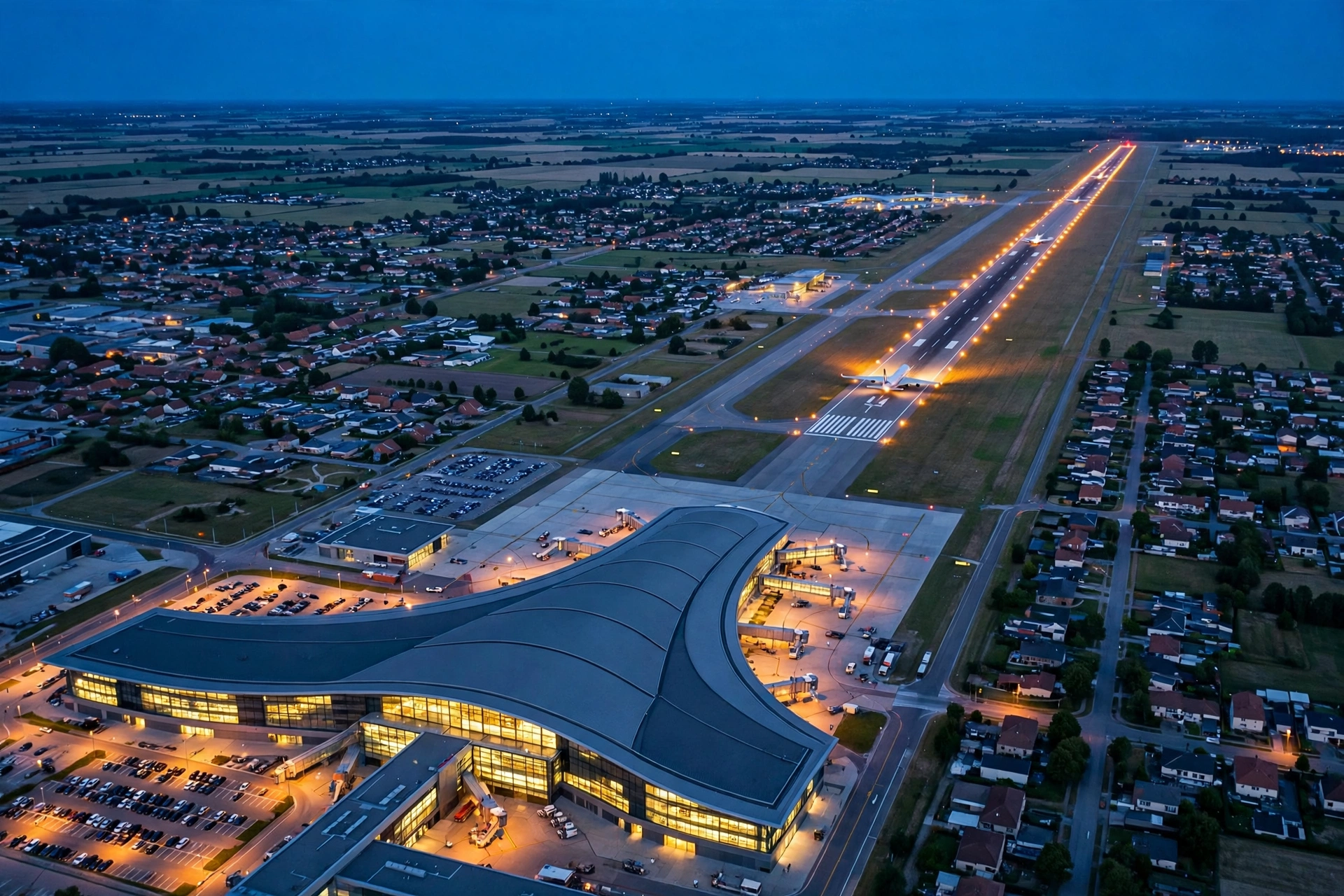
At 11:55pm on November 23, a Singapore Airlines A350 will push back from Western Sydney International Airport and climb out over Badgerys Creek. SQ262 will land in Singapore at 5:05am, in time for the morning bank of connections at Changi. The destination matters less than the clock: the flight leaves fifty-five minutes into Sydney’s overnight flight curfew, when scheduled departures from the city’s old airport are illegal.
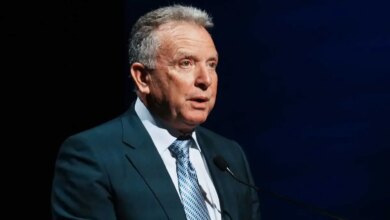
Sydney’s Kingsford Smith shuts to scheduled traffic between 11pm and 6am under the Sydney Airport Curfew Act 1995, and caps out at 80 movements an hour besides. Singapore Airlines’ latest departure from Mascot leaves at 7:10pm. From the new airport, the 11:55pm slot is the product. Vietjet’s Ho Chi Minh City departure is timed for 9:25pm. Qatar Airways signed on this week for a late-night Doha arrival from December 2027, and WSI chief executive Simon Hickey called the 24-hour capacity “one of WSI’s key competitive advantages.”

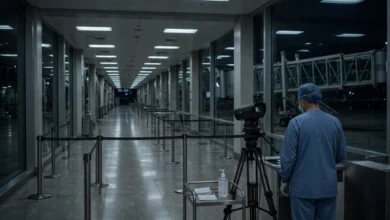
Commercial flights have been using the runway since July. The freight precinct opened for business on July 26, with Qantas Freight’s freighter departing on the evening of the 27th after trial runs earlier in the month. Stage one spans 733,000 square metres, parks eight widebody freighters at once, and is rated for 220,000 tonnes of freight a year; Qantas Freight alone expects to move more than 850 tonnes a week through its terminal. Texel Air Australasia landed two 737-800 converted freighters on opening day, and dnata has put A$32 million into its own cargo facility. “For 30 years, Sydney’s parcels slept. Now they don’t have to,” the Sydney logistics firm Norwest Logistic Management posted on Instagram this month. Freighters don’t need a rail link. They don’t need lounges. They need exactly what WSI has: a runway that never closes, an upgraded Northern Road, and the Aerotropolis sheds at Kemps Creek.


Three a day. Jetstar runs 21 departures a week from Sunday, 14 to Melbourne, four to the Gold Coast, three to Brisbane. Air New Zealand adds three Auckland returns a week from Monday. Aviation data firm Cirium, via Bloomberg, counts six or fewer scheduled flights a day across the next twelve months, in a terminal built for up to 10 million passengers a year. That capacity is roughly 27,000 passengers a day; six departures of A320-class aircraft is on the order of a thousand departing seats. Back in 2023 the Qantas Group talked about basing up to 15 aircraft at the airport in its first year. The launch is a fraction of that. Virgin Australia still hasn’t set a schedule.
New South Wales is buying the passengers it doesn’t yet have. The Western Sydney International Take-Off Fund, A$16 million from the state government and the airport, underwrites new routes; it has backed the New Zealand, Singapore, Ho Chi Minh City and Doha services. The state’s own forecast is 162,000 international visitors and A$530 million in visitor spending. Do the division and it comes to about A$99 of public money per promised visitor, each expected to spend around A$3,270. Aviation professor Rico Merkert at the University of Sydney reads Qatar’s timing, fourteen months from opening day to the first Doha flight, as a deliberate buffer: let the catchment mature until it can reliably fill 354-seat Boeing 777s.
A Super Shuttle ticket to Sydney’s CBD costs A$55 one way and takes the better part of an hour. From Kingsford Smith it’s about 20 minutes by train, with taxis capped at A$60 to the city. The numbers that flatter WSI are the local ones: the airport’s own estimate puts at least a third of Sydney’s population within a 45-minute drive, and the Parramatta shuttle is A$25. Vietjet’s A330s will carry up to 377 passengers each toward a city whose western suburbs hold more than 70,000 Vietnamese, over half of Greater Sydney’s Vietnamese population. University of Sydney transport professor David Levinson, who told Bloomberg the existing airport is “much more convenient” for almost all travellers, reached for Montreal’s Mirabel: opened in 1975, last commercial passenger flight in 2004, now mostly a freight hub. Airlines for Australia and New Zealand chief executive Stephen Beckett says carriers will “sit back and make their own commercial assessments based on passenger demand.”
The bill is A$5.6 billion, per Bloomberg, inside a wider Western Sydney program reported at approaching A$18 billion. For that, Sydney gets a runway that works at 2am, departure slots the old airport cannot legally sell, and a passenger schedule that arrives later, partly bought with A$16 million of public money and aimed at the west rather than the city. The first departure is Jetstar’s JQ362 to the Gold Coast at 11am.