Asif Hasan Took the Children’s Heart Cases Other Hospitals Called Too Risky
Over 4,000 open-heart operations, around 400 transplants and one technique invented on the operating table: the story behind the Pride of Britain's Lifetime Achievement Award.
- Asif Hasan Took the Children’s Heart Cases Other Hospitals Called Too Risky (CHOSEN)
- The Surgeon Who Invented a Technique Mid-Operation to Save a Dying Patient
- For 30 Years, the Sickest Children’s Hearts in Britain Were Sent to Newcastle
- Britain’s Last-Resort Children’s Heart Surgeon Just Won the Pride of Britain’s Top Honour
—
Sixteen years ago, on an operating table at the Freeman Hospital in Newcastle, a teenager’s new heart was beating and her chest wouldn’t close. Every other cardiac centre asked to do the transplant had refused. The surgeon looked at the open chest, looked at the donor heart that was too big for it, and invented a way to close her anyway, and it worked.
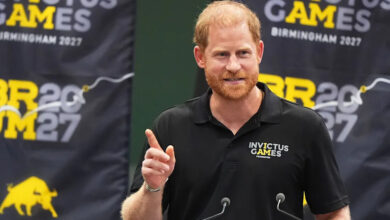
Cecilia Adamou was on the stage at Grosvenor House on Monday night, one of 19 former patients, aged 10 to 43, who walked out to surprise Asif Hasan, 70, as he received the Lifetime Achievement Award at the Pride of Britain Awards. The ceremony was broadcast on ITV on Thursday. Hasan retired earlier this year after three decades as head of paediatric cardiac surgery at the Freeman. The trust counts more than 4,000 open-heart operations. Roughly 3,000 of them he did as lead surgeon; around 400 were heart transplants. The emergency call-outs were never counted.

Writing on LinkedIn after the broadcast, Cecilia put his career in the plainest terms available: “He agreed to do my heart transplant when everyone refused to even try. When I nearly died on the operating table, there and then he invented a brand new technique to close my chest that saved my life and has helped many other children since.” In the same post she described a man who “would sit by his patients beds through the night.”

The technique has a name now, bootlace closure, and a job that sounds like something from a workshop manual. Donor hearts don’t come in children’s sizes, and when the only available heart is too large for the chest waiting for it, the lacing technique lets the surgeon close anyway. It has been used on other children since.
That pattern, the operation everyone else had ruled out, is what the Freeman unit became known for inside the NHS. Hasan took on the sickest children in the country. Many had already been rejected by other cardiac centres as too high-risk, and the techniques grew out of the cases. The Berlin Heart wasn’t his invention, but the programme that made it routine at Newcastle was his to co-lead: the bridge-to-transplant unit keeps infants and small children alive on the mechanical pump while they wait for a donor organ. Some of them wouldn’t survive the wait.
There was a reason those cases kept arriving in Newcastle. The Freeman’s children’s heart unit is one of only two in Britain carrying out heart and lung transplants on children. It’s the only one in the country offering cardiac care from before birth through to adulthood. The first children’s heart transplant in Britain happened there, in 1987, eight years before Hasan arrived. Children are referred to it from every part of the UK and Ireland.
On Monday night the referrals walked back in. Cameron Scott, 19, from Heworth in York, was born with his aortic valve fused shut, had emergency surgery at four days old and a six-hour operation at eleven. “When they asked me, I said ‘It is the least I can do’. He saved my life.” Seb Hollingsworth, 17, had his first lifesaving surgery at four months and another at thirteen; his mother Nadine is quoted in NHS England’s tribute this week: “As parents, we trusted him completely. He has had a huge impact on our family and we will always be grateful for everything he has done.” Natalie Grant had her surgery 25 years ago and now works in the unit that saved her. Max Johnson and Cecilia Adamou, both earlier Pride of Britain Children of Courage winners, were his patients.
Ask Hasan what he’s proudest of and he doesn’t name an operation. “I wanted to train people so that they are not only competent, but better than me, and that’s what I have achieved. That is my proudest achievement.” His colleague Louise Kenny says he has been “an integral part of training every single children’s heart surgeon in the UK, and many abroad also.” He put it his own way: “One of my abiding resolves was that when I stopped work, nobody would miss me. It’s the art of becoming redundant.” Retirement hasn’t quite worked out like that. He still guides surgeons at home and abroad and works with a charity in Pakistan and Nairobi. His wife Nancy’s version is shorter: “He does not like to make a fuss, he just wanted to quietly leave.”
He was appointed consultant cardiothoracic surgeon at the Freeman in 1995.